Updates

  1. Person pages list letters, writing, profiles and links as sortable tables with filters, and show each person's companies as links; Fund letters show each letter's description in its own column.
  2. Experts show a checked job title and a short description of each person; 30 more people have photographs.
  3. Every company, fund, university and publication the experts work for has a page listing the people there.
  4. Fund letters show each letter's thesis and filter by it; 225 person pages list the essays, columns and newsletter issues the person wrote.
  5. Person pages list every essay and newsletter issue a person wrote, and their own books as a table in List view.
  6. Recommends shows the five largest kinds of book and the rest under More; browse pictures load sooner.
  7. Podcasts and talks link the original episode, filter by Audio and video or Press, and list each publisher once.
  8. Pages are wider, Recommends has List and Grid, and a filter clicked again turns off.
  9. Book cards sit in a ruled grid with Open Library and Goodreads links and each book's one-line note.
  10. Funds is now Investors; each investor's styles are buttons that filter the table.
  11. Podcasts and talks on a person's page filter by year and publisher and show as a list or a grid of pictures.
  12. Quotes show only people's own words: 472 summaries written by list sites are gone.
  13. Country pages open from Browse again, and every link on the shelf lands on a page.
  14. Subject and person pages show their sections as tabs, and each book appears once on a person's page.
  15. Book cards show the quote, who said it and the source; grids show five cards to a row.
  16. On a phone, a menu holds the sections, search, Updates, Feedback and dark mode.
  17. Feedback takes a screenshot of the page with no browser prompt, opens a screenshot full size when you click it, and clears itself once sent.
  18. Book cards are centred, search names the topic each book sits in, and any text cut short shows whole on hover.
  19. Search groups its results by kind: people, companies, geographies, subjects, topics, books, funds, fund letters and papers.
  20. The Books table lists who recommended each book by name, and the browser tab names the section you are in.
  21. Feedback can take a screenshot of the page, or one you paste or choose, and opens in the corner beside Updates.
  22. Each rail button reopens its section where you left it, and Browse, Table and People show on every book and subject page.
  23. Filters grey out choices that hold nothing instead of hiding them, and Books › People filters by authors or recommenders.
  24. Feedback takes a subject line and up to three screenshots.
  25. Biographies are grouped by the person they are about: 41 new pages, from Abraham Lincoln to Lee Kuan Yew.
  26. Sport splits into 23 sports, and Religion into one topic per faith.
  27. Book lists show as cards: the cover, one recommendation quote and every recommender by name.
  28. Seventeen subjects that had two or three pages under different names now have one page each.
  29. Every page lists its Experts as authors and recommenders, with a link to them on the Experts tab.
  30. Economics, Financial history, Financial panics and Accounting are subjects of their own, with one page per financial crisis.
  31. Book, person and subject pages open inside the app, so the tabs stay in view.
  32. 996 more book covers, and photographs or logos for 227 more people and companies.
  33. Books › Browse shows every subject as cards, and the rail holds Fund letters, Papers, Experts, Books and Funds.
  34. Every topic over 150 books splits into narrower topics, each with a page of its own.

Send feedback

What is it?
Screenshots, up to 3 (optional)
or paste one with Ctrl+V

We use your email only to reply to you.

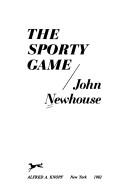
The Sporty Game

The Sporty Game

John Newhouse
1982
T3 242 pages · about 4h 2m to read Open Librarygoodreads

Classic on the bet-the-company economics of airliner programs.

Summary

Newhouse, a New Yorker writer, examined the commercial aircraft industry and the extraordinary financial risk of developing a new airliner. The title comes from an industry phrase for the bet a manufacturer makes when it launches a programme.

The economics are the argument. Developing a new aircraft costs more than the manufacturer's net worth, takes years before any revenue arrives, and requires selling several hundred units before breaking even. A failed programme can destroy the company, and Newhouse documents cases where it nearly did. The result is an industry where each launch decision is a bet on the entire firm, where governments become involved because the employment and technology consequences are national, and where the number of manufacturers falls over time because each failure removes one permanently.

He covers the specific episodes: the Lockheed TriStar and the Rolls-Royce bankruptcy that accompanied it, the McDonnell Douglas DC-10 and its certification and safety history, Boeing's 747 gamble which nearly failed before the market appeared, the Concorde as a programme where national prestige overrode commercial logic, and the formation of Airbus as a state-backed consortium precisely because no European company could take the risk alone.

The book is from 1982 and the industry has consolidated to two manufacturers since, which is the conclusion the analysis points toward. The specific programmes are historical. The economics of a business where each product decision risks the firm remain the durable content and apply to other industries with the same structure.

Key takeaways 7

  1. Developing a new airliner costs more than the manufacturer's net worth and requires selling several hundred units before breaking even, which makes each launch a bet on the firm.
  2. The industry consolidates over time because each failed programme permanently removes a manufacturer, and no new entrants can raise the required capital.
  3. Governments become involved because the employment and technology consequences of a programme are national, which turns commercial decisions into political ones.
  4. Airbus was created as a state-backed consortium because no single European company could carry the development risk alone.
  5. Engine development is a parallel bet of similar magnitude, and Rolls-Royce's bankruptcy during the TriStar programme nearly destroyed both companies.
  6. Launch customers extract very favourable terms because their orders are what allow the programme to proceed at all.
  7. Concorde demonstrated that national prestige can sustain a programme that no commercial analysis would have approved.

Who should read it

Investors and operators in industries where individual product decisions risk the whole firm, and anyone studying aerospace industry structure.

Similar books 6

Chosen by shared topics, the entries that hold them, and the people who recommended both.
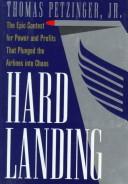
Thomas Petzinger Jr. · 1995

US airlines after 1978 deregulation through Crandall, Lorenzo and Kelleher.

Recommended by: Patrick Collison

Scott Davis, Carter Copeland, Rob Wertheimer · 2020

Sell-side analysts comparing Boeing, GE, Honeywell and Danaher.

Recommended by: Patrick O'Shaughnessy
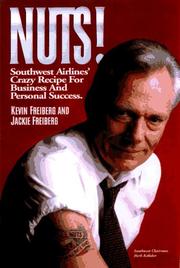
Kevin Freiberg, Jackie Freiberg · 1996

How Southwest Airlines built its low-cost model and its culture under Herb Kelleher.
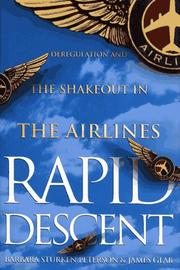
Barbara Sturken Peterson, James Glab · 1994
Rigas Doganis · 2005

The standard academic text on airline economics.
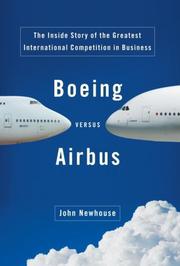
John Newhouse · 2007

The duopoly rivalry and the 787 and A380 bets.

Where it sits in the reference 5

Companies
Business themes
Industries
Industries
Business themes

Topics

Business and ManagementTechnology and ComputingAviation and spaceflight