Updates

  1. Person pages list letters, writing, profiles and links as sortable tables with filters, and show each person's companies as links; Fund letters show each letter's description in its own column.
  2. Experts show a checked job title and a short description of each person; 30 more people have photographs.
  3. Every company, fund, university and publication the experts work for has a page listing the people there.
  4. Fund letters show each letter's thesis and filter by it; 225 person pages list the essays, columns and newsletter issues the person wrote.
  5. Person pages list every essay and newsletter issue a person wrote, and their own books as a table in List view.
  6. Recommends shows the five largest kinds of book and the rest under More; browse pictures load sooner.
  7. Podcasts and talks link the original episode, filter by Audio and video or Press, and list each publisher once.
  8. Pages are wider, Recommends has List and Grid, and a filter clicked again turns off.
  9. Book cards sit in a ruled grid with Open Library and Goodreads links and each book's one-line note.
  10. Funds is now Investors; each investor's styles are buttons that filter the table.
  11. Podcasts and talks on a person's page filter by year and publisher and show as a list or a grid of pictures.
  12. Quotes show only people's own words: 472 summaries written by list sites are gone.
  13. Country pages open from Browse again, and every link on the shelf lands on a page.
  14. Subject and person pages show their sections as tabs, and each book appears once on a person's page.
  15. Book cards show the quote, who said it and the source; grids show five cards to a row.
  16. On a phone, a menu holds the sections, search, Updates, Feedback and dark mode.
  17. Feedback takes a screenshot of the page with no browser prompt, opens a screenshot full size when you click it, and clears itself once sent.
  18. Book cards are centred, search names the topic each book sits in, and any text cut short shows whole on hover.
  19. Search groups its results by kind: people, companies, geographies, subjects, topics, books, funds, fund letters and papers.
  20. The Books table lists who recommended each book by name, and the browser tab names the section you are in.
  21. Feedback can take a screenshot of the page, or one you paste or choose, and opens in the corner beside Updates.
  22. Each rail button reopens its section where you left it, and Browse, Table and People show on every book and subject page.
  23. Filters grey out choices that hold nothing instead of hiding them, and Books › People filters by authors or recommenders.
  24. Feedback takes a subject line and up to three screenshots.
  25. Biographies are grouped by the person they are about: 41 new pages, from Abraham Lincoln to Lee Kuan Yew.
  26. Sport splits into 23 sports, and Religion into one topic per faith.
  27. Book lists show as cards: the cover, one recommendation quote and every recommender by name.
  28. Seventeen subjects that had two or three pages under different names now have one page each.
  29. Every page lists its Experts as authors and recommenders, with a link to them on the Experts tab.
  30. Economics, Financial history, Financial panics and Accounting are subjects of their own, with one page per financial crisis.
  31. Book, person and subject pages open inside the app, so the tabs stay in view.
  32. 996 more book covers, and photographs or logos for 227 more people and companies.
  33. Books › Browse shows every subject as cards, and the rail holds Fund letters, Papers, Experts, Books and Funds.
  34. Every topic over 150 books splits into narrower topics, each with a page of its own.

Send feedback

What is it?
Screenshots, up to 3 (optional)
or paste one with Ctrl+V

We use your email only to reply to you.

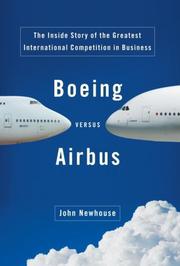
Boeing versus Airbus

Boeing versus Airbus

John Newhouse
2007
T3 272 pages · about 4h 32m to read Open Librarygoodreads

The duopoly rivalry and the 787 and A380 bets.

Summary

Newhouse, who had written The Sporty Game about the commercial aircraft industry two decades earlier, returned to it to cover the competition between Boeing and Airbus through the early 2000s.

The industry analysis is what makes the book useful. Commercial aircraft development requires investment that can exceed a manufacturer's market value, with a payback period measured in decades, against demand that is cyclical and driven by airline profitability. Each programme is effectively a bet on the company. The duopoly structure follows from this: no third entrant can fund the development, and the two incumbents compete on programme decisions made years before the market that will judge them exists.

The strategic divergence is the narrative. Boeing, under management that had moved from Seattle to Chicago and that emphasised shareholder returns after the McDonnell Douglas merger, declined to build a new large aircraft and instead pursued the 787, betting on point-to-point routes served by efficient mid-size long-range aircraft. Airbus bet on the A380, a very large aircraft assuming continued growth in hub-to-hub traffic. Newhouse argues Boeing's read of the market was correct and Airbus's was not.

He also covers the subsidy dispute, with Airbus receiving launch aid from European governments and Boeing benefiting from defence contracts and tax arrangements, and the trade cases each side brought.

Newhouse is critical of Boeing's cultural change after the McDonnell Douglas merger, arguing that financial management displaced engineering authority. That argument was substantially vindicated by the 787's outsourcing problems and later by the 737 MAX. The book predates both. Robison's Flying Blind, also in this reference, covers what followed.

Key takeaways 7

  1. A commercial aircraft programme requires investment comparable to the manufacturer's market value with payback measured in decades.
  2. The duopoly structure follows from development costs that no third entrant can fund rather than from any regulatory barrier.
  3. Boeing bet on point-to-point routes served by efficient mid-size long-range aircraft while Airbus bet on very large hub-to-hub aircraft.
  4. Boeing's read of the route structure was correct and the A380 did not find the market Airbus assumed.
  5. The McDonnell Douglas merger shifted Boeing's culture from engineering authority toward financial management.
  6. Airbus received launch aid from European governments while Boeing benefited from defence contracts and tax arrangements, and both disputed the other's support.
  7. Programme decisions are made years before the market that will judge them exists, which makes them bets on a forecast rather than responses to demand.

Who should read it

Investors and operators in aerospace and other long-cycle capital goods industries who need the economics of programme-level bets and duopoly competition.

Similar books 6

Chosen by shared topics, the entries that hold them, and the people who recommended both.
Peter Robison · 2021

The two 737 MAX crashes and the corporate history at Boeing that led to them.
John Newhouse · 1982

Classic on the bet-the-company economics of airliner programs.
Thomas Petzinger Jr. · 1995

US airlines after 1978 deregulation through Crandall, Lorenzo and Kelleher.

Recommended by: Patrick Collison

Robert J. Serling · 1992

Boeing's history from the B-17 to the 747 and the Saturn rocket.

Scott Davis, Carter Copeland, Rob Wertheimer · 2020

Sell-side analysts comparing Boeing, GE, Honeywell and Danaher.

Recommended by: Patrick O'Shaughnessy
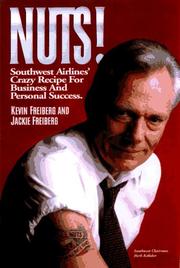
Kevin Freiberg, Jackie Freiberg · 1996

How Southwest Airlines built its low-cost model and its culture under Herb Kelleher.

Where it sits in the reference 2

Companies
Industries

Topics

Company HistoriesTechnology and ComputingAviation and spaceflight