Updates

  1. Person pages list letters, writing, profiles and links as sortable tables with filters, and show each person's companies as links; Fund letters show each letter's description in its own column.
  2. Experts show a checked job title and a short description of each person; 30 more people have photographs.
  3. Every company, fund, university and publication the experts work for has a page listing the people there.
  4. Fund letters show each letter's thesis and filter by it; 225 person pages list the essays, columns and newsletter issues the person wrote.
  5. Person pages list every essay and newsletter issue a person wrote, and their own books as a table in List view.
  6. Recommends shows the five largest kinds of book and the rest under More; browse pictures load sooner.
  7. Podcasts and talks link the original episode, filter by Audio and video or Press, and list each publisher once.
  8. Pages are wider, Recommends has List and Grid, and a filter clicked again turns off.
  9. Book cards sit in a ruled grid with Open Library and Goodreads links and each book's one-line note.
  10. Funds is now Investors; each investor's styles are buttons that filter the table.
  11. Podcasts and talks on a person's page filter by year and publisher and show as a list or a grid of pictures.
  12. Quotes show only people's own words: 472 summaries written by list sites are gone.
  13. Country pages open from Browse again, and every link on the shelf lands on a page.
  14. Subject and person pages show their sections as tabs, and each book appears once on a person's page.
  15. Book cards show the quote, who said it and the source; grids show five cards to a row.
  16. On a phone, a menu holds the sections, search, Updates, Feedback and dark mode.
  17. Feedback takes a screenshot of the page with no browser prompt, opens a screenshot full size when you click it, and clears itself once sent.
  18. Book cards are centred, search names the topic each book sits in, and any text cut short shows whole on hover.
  19. Search groups its results by kind: people, companies, geographies, subjects, topics, books, funds, fund letters and papers.
  20. The Books table lists who recommended each book by name, and the browser tab names the section you are in.
  21. Feedback can take a screenshot of the page, or one you paste or choose, and opens in the corner beside Updates.
  22. Each rail button reopens its section where you left it, and Browse, Table and People show on every book and subject page.
  23. Filters grey out choices that hold nothing instead of hiding them, and Books › People filters by authors or recommenders.
  24. Feedback takes a subject line and up to three screenshots.
  25. Biographies are grouped by the person they are about: 41 new pages, from Abraham Lincoln to Lee Kuan Yew.
  26. Sport splits into 23 sports, and Religion into one topic per faith.
  27. Book lists show as cards: the cover, one recommendation quote and every recommender by name.
  28. Seventeen subjects that had two or three pages under different names now have one page each.
  29. Every page lists its Experts as authors and recommenders, with a link to them on the Experts tab.
  30. Economics, Financial history, Financial panics and Accounting are subjects of their own, with one page per financial crisis.
  31. Book, person and subject pages open inside the app, so the tabs stay in view.
  32. 996 more book covers, and photographs or logos for 227 more people and companies.
  33. Books › Browse shows every subject as cards, and the rail holds Fund letters, Papers, Experts, Books and Funds.
  34. Every topic over 150 books splits into narrower topics, each with a page of its own.

Send feedback

What is it?
Screenshots, up to 3 (optional)
or paste one with Ctrl+V

We use your email only to reply to you.

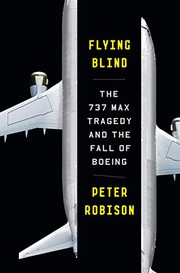
Flying Blind: The 737 MAX Tragedy and the Fa

Flying Blind: The 737 MAX Tragedy and the Fall of Boeing

Peter Robison
2021
T2 333 pages · about 5h 33m to read Open Librarygoodreads

The standard account of the culture shift behind the MAX crashes.

Summary

Robison, a Bloomberg journalist who had covered Boeing for years, wrote about the two 737 MAX crashes that killed three hundred and forty-six people and about the corporate history that produced them.

The technical explanation is clear. Boeing needed to compete with the Airbus A320neo without the cost and the certification delay of a new aircraft, so it fitted larger, more efficient engines to the existing 737 airframe. The engines had to be mounted further forward and higher, which changed the aircraft's pitch behaviour under certain conditions. Boeing added software, the Manoeuvring Characteristics Augmentation System, to counteract this. The system relied on a single angle of attack sensor with no redundancy, could repeatedly command the nose down, and was not described in the pilot manuals or in the training, because a requirement for simulator training would have removed the commercial advantage of an aircraft that pilots could fly without retraining.

The corporate explanation is the book's argument. Robison traces the change after the 1997 McDonnell Douglas merger: the headquarters move to Chicago away from the engineering base, the ascendancy of executives from a financially driven culture, the emphasis on share buybacks and shareholder returns, the pressure on suppliers and on engineering costs, the outsourcing that had already caused the 787's delays, and the relationship with the Federal Aviation Administration under which Boeing employees performed certification work on the regulator's behalf.

Robison's reporting includes internal messages in which employees described the aircraft and the process in damning terms.

The book argues a position and Boeing disputes elements of it. The technical account is consistent with the official investigations. The causal claim connecting the merger's cultural change to the specific engineering decisions is an interpretation, though a widely shared one.

Key takeaways 7

  1. Fitting larger engines to the existing 737 airframe changed the aircraft's pitch behaviour, which software was added to counteract.
  2. The augmentation system relied on a single sensor with no redundancy and could repeatedly command the nose down.
  3. The system was omitted from pilot manuals and training because requiring simulator training would have removed the aircraft's commercial advantage.
  4. Avoiding a requirement for pilot retraining was the commercial objective that determined the engineering and disclosure decisions.
  5. Boeing employees performed certification work on the regulator's behalf, which removed independent scrutiny of the design.
  6. The culture change after the McDonnell Douglas merger shifted authority from engineering toward financial management.
  7. Internal messages show employees identified the problems and the pressure that produced them before the crashes occurred.

Who should read it

Operators and directors in safety-critical industries who need a documented case of how commercial constraints determined engineering and disclosure decisions.

Similar books 6

Chosen by shared topics, the entries that hold them, and the people who recommended both.
John Newhouse · 2007

The duopoly rivalry and the 787 and A380 bets.
John Newhouse · 1982

Classic on the bet-the-company economics of airliner programs.
Thomas Petzinger Jr. · 1995

US airlines after 1978 deregulation through Crandall, Lorenzo and Kelleher.

Recommended by: Patrick Collison

Robert J. Serling · 1992

Boeing's history from the B-17 to the 747 and the Saturn rocket.

Scott Davis, Carter Copeland, Rob Wertheimer · 2020

Sell-side analysts comparing Boeing, GE, Honeywell and Danaher.

Recommended by: Patrick O'Shaughnessy
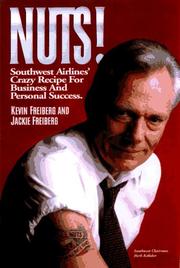
Kevin Freiberg, Jackie Freiberg · 1996

How Southwest Airlines built its low-cost model and its culture under Herb Kelleher.

Where it sits in the reference 2

Companies
Industries

Topics

Company HistoriesTechnology and ComputingAviation and spaceflight