Updates

  1. Person pages list letters, writing, profiles and links as sortable tables with filters, and show each person's companies as links; Fund letters show each letter's description in its own column.
  2. Experts show a checked job title and a short description of each person; 30 more people have photographs.
  3. Every company, fund, university and publication the experts work for has a page listing the people there.
  4. Fund letters show each letter's thesis and filter by it; 225 person pages list the essays, columns and newsletter issues the person wrote.
  5. Person pages list every essay and newsletter issue a person wrote, and their own books as a table in List view.
  6. Recommends shows the five largest kinds of book and the rest under More; browse pictures load sooner.
  7. Podcasts and talks link the original episode, filter by Audio and video or Press, and list each publisher once.
  8. Pages are wider, Recommends has List and Grid, and a filter clicked again turns off.
  9. Book cards sit in a ruled grid with Open Library and Goodreads links and each book's one-line note.
  10. Funds is now Investors; each investor's styles are buttons that filter the table.
  11. Podcasts and talks on a person's page filter by year and publisher and show as a list or a grid of pictures.
  12. Quotes show only people's own words: 472 summaries written by list sites are gone.
  13. Country pages open from Browse again, and every link on the shelf lands on a page.
  14. Subject and person pages show their sections as tabs, and each book appears once on a person's page.
  15. Book cards show the quote, who said it and the source; grids show five cards to a row.
  16. On a phone, a menu holds the sections, search, Updates, Feedback and dark mode.
  17. Feedback takes a screenshot of the page with no browser prompt, opens a screenshot full size when you click it, and clears itself once sent.
  18. Book cards are centred, search names the topic each book sits in, and any text cut short shows whole on hover.
  19. Search groups its results by kind: people, companies, geographies, subjects, topics, books, funds, fund letters and papers.
  20. The Books table lists who recommended each book by name, and the browser tab names the section you are in.
  21. Feedback can take a screenshot of the page, or one you paste or choose, and opens in the corner beside Updates.
  22. Each rail button reopens its section where you left it, and Browse, Table and People show on every book and subject page.
  23. Filters grey out choices that hold nothing instead of hiding them, and Books › People filters by authors or recommenders.
  24. Feedback takes a subject line and up to three screenshots.
  25. Biographies are grouped by the person they are about: 41 new pages, from Abraham Lincoln to Lee Kuan Yew.
  26. Sport splits into 23 sports, and Religion into one topic per faith.
  27. Book lists show as cards: the cover, one recommendation quote and every recommender by name.
  28. Seventeen subjects that had two or three pages under different names now have one page each.
  29. Every page lists its Experts as authors and recommenders, with a link to them on the Experts tab.
  30. Economics, Financial history, Financial panics and Accounting are subjects of their own, with one page per financial crisis.
  31. Book, person and subject pages open inside the app, so the tabs stay in view.
  32. 996 more book covers, and photographs or logos for 227 more people and companies.
  33. Books › Browse shows every subject as cards, and the rail holds Fund letters, Papers, Experts, Books and Funds.
  34. Every topic over 150 books splits into narrower topics, each with a page of its own.

Send feedback

What is it?
Screenshots, up to 3 (optional)
or paste one with Ctrl+V

We use your email only to reply to you.

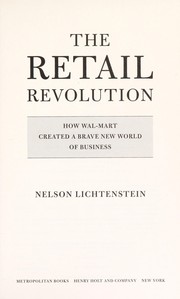
The Retail Revolution: How Wal-Mart Created

The Retail Revolution: How Wal-Mart Created a Brave New World of Business

Nelson Lichtenstein
2009
T3 372 pages · about 6h 12m to read Open Librarygoodreads

Labor historian on Walmart as a new template for capitalism.

Summary

Nelson Lichtenstein is a labour historian, and he argues that Wal-Mart represents a new template for capitalist organisation in the way that the Pennsylvania Railroad, Ford and General Motors did in earlier periods, and that its practices have reshaped the American economy.

His historical argument places the company in the context of American retail development and of the shift of economic power from manufacturers to retailers. He documents how Wal-Mart's scale allowed it to dictate terms to suppliers, requiring price reductions annually and imposing its own logistics and data standards, and how this reversed the relationship in which manufacturers had previously set prices and controlled distribution. Procter and Gamble's accommodation to Wal-Mart is his central case.

The labour material covers the company's employment practices, its opposition to unionisation, its wage and scheduling policies, and the litigation over off-the-clock work and discrimination. Lichtenstein connects these to the broader decline in American labour standards, arguing that Wal-Mart's model set a benchmark that competitors had to match. He also covers the company's origins in the rural South and the cultural and political character that came with it, and the supply chain's relocation to China.

The book is written from a labour perspective and gives limited weight to the consumer benefit that the economic literature attributes to the company. It is more analytical and less journalistic than Bianco's Bully of Bentonville and situates the company in a longer history of American business organisation.

Key takeaways 7

  1. Wal-Mart's scale reversed the relationship between manufacturers and retailers, transferring pricing power to the channel.
  2. Requiring annual supplier price reductions forced manufacturing relocation and reorganisation across entire industries.
  3. Imposing its own logistics and data standards on suppliers made Wal-Mart the coordinator of supply chains it did not own.
  4. Lichtenstein argues that Wal-Mart's employment model set a benchmark competitors had to match, which lowered standards across retail.
  5. The company's origins in the rural South shaped its culture, its labour relations and its political positioning.
  6. Retail rather than manufacturing became the organising centre of the American economy, and Wal-Mart is the case that demonstrates it.
  7. The book is written from a labour perspective and gives limited weight to the consumer surplus the economic literature measures.

Who should read it

Investors and operators who want Wal-Mart analysed as a template for how economic power shifted from manufacturers to retailers.

Similar books 6

Chosen by shared topics, the entries that hold them, and the people who recommended both.

Nelson Lichtenstein · 2006

Edited volume on the supply chain and logistics model.

Anthony Bianco · 2006

Business-press account of supplier and wage pressure.
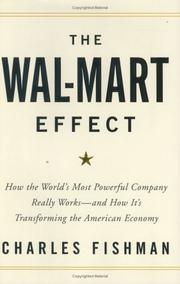
Charles Fishman · 2006

What Wal-Mart's scale does to its suppliers, its towns and prices everywhere.

Bob Ortega · 1998

First major critical history by a WSJ Walmart reporter.

Sam Walton, John Huey · 1992

How Walmart grew from one Arkansas store by cutting costs and prices.

Where it sits in the reference 2

Companies
Biographies

Topics

Company HistoriesSociology and CultureWork, labour and industrial society