Updates

  1. Person pages list letters, writing, profiles and links as sortable tables with filters, and show each person's companies as links; Fund letters show each letter's description in its own column.
  2. Experts show a checked job title and a short description of each person; 30 more people have photographs.
  3. Every company, fund, university and publication the experts work for has a page listing the people there.
  4. Fund letters show each letter's thesis and filter by it; 225 person pages list the essays, columns and newsletter issues the person wrote.
  5. Person pages list every essay and newsletter issue a person wrote, and their own books as a table in List view.
  6. Recommends shows the five largest kinds of book and the rest under More; browse pictures load sooner.
  7. Podcasts and talks link the original episode, filter by Audio and video or Press, and list each publisher once.
  8. Pages are wider, Recommends has List and Grid, and a filter clicked again turns off.
  9. Book cards sit in a ruled grid with Open Library and Goodreads links and each book's one-line note.
  10. Funds is now Investors; each investor's styles are buttons that filter the table.
  11. Podcasts and talks on a person's page filter by year and publisher and show as a list or a grid of pictures.
  12. Quotes show only people's own words: 472 summaries written by list sites are gone.
  13. Country pages open from Browse again, and every link on the shelf lands on a page.
  14. Subject and person pages show their sections as tabs, and each book appears once on a person's page.
  15. Book cards show the quote, who said it and the source; grids show five cards to a row.
  16. On a phone, a menu holds the sections, search, Updates, Feedback and dark mode.
  17. Feedback takes a screenshot of the page with no browser prompt, opens a screenshot full size when you click it, and clears itself once sent.
  18. Book cards are centred, search names the topic each book sits in, and any text cut short shows whole on hover.
  19. Search groups its results by kind: people, companies, geographies, subjects, topics, books, funds, fund letters and papers.
  20. The Books table lists who recommended each book by name, and the browser tab names the section you are in.
  21. Feedback can take a screenshot of the page, or one you paste or choose, and opens in the corner beside Updates.
  22. Each rail button reopens its section where you left it, and Browse, Table and People show on every book and subject page.
  23. Filters grey out choices that hold nothing instead of hiding them, and Books › People filters by authors or recommenders.
  24. Feedback takes a subject line and up to three screenshots.
  25. Biographies are grouped by the person they are about: 41 new pages, from Abraham Lincoln to Lee Kuan Yew.
  26. Sport splits into 23 sports, and Religion into one topic per faith.
  27. Book lists show as cards: the cover, one recommendation quote and every recommender by name.
  28. Seventeen subjects that had two or three pages under different names now have one page each.
  29. Every page lists its Experts as authors and recommenders, with a link to them on the Experts tab.
  30. Economics, Financial history, Financial panics and Accounting are subjects of their own, with one page per financial crisis.
  31. Book, person and subject pages open inside the app, so the tabs stay in view.
  32. 996 more book covers, and photographs or logos for 227 more people and companies.
  33. Books › Browse shows every subject as cards, and the rail holds Fund letters, Papers, Experts, Books and Funds.
  34. Every topic over 150 books splits into narrower topics, each with a page of its own.

Send feedback

What is it?
Screenshots, up to 3 (optional)
or paste one with Ctrl+V

We use your email only to reply to you.

Hustle and Gig

Hustle and Gig

Alexandrea J. Ravenelle
2019
T4 288 pages · about 4h 48m to read Open Librarygoodreads

Sociology of platform work across Uber and peers.

Summary

Alexandrea Ravenelle interviewed about eighty workers on Uber, Airbnb, TaskRabbit and Kitchensurfing in New York City, and reports what they said about pay, risk and recourse. She sorts them into three groups: Success Stories, who use the platforms as intended and do well; Strivers, who have other income and treat gig work as a supplement; and Strugglers, who depend on it and cannot make it produce a living.

Her central claim is that platform work reverses a century of labour protection. Workers classified as independent contractors have no minimum wage, no workers' compensation, no unemployment insurance and no protection from discrimination or harassment. Ravenelle documents specific consequences: drivers assaulted by passengers with no employer to report to, cleaners injured in strangers' homes, hosts whose apartments were damaged, workers deactivated by algorithm with no appeal. She argues that the sharing-economy vocabulary of entrepreneurship and flexibility conceals a transfer of risk that the New Deal settlement had assigned to employers.

The sample is small, self-selected and confined to one city at one moment, and Ravenelle does not attempt to measure how representative her respondents are. She also gives limited weight to workers who value the flexibility genuinely, though the Success Stories chapter acknowledges them. The book predates the California legislation and the European reclassification rulings that followed, so the regulatory discussion is dated. Its strength is the specific documentation of what happens when something goes wrong and no employment relationship exists.

Key takeaways 7

  1. Platform companies transferred to workers the risks that employment law had assigned to employers, including injury, equipment and idle time.
  2. Independent contractor classification removes minimum wage, overtime, workers' compensation and anti-discrimination protection simultaneously.
  3. Algorithmic deactivation functions as dismissal without notice, cause or appeal.
  4. Workers who succeed on these platforms generally have capital, such as a car or an apartment, rather than superior skill or effort.
  5. The sharing-economy vocabulary of entrepreneurship encourages workers to attribute structural outcomes to personal failure.
  6. Platform workers who are assaulted or robbed on the job frequently do not report it, because they fear deactivation more than they expect help.
  7. Ravenelle argues that gig work resembles piecework of the early twentieth century rather than any new economic form.

Who should read it

Founders and investors building marketplace businesses who need to understand the worker-side risks that determine regulatory exposure and supply retention.

Similar books 6

Chosen by shared topics, the entries that hold them, and the people who recommended both.

Sarah Kessler · 2018

The gig-work model Uber's unit economics depend on.

Alex Rosenblat · 2018

Field research on algorithmic management of drivers.

Mike Isaac · 2019

How Uber grew on subsidies and aggression until its founder was pushed out in 2017.

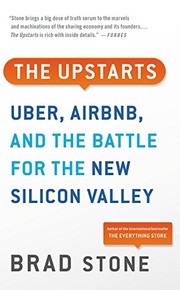
Brad Stone · 2017

How Uber and Airbnb built businesses in regulated markets by acting first.

Recommended by: Sean Ellis

Mary L. Gray, Siddharth Suri · 2019

The hidden on-demand workers who make automated online services work.

Jeremias Prassl · 2018

The gig economy's promises and realities, and the law on classifying its workers.

Where it sits in the reference 2

Companies
Business models

Topics

Sociology and CultureWork, labour and industrial society