Updates

  1. Person pages list letters, writing, profiles and links as sortable tables with filters, and show each person's companies as links; Fund letters show each letter's description in its own column.
  2. Experts show a checked job title and a short description of each person; 30 more people have photographs.
  3. Every company, fund, university and publication the experts work for has a page listing the people there.
  4. Fund letters show each letter's thesis and filter by it; 225 person pages list the essays, columns and newsletter issues the person wrote.
  5. Person pages list every essay and newsletter issue a person wrote, and their own books as a table in List view.
  6. Recommends shows the five largest kinds of book and the rest under More; browse pictures load sooner.
  7. Podcasts and talks link the original episode, filter by Audio and video or Press, and list each publisher once.
  8. Pages are wider, Recommends has List and Grid, and a filter clicked again turns off.
  9. Book cards sit in a ruled grid with Open Library and Goodreads links and each book's one-line note.
  10. Funds is now Investors; each investor's styles are buttons that filter the table.
  11. Podcasts and talks on a person's page filter by year and publisher and show as a list or a grid of pictures.
  12. Quotes show only people's own words: 472 summaries written by list sites are gone.
  13. Country pages open from Browse again, and every link on the shelf lands on a page.
  14. Subject and person pages show their sections as tabs, and each book appears once on a person's page.
  15. Book cards show the quote, who said it and the source; grids show five cards to a row.
  16. On a phone, a menu holds the sections, search, Updates, Feedback and dark mode.
  17. Feedback takes a screenshot of the page with no browser prompt, opens a screenshot full size when you click it, and clears itself once sent.
  18. Book cards are centred, search names the topic each book sits in, and any text cut short shows whole on hover.
  19. Search groups its results by kind: people, companies, geographies, subjects, topics, books, funds, fund letters and papers.
  20. The Books table lists who recommended each book by name, and the browser tab names the section you are in.
  21. Feedback can take a screenshot of the page, or one you paste or choose, and opens in the corner beside Updates.
  22. Each rail button reopens its section where you left it, and Browse, Table and People show on every book and subject page.
  23. Filters grey out choices that hold nothing instead of hiding them, and Books › People filters by authors or recommenders.
  24. Feedback takes a subject line and up to three screenshots.
  25. Biographies are grouped by the person they are about: 41 new pages, from Abraham Lincoln to Lee Kuan Yew.
  26. Sport splits into 23 sports, and Religion into one topic per faith.
  27. Book lists show as cards: the cover, one recommendation quote and every recommender by name.
  28. Seventeen subjects that had two or three pages under different names now have one page each.
  29. Every page lists its Experts as authors and recommenders, with a link to them on the Experts tab.
  30. Economics, Financial history, Financial panics and Accounting are subjects of their own, with one page per financial crisis.
  31. Book, person and subject pages open inside the app, so the tabs stay in view.
  32. 996 more book covers, and photographs or logos for 227 more people and companies.
  33. Books › Browse shows every subject as cards, and the rail holds Fund letters, Papers, Experts, Books and Funds.
  34. Every topic over 150 books splits into narrower topics, each with a page of its own.

Send feedback

What is it?
Screenshots, up to 3 (optional)
or paste one with Ctrl+V

We use your email only to reply to you.

Gigged

Gigged

Sarah Kessler
2018
T3 304 pages · about 5h 4m to read Open Librarygoodreads

The gig-work model Uber's unit economics depend on.

Summary

Kessler, a technology journalist, reported on the gig economy by following individual workers over an extended period rather than by analysing platform data.

The subjects include an Uber driver, a Manhattan-based technology worker using freelance platforms, a Kansas City resident attempting to earn through online task work, a woman doing care work through a platform, and an employee of a company that attempted to convert its contractors to employees. Following the same people over time is what distinguishes the reporting: it captures how earnings, algorithm changes, platform policy shifts and personal circumstances interact.

The findings complicate the standard accounts on both sides. The flexibility is genuine and several subjects valued it. The earnings are lower than the platforms advertise once vehicle costs, unpaid waiting time, self-employment taxes and the absence of benefits are accounted for. Algorithmic management directs work and imposes discipline without any manager, and workers cannot appeal decisions to anyone. Platform policy changes alter earnings unilaterally and without notice. The absence of employment status removes unemployment insurance, workers' compensation, sick pay and the ability to organise.

Kessler also covers the technology industry's framing of this work as entrepreneurship and the political debate over classification, including the legislative and litigation fights.

The book was published in 2018 and precedes the pandemic's expansion of delivery work, the California Proposition 22 result and the subsequent regulatory developments in Europe and elsewhere. The method, following individuals over time rather than surveying at a point, produces findings about volatility and about algorithmic control that cross-sectional research does not capture.

Key takeaways 7

  1. Following the same gig workers over time reveals earnings volatility that point-in-time surveys do not capture.
  2. Advertised earnings exclude vehicle costs, unpaid waiting time, self-employment taxes and the absence of benefits.
  3. Algorithmic management directs work and imposes discipline with no manager to whom a decision can be appealed.
  4. Platforms change the terms that determine earnings unilaterally and without notice.
  5. Flexibility is genuine and valued by some workers, which the critical accounts understate.
  6. Absence of employment status removes unemployment insurance, workers' compensation and the ability to organise collectively.
  7. Framing this work as entrepreneurship transfers the risks of a business to people who control none of its terms.

Who should read it

Operators building marketplace and platform businesses who need to see how algorithmic management and policy changes are experienced by the workers on them.

Similar books 6

Chosen by shared topics, the entries that hold them, and the people who recommended both.

Alex Rosenblat · 2018

Field research on algorithmic management of drivers.

Alexandrea J. Ravenelle · 2019

Sociology of platform work across Uber and peers.

Mary L. Gray, Siddharth Suri · 2019

The hidden on-demand workers who make automated online services work.

Jeremias Prassl · 2018

The gig economy's promises and realities, and the law on classifying its workers.

Mike Isaac · 2019

How Uber grew on subsidies and aggression until its founder was pushed out in 2017.

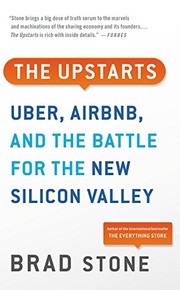
Brad Stone · 2017

How Uber and Airbnb built businesses in regulated markets by acting first.

Recommended by: Sean Ellis

Where it sits in the reference 2

Companies
Business models

Topics

Sociology and CultureTechnology and ComputingWork, labour and industrial societyTech strategy and platform economics