Updates

  1. Person pages list letters, writing, profiles and links as sortable tables with filters, and show each person's companies as links; Fund letters show each letter's description in its own column.
  2. Experts show a checked job title and a short description of each person; 30 more people have photographs.
  3. Every company, fund, university and publication the experts work for has a page listing the people there.
  4. Fund letters show each letter's thesis and filter by it; 225 person pages list the essays, columns and newsletter issues the person wrote.
  5. Person pages list every essay and newsletter issue a person wrote, and their own books as a table in List view.
  6. Recommends shows the five largest kinds of book and the rest under More; browse pictures load sooner.
  7. Podcasts and talks link the original episode, filter by Audio and video or Press, and list each publisher once.
  8. Pages are wider, Recommends has List and Grid, and a filter clicked again turns off.
  9. Book cards sit in a ruled grid with Open Library and Goodreads links and each book's one-line note.
  10. Funds is now Investors; each investor's styles are buttons that filter the table.
  11. Podcasts and talks on a person's page filter by year and publisher and show as a list or a grid of pictures.
  12. Quotes show only people's own words: 472 summaries written by list sites are gone.
  13. Country pages open from Browse again, and every link on the shelf lands on a page.
  14. Subject and person pages show their sections as tabs, and each book appears once on a person's page.
  15. Book cards show the quote, who said it and the source; grids show five cards to a row.
  16. On a phone, a menu holds the sections, search, Updates, Feedback and dark mode.
  17. Feedback takes a screenshot of the page with no browser prompt, opens a screenshot full size when you click it, and clears itself once sent.
  18. Book cards are centred, search names the topic each book sits in, and any text cut short shows whole on hover.
  19. Search groups its results by kind: people, companies, geographies, subjects, topics, books, funds, fund letters and papers.
  20. The Books table lists who recommended each book by name, and the browser tab names the section you are in.
  21. Feedback can take a screenshot of the page, or one you paste or choose, and opens in the corner beside Updates.
  22. Each rail button reopens its section where you left it, and Browse, Table and People show on every book and subject page.
  23. Filters grey out choices that hold nothing instead of hiding them, and Books › People filters by authors or recommenders.
  24. Feedback takes a subject line and up to three screenshots.
  25. Biographies are grouped by the person they are about: 41 new pages, from Abraham Lincoln to Lee Kuan Yew.
  26. Sport splits into 23 sports, and Religion into one topic per faith.
  27. Book lists show as cards: the cover, one recommendation quote and every recommender by name.
  28. Seventeen subjects that had two or three pages under different names now have one page each.
  29. Every page lists its Experts as authors and recommenders, with a link to them on the Experts tab.
  30. Economics, Financial history, Financial panics and Accounting are subjects of their own, with one page per financial crisis.
  31. Book, person and subject pages open inside the app, so the tabs stay in view.
  32. 996 more book covers, and photographs or logos for 227 more people and companies.
  33. Books › Browse shows every subject as cards, and the rail holds Fund letters, Papers, Experts, Books and Funds.
  34. Every topic over 150 books splits into narrower topics, each with a page of its own.

Send feedback

What is it?
Screenshots, up to 3 (optional)
or paste one with Ctrl+V

We use your email only to reply to you.

Super Pumped

Super Pumped

Mike Isaac
2019
T1 387 pages · about 6h 27m to read Open Librarygoodreads

The definitive account of Kalanick's rise and ouster.

Summary

Isaac, a New York Times technology reporter, covers Uber from founding through Travis Kalanick's removal as chief executive in 2017, drawing on extensive sourcing inside the company and on documents. The business material covers the growth model in detail: the use of subsidies to buy both driver supply and rider demand simultaneously, the city-by-city launch playbook run by general managers with substantial autonomy, the deliberate strategy of operating in violation of local regulations and then mobilising users politically when regulators responded, and the capital requirements that made continuous fundraising a core function.

The conduct material is what the book is known for. Isaac documents Greyball, a tool used to identify and deny service to suspected regulators; the surveillance of competitors and of journalists; the acquisition of Lyft rider data; the sexual harassment described in Susan Fowler's blog post and the human resources failures behind it; the handling of a rape case in India including the retrieval of the victim's medical records; and the internal cultural values that rewarded aggression and were used to defend it.

The governance material covers the board's inability to constrain Kalanick because of the voting structure he held, the role of Benchmark's Bill Gurley in eventually forcing the removal, and the Holder report.

Isaac is a reporter and the book is narrative rather than analytical. It does not resolve how much of Uber's growth depended on the conduct described. The account is unfavourable to Kalanick throughout and readers should note that most sources were people who opposed him. It is the standard account of how founder control, capital abundance and a regulation-breaking growth model combined.

Key takeaways 8

  1. Uber subsidised both drivers and riders simultaneously to build both sides of a marketplace, which required continuous large-scale fundraising as a core operational function.
  2. Operating in violation of local regulations and then mobilising users politically was a deliberate strategy rather than an accident of fast growth.
  3. City general managers were given substantial autonomy and aggressive targets, which produced fast expansion and repeated local scandals.
  4. Founder-controlled voting structures prevented the board from removing the chief executive until investors organised outside the formal governance process.
  5. Cultural values that reward aggression get used to justify conduct that the company later cannot defend.
  6. Human resources functions without independent authority cannot address misconduct by people the company considers high performers.
  7. Tools built to evade regulators, including Greyball, created legal exposure disproportionate to any operational benefit.
  8. An investor who forces a founder out damages their own reputation with future founders, which is why the intervention took as long as it did.

Who should read it

Investors and founders who want a documented case of founder control, capital-fuelled growth and the governance failures that follow both.

Who recommended it 6

Anna Chengreported
Kara Swisherreported

Similar books 6

Chosen by shared topics, the entries that hold them, and the people who recommended both.
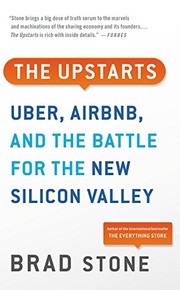
Brad Stone · 2017

How Uber and Airbnb built businesses in regulated markets by acting first.

Recommended by: Sean Ellis

Adam Lashinsky · 2017

Reported from inside Uber just before the 2017 crisis broke.

Recommended by: Alfred Lin

Sarah Kessler · 2018

The gig-work model Uber's unit economics depend on.

Alexandrea J. Ravenelle · 2019

Sociology of platform work across Uber and peers.

Alex Rosenblat · 2018

Field research on algorithmic management of drivers.

Susan Fowler · 2020

Insider memoir by the engineer whose blog post triggered the reckoning.

Where it sits in the reference 3

Companies
Biographies
Business models

Topics

Company HistoriesEntrepreneurship and StartupsFounder Profiles and Startup Stories