Updates

  1. Person pages list letters, writing, profiles and links as sortable tables with filters, and show each person's companies as links; Fund letters show each letter's description in its own column.
  2. Experts show a checked job title and a short description of each person; 30 more people have photographs.
  3. Every company, fund, university and publication the experts work for has a page listing the people there.
  4. Fund letters show each letter's thesis and filter by it; 225 person pages list the essays, columns and newsletter issues the person wrote.
  5. Person pages list every essay and newsletter issue a person wrote, and their own books as a table in List view.
  6. Recommends shows the five largest kinds of book and the rest under More; browse pictures load sooner.
  7. Podcasts and talks link the original episode, filter by Audio and video or Press, and list each publisher once.
  8. Pages are wider, Recommends has List and Grid, and a filter clicked again turns off.
  9. Book cards sit in a ruled grid with Open Library and Goodreads links and each book's one-line note.
  10. Funds is now Investors; each investor's styles are buttons that filter the table.
  11. Podcasts and talks on a person's page filter by year and publisher and show as a list or a grid of pictures.
  12. Quotes show only people's own words: 472 summaries written by list sites are gone.
  13. Country pages open from Browse again, and every link on the shelf lands on a page.
  14. Subject and person pages show their sections as tabs, and each book appears once on a person's page.
  15. Book cards show the quote, who said it and the source; grids show five cards to a row.
  16. On a phone, a menu holds the sections, search, Updates, Feedback and dark mode.
  17. Feedback takes a screenshot of the page with no browser prompt, opens a screenshot full size when you click it, and clears itself once sent.
  18. Book cards are centred, search names the topic each book sits in, and any text cut short shows whole on hover.
  19. Search groups its results by kind: people, companies, geographies, subjects, topics, books, funds, fund letters and papers.
  20. The Books table lists who recommended each book by name, and the browser tab names the section you are in.
  21. Feedback can take a screenshot of the page, or one you paste or choose, and opens in the corner beside Updates.
  22. Each rail button reopens its section where you left it, and Browse, Table and People show on every book and subject page.
  23. Filters grey out choices that hold nothing instead of hiding them, and Books › People filters by authors or recommenders.
  24. Feedback takes a subject line and up to three screenshots.
  25. Biographies are grouped by the person they are about: 41 new pages, from Abraham Lincoln to Lee Kuan Yew.
  26. Sport splits into 23 sports, and Religion into one topic per faith.
  27. Book lists show as cards: the cover, one recommendation quote and every recommender by name.
  28. Seventeen subjects that had two or three pages under different names now have one page each.
  29. Every page lists its Experts as authors and recommenders, with a link to them on the Experts tab.
  30. Economics, Financial history, Financial panics and Accounting are subjects of their own, with one page per financial crisis.
  31. Book, person and subject pages open inside the app, so the tabs stay in view.
  32. 996 more book covers, and photographs or logos for 227 more people and companies.
  33. Books › Browse shows every subject as cards, and the rail holds Fund letters, Papers, Experts, Books and Funds.
  34. Every topic over 150 books splits into narrower topics, each with a page of its own.

Send feedback

What is it?
Screenshots, up to 3 (optional)
or paste one with Ctrl+V

We use your email only to reply to you.

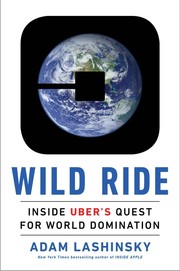
Wild Ride

Wild Ride

Adam Lashinsky
2017
T3 234 pages · about 3h 54m to read Open Librarygoodreads

Reported from inside Uber just before the 2017 crisis broke.

Summary

Lashinsky, a Fortune journalist who had earlier written a book on Apple, reports on Uber during the Travis Kalanick period and the months around his removal in 2017. He interviewed Kalanick at length before the collapse, which gives the book unusual access to how the company's leadership described its own strategy.

The business material covers the mechanics: how Uber grew city by city with local general managers holding wide autonomy and large budgets, how it used driver subsidies and rider discounts funded by venture capital to buy market share, how it fought regulators by mobilising users rather than by negotiating, and how it approached the competitive fights with Lyft in the United States and Didi in China. Lashinsky takes seriously the argument that ride-hailing is a network business where density produces lower wait times and better utilisation, which was the basis for spending so heavily on growth.

The cultural material covers the values Kalanick installed, including principled confrontation and always be hustling, and the consequences: Susan Fowler's account of sexual harassment and the human resources response, the Waymo trade secrets litigation, the Greyball tool used to evade regulators, the executive departures, the Holder report and the board's removal of Kalanick.

The book was written while events were still unfolding and has the strengths and limits of that timing. It does not cover the Khosrowshahi turnaround, the 2019 public offering, the settlement of the driver classification fights, or whether the density argument for profitability was correct, which the following years partly answered. Lashinsky is also more sympathetic to Kalanick's strategic reasoning than most later accounts, which readers can weigh for themselves.

Key takeaways 7

  1. Uber's growth model gave city general managers large autonomy and subsidy budgets, which produced speed and also produced the behaviour that later damaged the company.
  2. Subsidies funded by venture capital were used to buy market share on the theory that density creates a durable local network advantage.
  3. The company treated regulatory conflict as a mobilisation problem, activating riders against city authorities rather than negotiating.
  4. Kalanick's stated values rewarded confrontation and rule-breaking, and the harassment and evasion scandals followed from them rather than contradicting them.
  5. Ride-hailing network effects are local rather than global, which is why Uber could dominate some cities while losing others.
  6. Uber's withdrawal from China in exchange for a Didi stake showed the limits of a capital-intensive share war against a local incumbent.
  7. Investor governance failed for years because founder-friendly share structures left the board unable to act until the scandals became public.

Who should read it

Founders and investors in marketplace businesses who want a close account of aggressive growth strategy and the governance failures that accompanied it.

Who recommended it 1 · 1 direct

Similar books 6

Chosen by shared topics, the entries that hold them, and the people who recommended both.
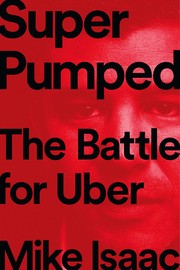
Mike Isaac · 2019

How Uber grew on subsidies and aggression until its founder was pushed out in 2017.

Brad Stone · 2017

How Uber and Airbnb built businesses in regulated markets by acting first.

Recommended by: Sean Ellis

Susan Fowler · 2020

Insider memoir by the engineer whose blog post triggered the reckoning.

John Carreyrou · 2018

How Theranos reached a $9 billion value with blood tests that never worked.

Where it sits in the reference 2

Companies
Biographies

Topics

Company HistoriesEntrepreneurship and StartupsFounder Profiles and Startup Stories