Updates

  1. Person pages list letters, writing, profiles and links as sortable tables with filters, and show each person's companies as links; Fund letters show each letter's description in its own column.
  2. Experts show a checked job title and a short description of each person; 30 more people have photographs.
  3. Every company, fund, university and publication the experts work for has a page listing the people there.
  4. Fund letters show each letter's thesis and filter by it; 225 person pages list the essays, columns and newsletter issues the person wrote.
  5. Person pages list every essay and newsletter issue a person wrote, and their own books as a table in List view.
  6. Recommends shows the five largest kinds of book and the rest under More; browse pictures load sooner.
  7. Podcasts and talks link the original episode, filter by Audio and video or Press, and list each publisher once.
  8. Pages are wider, Recommends has List and Grid, and a filter clicked again turns off.
  9. Book cards sit in a ruled grid with Open Library and Goodreads links and each book's one-line note.
  10. Funds is now Investors; each investor's styles are buttons that filter the table.
  11. Podcasts and talks on a person's page filter by year and publisher and show as a list or a grid of pictures.
  12. Quotes show only people's own words: 472 summaries written by list sites are gone.
  13. Country pages open from Browse again, and every link on the shelf lands on a page.
  14. Subject and person pages show their sections as tabs, and each book appears once on a person's page.
  15. Book cards show the quote, who said it and the source; grids show five cards to a row.
  16. On a phone, a menu holds the sections, search, Updates, Feedback and dark mode.
  17. Feedback takes a screenshot of the page with no browser prompt, opens a screenshot full size when you click it, and clears itself once sent.
  18. Book cards are centred, search names the topic each book sits in, and any text cut short shows whole on hover.
  19. Search groups its results by kind: people, companies, geographies, subjects, topics, books, funds, fund letters and papers.
  20. The Books table lists who recommended each book by name, and the browser tab names the section you are in.
  21. Feedback can take a screenshot of the page, or one you paste or choose, and opens in the corner beside Updates.
  22. Each rail button reopens its section where you left it, and Browse, Table and People show on every book and subject page.
  23. Filters grey out choices that hold nothing instead of hiding them, and Books › People filters by authors or recommenders.
  24. Feedback takes a subject line and up to three screenshots.
  25. Biographies are grouped by the person they are about: 41 new pages, from Abraham Lincoln to Lee Kuan Yew.
  26. Sport splits into 23 sports, and Religion into one topic per faith.
  27. Book lists show as cards: the cover, one recommendation quote and every recommender by name.
  28. Seventeen subjects that had two or three pages under different names now have one page each.
  29. Every page lists its Experts as authors and recommenders, with a link to them on the Experts tab.
  30. Economics, Financial history, Financial panics and Accounting are subjects of their own, with one page per financial crisis.
  31. Book, person and subject pages open inside the app, so the tabs stay in view.
  32. 996 more book covers, and photographs or logos for 227 more people and companies.
  33. Books › Browse shows every subject as cards, and the rail holds Fund letters, Papers, Experts, Books and Funds.
  34. Every topic over 150 books splits into narrower topics, each with a page of its own.

Send feedback

What is it?
Screenshots, up to 3 (optional)
or paste one with Ctrl+V

We use your email only to reply to you.

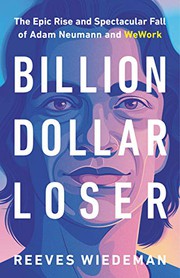
Billion Dollar Loser: The Epic Rise and Spec

Billion Dollar Loser: The Epic Rise and Spectacular Fall of Adam Neumann and WeWork

Reeves Wiedeman
2020
T2 304 pages · about 5h 4m to read Open Librarygoodreads

Character-driven and closest to Neumann himself.

Summary

Wiedeman, a New York magazine reporter, wrote one of the two major accounts of WeWork's rise and failed public offering, based on interviews with several hundred current and former employees, investors and associates.

His emphasis differs from the Wall Street Journal account by Brown and Farrell. Wiedeman spends more time on Neumann personally and on the internal culture: the recruiting of young employees on a mission framing, the mandatory summer camp, the alcohol, the treatment of staff during layoffs, the personal spending, and the way Neumann's family occupied positions in the company. He documents Neumann's purchase of properties leased back to WeWork, the trademark payment for the word We, and the loans taken against his stock.

The business analysis is present but lighter. Wiedeman covers the core economics of long-term leases funding short-term subletting, the losses that grew with each new building, the failed expansions into schools and housing, and the valuation sequence driven by SoftBank.

The two books cover the same events and either serves. Wiedeman's is the better account of the culture and of Neumann as a person; Brown and Farrell's is the better account of the financing, the governance and the bankers. Neither seriously examines whether flexible office space is a viable business, which the sector's subsequent recovery under other operators makes a live question.

Key takeaways 7

  1. WeWork's unit economics worsened with each new building, because expansion added long-term lease obligations against revenue that took years to mature.
  2. Neumann extracted personal value through properties leased back to the company, a payment for the We trademark, and loans against his own stock.
  3. The company recruited young employees on a mission framing that substituted belief for compensation and made internal criticism feel like disloyalty.
  4. Expansion into schools, housing and other categories was pursued without any operating basis, and each initiative consumed capital and management attention.
  5. SoftBank's investments repeatedly rewarded the behaviour that made the company more fragile, and each round validated the previous valuation.
  6. Board members with financial interests in the company's continued fundraising did not exercise any restraining function.
  7. The mission language served a commercial purpose by supporting a technology valuation for a real estate business.

Who should read it

Founders and investors who want the cultural and personal account of the WeWork failure, complementary to the finance-focused Cult of We.

Similar books 6

Chosen by shared topics, the entries that hold them, and the people who recommended both.

Eliot Brown, Maureen Farrell · 2021

WeWork's rise under Adam Neumann, the failed 2019 IPO and SoftBank's rescue.

Lionel Barber · 2024

Masayoshi Son's rise from Kyushu to SoftBank, Yahoo Japan and the Vision Fund.

Recommended by: Andrew Wilkinson

Atsuo Inoue · 2021

Authorised, translated from Japanese; admiring in tone.

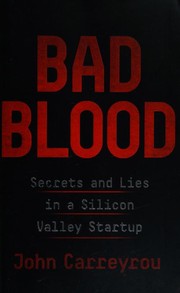
John Carreyrou · 2018

How Theranos reached a $9 billion value with blood tests that never worked.

Where it sits in the reference 4

Companies
Companies
Biographies
Biographies

Topics

Company HistoriesEntrepreneurship and StartupsFounder Profiles and Startup Stories