Updates

  1. Person pages list letters, writing, profiles and links as sortable tables with filters, and show each person's companies as links; Fund letters show each letter's description in its own column.
  2. Experts show a checked job title and a short description of each person; 30 more people have photographs.
  3. Every company, fund, university and publication the experts work for has a page listing the people there.
  4. Fund letters show each letter's thesis and filter by it; 225 person pages list the essays, columns and newsletter issues the person wrote.
  5. Person pages list every essay and newsletter issue a person wrote, and their own books as a table in List view.
  6. Recommends shows the five largest kinds of book and the rest under More; browse pictures load sooner.
  7. Podcasts and talks link the original episode, filter by Audio and video or Press, and list each publisher once.
  8. Pages are wider, Recommends has List and Grid, and a filter clicked again turns off.
  9. Book cards sit in a ruled grid with Open Library and Goodreads links and each book's one-line note.
  10. Funds is now Investors; each investor's styles are buttons that filter the table.
  11. Podcasts and talks on a person's page filter by year and publisher and show as a list or a grid of pictures.
  12. Quotes show only people's own words: 472 summaries written by list sites are gone.
  13. Country pages open from Browse again, and every link on the shelf lands on a page.
  14. Subject and person pages show their sections as tabs, and each book appears once on a person's page.
  15. Book cards show the quote, who said it and the source; grids show five cards to a row.
  16. On a phone, a menu holds the sections, search, Updates, Feedback and dark mode.
  17. Feedback takes a screenshot of the page with no browser prompt, opens a screenshot full size when you click it, and clears itself once sent.
  18. Book cards are centred, search names the topic each book sits in, and any text cut short shows whole on hover.
  19. Search groups its results by kind: people, companies, geographies, subjects, topics, books, funds, fund letters and papers.
  20. The Books table lists who recommended each book by name, and the browser tab names the section you are in.
  21. Feedback can take a screenshot of the page, or one you paste or choose, and opens in the corner beside Updates.
  22. Each rail button reopens its section where you left it, and Browse, Table and People show on every book and subject page.
  23. Filters grey out choices that hold nothing instead of hiding them, and Books › People filters by authors or recommenders.
  24. Feedback takes a subject line and up to three screenshots.
  25. Biographies are grouped by the person they are about: 41 new pages, from Abraham Lincoln to Lee Kuan Yew.
  26. Sport splits into 23 sports, and Religion into one topic per faith.
  27. Book lists show as cards: the cover, one recommendation quote and every recommender by name.
  28. Seventeen subjects that had two or three pages under different names now have one page each.
  29. Every page lists its Experts as authors and recommenders, with a link to them on the Experts tab.
  30. Economics, Financial history, Financial panics and Accounting are subjects of their own, with one page per financial crisis.
  31. Book, person and subject pages open inside the app, so the tabs stay in view.
  32. 996 more book covers, and photographs or logos for 227 more people and companies.
  33. Books › Browse shows every subject as cards, and the rail holds Fund letters, Papers, Experts, Books and Funds.
  34. Every topic over 150 books splits into narrower topics, each with a page of its own.

Send feedback

What is it?
Screenshots, up to 3 (optional)
or paste one with Ctrl+V

We use your email only to reply to you.

Gambling Man: The Wild Ride of Japan's Masay

Gambling Man: The Wild Ride of Japan's Masayoshi Son

Lionel Barber
2024
T2 368 pages · about 6h 8m to read Open Librarygoodreads

The SoftBank side of the WeWork bet, from Son's biographer.

Summary

Barber, formerly editor of the Financial Times, wrote a biography of Masayoshi Son covering his Korean-Japanese background in Kyushu, his education in California, the founding of SoftBank as a software distributor, the Yahoo Japan partnership, the Alibaba investment, the acquisitions of Vodafone Japan, Sprint and Arm, and the Vision Fund.

The pattern Barber documents is consistent across decades: Son makes concentrated bets far larger than his balance sheet supports, financed by debt secured against appreciated assets, and each success funds a larger version of the same behaviour. The twenty million dollar Alibaba investment, which became worth tens of billions, funded the confidence and the collateral for everything afterward. Barber also documents the losses, including the roughly ninety-nine percent fall in SoftBank's share price after 2000, the Sprint acquisition, and the Vision Fund's write-downs on WeWork, Katerra, Greensill, Wirecard and others.

The structural material is the useful part for investors. Barber explains SoftBank's dependence on margin loans against its Alibaba and Arm holdings, the opacity of its net asset value reporting, the governance of the Vision Fund and the terms of the Saudi and Emirati commitments, and the effect of the fund's capital scale on private market valuations across the whole venture industry.

Barber had interviews with Son and with many of the principals. The book is recent and covers events through the Arm listing. Its assessment of whether Son's method is skill or leverage is left open, which is defensible given the record but leaves the central question unresolved.

Key takeaways 7

  1. Son's method has been consistent for decades: concentrated bets far larger than the balance sheet supports, financed by debt against appreciated assets.
  2. The Alibaba investment produced returns so large that it funded and justified every subsequent risk, which makes the record difficult to separate from a single outcome.
  3. SoftBank's structure depends on margin borrowing against listed holdings, which makes it vulnerable to the same price declines it is exposed to through its assets.
  4. The Vision Fund's capital scale changed valuations across the entire venture market by making it possible to fund companies to outspend rather than outcompete rivals.
  5. The Saudi and Emirati commitments to the Vision Fund carried preferred return structures that shifted risk in ways the headline size concealed.
  6. Son's outsider status as a Korean-Japanese in Japan shaped both his willingness to act against consensus and his difficulty in establishing institutional credibility.
  7. SoftBank's reported net asset value depends on marks for private holdings that the company itself sets, which limits what the disclosure establishes.

Who should read it

Investors who want the structural analysis of SoftBank's leverage and the Vision Fund's effect on private markets, alongside the biography.

Who recommended it 1 · 1 direct

Similar books 6

Chosen by shared topics, the entries that hold them, and the people who recommended both.
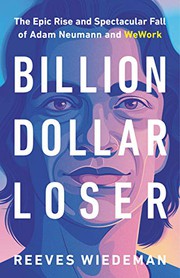
Eliot Brown, Maureen Farrell · 2021

WeWork's rise under Adam Neumann, the failed 2019 IPO and SoftBank's rescue.

Atsuo Inoue · 2021

Authorised, translated from Japanese; admiring in tone.

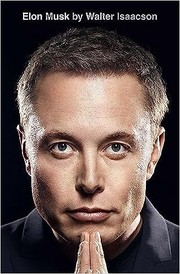
Walter Isaacson · 2023

Two years shadowing Musk, across SpaceX, Tesla, Neuralink and the buying of Twitter.

Walter Isaacson · 2011

Steve Jobs's life and Apple's products, from forty interviews with him and many more.

Where it sits in the reference 3

Companies
Companies
Biographies

Topics

Biography and MemoirEntrepreneurship and StartupsFounders and EntrepreneursFounder Profiles and Startup Stories