Updates

  1. Person pages list letters, writing, profiles and links as sortable tables with filters, and show each person's companies as links; Fund letters show each letter's description in its own column.
  2. Experts show a checked job title and a short description of each person; 30 more people have photographs.
  3. Every company, fund, university and publication the experts work for has a page listing the people there.
  4. Fund letters show each letter's thesis and filter by it; 225 person pages list the essays, columns and newsletter issues the person wrote.
  5. Person pages list every essay and newsletter issue a person wrote, and their own books as a table in List view.
  6. Recommends shows the five largest kinds of book and the rest under More; browse pictures load sooner.
  7. Podcasts and talks link the original episode, filter by Audio and video or Press, and list each publisher once.
  8. Pages are wider, Recommends has List and Grid, and a filter clicked again turns off.
  9. Book cards sit in a ruled grid with Open Library and Goodreads links and each book's one-line note.
  10. Funds is now Investors; each investor's styles are buttons that filter the table.
  11. Podcasts and talks on a person's page filter by year and publisher and show as a list or a grid of pictures.
  12. Quotes show only people's own words: 472 summaries written by list sites are gone.
  13. Country pages open from Browse again, and every link on the shelf lands on a page.
  14. Subject and person pages show their sections as tabs, and each book appears once on a person's page.
  15. Book cards show the quote, who said it and the source; grids show five cards to a row.
  16. On a phone, a menu holds the sections, search, Updates, Feedback and dark mode.
  17. Feedback takes a screenshot of the page with no browser prompt, opens a screenshot full size when you click it, and clears itself once sent.
  18. Book cards are centred, search names the topic each book sits in, and any text cut short shows whole on hover.
  19. Search groups its results by kind: people, companies, geographies, subjects, topics, books, funds, fund letters and papers.
  20. The Books table lists who recommended each book by name, and the browser tab names the section you are in.
  21. Feedback can take a screenshot of the page, or one you paste or choose, and opens in the corner beside Updates.
  22. Each rail button reopens its section where you left it, and Browse, Table and People show on every book and subject page.
  23. Filters grey out choices that hold nothing instead of hiding them, and Books › People filters by authors or recommenders.
  24. Feedback takes a subject line and up to three screenshots.
  25. Biographies are grouped by the person they are about: 41 new pages, from Abraham Lincoln to Lee Kuan Yew.
  26. Sport splits into 23 sports, and Religion into one topic per faith.
  27. Book lists show as cards: the cover, one recommendation quote and every recommender by name.
  28. Seventeen subjects that had two or three pages under different names now have one page each.
  29. Every page lists its Experts as authors and recommenders, with a link to them on the Experts tab.
  30. Economics, Financial history, Financial panics and Accounting are subjects of their own, with one page per financial crisis.
  31. Book, person and subject pages open inside the app, so the tabs stay in view.
  32. 996 more book covers, and photographs or logos for 227 more people and companies.
  33. Books › Browse shows every subject as cards, and the rail holds Fund letters, Papers, Experts, Books and Funds.
  34. Every topic over 150 books splits into narrower topics, each with a page of its own.

Send feedback

What is it?
Screenshots, up to 3 (optional)
or paste one with Ctrl+V

We use your email only to reply to you.

The Money Trap: Lost Illusions Inside the Te

The Money Trap: Lost Illusions Inside the Tech Bubble

Alok Sama
2024
T3 352 pages · about 5h 52m to read Open Librarygoodreads

Insider memoir by SoftBank's former CFO

Summary

Alok Sama was chief financial officer and a senior dealmaker at SoftBank Group during the period of its largest transactions, and this memoir covers those years from inside.

The business material concerns the deals: the acquisition of ARM Holdings in 2016 for over thirty billion dollars, the Sprint position and the attempted merger with T-Mobile, the Nvidia stake, and the formation and early deployment of the Vision Fund with capital from Saudi and Emirati sovereign funds. Sama describes how Masayoshi Son makes decisions, which he presents as intuitive, fast and largely unconstrained by the analysis his own finance function produced.

The personal material concerns a smear campaign conducted against him and another executive, involving planted media stories and surveillance, which Sama attributes to internal rivalry and which was reported at the time. He writes candidly about the psychological effect and about his ambivalence toward the work. The book is a memoir rather than an analysis of SoftBank's returns, and it does not systematically assess whether the Vision Fund's strategy worked. Readers should note that Sama is writing about former colleagues and about a period whose outcomes are still disputed.

Key takeaways 6

  1. Son's investment decisions at SoftBank were made intuitively and quickly, largely independent of the analysis the finance function produced.
  2. The ARM acquisition was pursued as a long-horizon bet on semiconductor architecture rather than on near-term returns.
  3. Vision Fund capital from sovereign investors carried structural obligations, including a preferred return, that shaped deployment pressure.
  4. Sama describes a smear campaign against senior executives that involved planted media stories and surveillance.
  5. Deal execution at scale depends on a small number of relationships rather than on institutional process.
  6. The book is a memoir and does not systematically assess whether the Vision Fund's strategy produced returns.

Who should read it

Investors interested in how capital allocation actually worked inside the largest technology investor of the period, from a participant's perspective.

Similar books 6

Chosen by shared topics, the entries that hold them, and the people who recommended both.

Atsuo Inoue · 2021

Authorised, translated from Japanese; admiring in tone.

Lionel Barber · 2024

Masayoshi Son's rise from Kyushu to SoftBank, Yahoo Japan and the Vision Fund.

Recommended by: Andrew Wilkinson
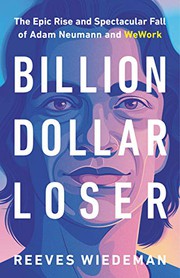
Eliot Brown, Maureen Farrell · 2021

WeWork's rise under Adam Neumann, the failed 2019 IPO and SoftBank's rescue.

Edward O. Thorp · 2017

From beating blackjack with maths to pricing warrants and running a hedge fund.

Philip L. Carret, Philip Carret · 1995

A fund manager of sixty years on investing, business and a long life.

Recommended by: Mohnish Pabrai

Where it sits in the reference 2

Companies
Biographies

Topics

Biography and MemoirInvestingExecutives and Corporate Insiders