Updates

  1. Person pages list letters, writing, profiles and links as sortable tables with filters, and show each person's companies as links; Fund letters show each letter's description in its own column.
  2. Experts show a checked job title and a short description of each person; 30 more people have photographs.
  3. Every company, fund, university and publication the experts work for has a page listing the people there.
  4. Fund letters show each letter's thesis and filter by it; 225 person pages list the essays, columns and newsletter issues the person wrote.
  5. Person pages list every essay and newsletter issue a person wrote, and their own books as a table in List view.
  6. Recommends shows the five largest kinds of book and the rest under More; browse pictures load sooner.
  7. Podcasts and talks link the original episode, filter by Audio and video or Press, and list each publisher once.
  8. Pages are wider, Recommends has List and Grid, and a filter clicked again turns off.
  9. Book cards sit in a ruled grid with Open Library and Goodreads links and each book's one-line note.
  10. Funds is now Investors; each investor's styles are buttons that filter the table.
  11. Podcasts and talks on a person's page filter by year and publisher and show as a list or a grid of pictures.
  12. Quotes show only people's own words: 472 summaries written by list sites are gone.
  13. Country pages open from Browse again, and every link on the shelf lands on a page.
  14. Subject and person pages show their sections as tabs, and each book appears once on a person's page.
  15. Book cards show the quote, who said it and the source; grids show five cards to a row.
  16. On a phone, a menu holds the sections, search, Updates, Feedback and dark mode.
  17. Feedback takes a screenshot of the page with no browser prompt, opens a screenshot full size when you click it, and clears itself once sent.
  18. Book cards are centred, search names the topic each book sits in, and any text cut short shows whole on hover.
  19. Search groups its results by kind: people, companies, geographies, subjects, topics, books, funds, fund letters and papers.
  20. The Books table lists who recommended each book by name, and the browser tab names the section you are in.
  21. Feedback can take a screenshot of the page, or one you paste or choose, and opens in the corner beside Updates.
  22. Each rail button reopens its section where you left it, and Browse, Table and People show on every book and subject page.
  23. Filters grey out choices that hold nothing instead of hiding them, and Books › People filters by authors or recommenders.
  24. Feedback takes a subject line and up to three screenshots.
  25. Biographies are grouped by the person they are about: 41 new pages, from Abraham Lincoln to Lee Kuan Yew.
  26. Sport splits into 23 sports, and Religion into one topic per faith.
  27. Book lists show as cards: the cover, one recommendation quote and every recommender by name.
  28. Seventeen subjects that had two or three pages under different names now have one page each.
  29. Every page lists its Experts as authors and recommenders, with a link to them on the Experts tab.
  30. Economics, Financial history, Financial panics and Accounting are subjects of their own, with one page per financial crisis.
  31. Book, person and subject pages open inside the app, so the tabs stay in view.
  32. 996 more book covers, and photographs or logos for 227 more people and companies.
  33. Books › Browse shows every subject as cards, and the rail holds Fund letters, Papers, Experts, Books and Funds.
  34. Every topic over 150 books splits into narrower topics, each with a page of its own.

Send feedback

What is it?
Screenshots, up to 3 (optional)
or paste one with Ctrl+V

We use your email only to reply to you.

Whistleblower

Whistleblower

Susan Fowler
2020
T3 Open Librarygoodreads

Insider memoir by the engineer whose blog post triggered the reckoning.

Summary

Susan Fowler published a blog post in February 2017 describing her experience as an engineer at Uber, which produced an internal investigation, the departure of numerous executives including the chief executive, and a broader reckoning in the technology industry. This memoir covers her life before and after.

The substantive account of Uber describes what she documented at the time: a manager who propositioned her on her first day on his team, the human resources response that he was a high performer and that this was his first offence, her discovery that other women had reported the same manager, the subsequent obstruction of her transfers, the performance review altered retroactively, and the threat of termination when she continued to report. She documents that she kept records of every interaction, which is what made the account unassailable when she published it.

The memoir also covers her upbringing in rural Arizona, her education, and her experience at other institutions including a Wall Street firm and academic physics, where she describes comparable treatment. She writes about the decision to publish under her own name and about the consequences, including surveillance and pressure. The book is a personal account and does not analyse organisational structure. Its practical content is the demonstration that contemporaneous documentation is what makes a report actionable and what protects the person making it.

Key takeaways 7

  1. Fowler kept contemporaneous written records of every interaction, which is what made her account unassailable when she published it.
  2. Human resources treated the reporting manager's performance as relevant to whether his conduct would be addressed.
  3. She was told the incident was a first offence when other women had reported the same person previously.
  4. Retaliation took the form of blocked transfers and a retroactively altered performance review rather than direct action.
  5. Publishing under her own name rather than anonymously is what made the account credible and what exposed her to consequences.
  6. Fowler describes comparable treatment at other institutions, which places the case in a pattern rather than at one company.
  7. The memoir is a personal account and does not analyse the organisational structures that produced the outcome.

Who should read it

Founders and executives responsible for workplace conduct who want a first-hand account of how internal reporting systems fail and what documentation makes actionable.

Similar books 6

Chosen by shared topics, the entries that hold them, and the people who recommended both.

Emily Chang · 2018

Reporting on the culture that produced Uber's 2017 crisis.

Mike Isaac · 2019

How Uber grew on subsidies and aggression until its founder was pushed out in 2017.

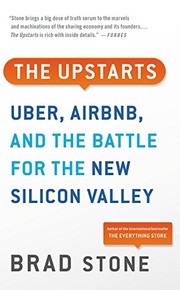
Brad Stone · 2017

How Uber and Airbnb built businesses in regulated markets by acting first.

Recommended by: Sean Ellis

Adam Lashinsky · 2017

Reported from inside Uber just before the 2017 crisis broke.

Recommended by: Alfred Lin

Sarah Kessler · 2018

The gig-work model Uber's unit economics depend on.

Alex Rosenblat · 2018

Field research on algorithmic management of drivers.

Where it sits in the reference 2

Companies
Biographies

Topics

Biography and MemoirTechnology and ComputingSociology and CultureExecutives and Corporate InsidersRace, gender and identityTech company stories