Updates

  1. Person pages list letters, writing, profiles and links as sortable tables with filters, and show each person's companies as links; Fund letters show each letter's description in its own column.
  2. Experts show a checked job title and a short description of each person; 30 more people have photographs.
  3. Every company, fund, university and publication the experts work for has a page listing the people there.
  4. Fund letters show each letter's thesis and filter by it; 225 person pages list the essays, columns and newsletter issues the person wrote.
  5. Person pages list every essay and newsletter issue a person wrote, and their own books as a table in List view.
  6. Recommends shows the five largest kinds of book and the rest under More; browse pictures load sooner.
  7. Podcasts and talks link the original episode, filter by Audio and video or Press, and list each publisher once.
  8. Pages are wider, Recommends has List and Grid, and a filter clicked again turns off.
  9. Book cards sit in a ruled grid with Open Library and Goodreads links and each book's one-line note.
  10. Funds is now Investors; each investor's styles are buttons that filter the table.
  11. Podcasts and talks on a person's page filter by year and publisher and show as a list or a grid of pictures.
  12. Quotes show only people's own words: 472 summaries written by list sites are gone.
  13. Country pages open from Browse again, and every link on the shelf lands on a page.
  14. Subject and person pages show their sections as tabs, and each book appears once on a person's page.
  15. Book cards show the quote, who said it and the source; grids show five cards to a row.
  16. On a phone, a menu holds the sections, search, Updates, Feedback and dark mode.
  17. Feedback takes a screenshot of the page with no browser prompt, opens a screenshot full size when you click it, and clears itself once sent.
  18. Book cards are centred, search names the topic each book sits in, and any text cut short shows whole on hover.
  19. Search groups its results by kind: people, companies, geographies, subjects, topics, books, funds, fund letters and papers.
  20. The Books table lists who recommended each book by name, and the browser tab names the section you are in.
  21. Feedback can take a screenshot of the page, or one you paste or choose, and opens in the corner beside Updates.
  22. Each rail button reopens its section where you left it, and Browse, Table and People show on every book and subject page.
  23. Filters grey out choices that hold nothing instead of hiding them, and Books › People filters by authors or recommenders.
  24. Feedback takes a subject line and up to three screenshots.
  25. Biographies are grouped by the person they are about: 41 new pages, from Abraham Lincoln to Lee Kuan Yew.
  26. Sport splits into 23 sports, and Religion into one topic per faith.
  27. Book lists show as cards: the cover, one recommendation quote and every recommender by name.
  28. Seventeen subjects that had two or three pages under different names now have one page each.
  29. Every page lists its Experts as authors and recommenders, with a link to them on the Experts tab.
  30. Economics, Financial history, Financial panics and Accounting are subjects of their own, with one page per financial crisis.
  31. Book, person and subject pages open inside the app, so the tabs stay in view.
  32. 996 more book covers, and photographs or logos for 227 more people and companies.
  33. Books › Browse shows every subject as cards, and the rail holds Fund letters, Papers, Experts, Books and Funds.
  34. Every topic over 150 books splits into narrower topics, each with a page of its own.

Send feedback

What is it?
Screenshots, up to 3 (optional)
or paste one with Ctrl+V

We use your email only to reply to you.

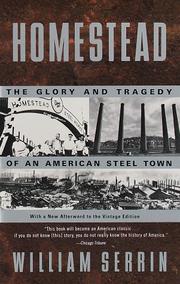
Homestead: The Glory and Tragedy of an Ameri

Homestead: The Glory and Tragedy of an American Steel Town

William Serrin
1992
T2 456 pages · about 7h 36m to read Open Librarygoodreads

A century of the town Carnegie built and broke.

Summary

William Serrin, a former New York Times labour correspondent, traces a single Pennsylvania mill town from Andrew Carnegie's purchase of the works in 1883 to the day USX shut the plant down in 1986. The 1892 lockout and the gun battle with Pinkerton agents occupy the centre of the book, but Serrin treats that defeat as the start of a ninety-year story rather than its climax. He follows what happened after the Amalgamated Association was broken: twelve-hour days, immigrant labour recruited to divide the workforce, the union's return under the CIO in the late 1930s, the postwar wage settlements, and the slow managerial decision to stop reinvesting in the mill.

The evidence comes from company records, union archives, local newspapers and several hundred interviews with Homestead residents. Serrin knows the town at street level and uses that access to complicate both of the standard stories. He rejects the corporate account in which foreign competition alone killed American steel, and he is equally hard on the United Steelworkers, arguing that the union traded work rules and technological modernisation for wage gains and then had nothing to defend when the orders stopped.

For an investor or operator the book is a long case study in capital allocation inside a mature industry. Serrin documents how U.S. Steel diverted cash from the mills into acquisitions, most conspicuously the purchase of Marathon Oil in 1981, while Homestead's furnaces aged. The book is journalistic rather than quantitative, and readers wanting comparative productivity data on American versus Japanese steelmaking will need to go elsewhere. Its account of the 1892 events has been supplemented by later scholarship, though not overturned.

Key takeaways 7

  1. Carnegie built his cost advantage on continuous reinvestment and on driving labour costs down, and the two policies were deliberately linked.
  2. The 1892 defeat at Homestead removed unions from the American steel industry for roughly forty-five years.
  3. U.S. Steel operated as a price-stabilising combination after 1901 and lost the technical aggressiveness Carnegie's firm had shown.
  4. The union's postwar bargaining strategy secured high wages while conceding management's right to underinvest in plant.
  5. U.S. Steel's purchase of Marathon Oil in 1981 revealed that management no longer believed steel deserved its own capital.
  6. Foreign competition explains part of the industry's collapse but arrived after decades of deferred domestic modernisation.
  7. Company towns generate loyalty that survives the company, which is why Homestead's residents defended an employer that had already left.

Who should read it

Investors and operators who want a ground-level history of how a dominant industrial franchise decays over decades of capital-allocation choices rather than in a single competitive shock.

Similar books 6

Chosen by shared topics, the entries that hold them, and the people who recommended both.

Robert Hessen · 1975

Charles Schwab's rise from Carnegie's mill to head US Steel, then build Bethlehem.
David P. Demarest · 1992

Documentary history of the strike, assembled from contemporary sources.

Jessica Gordon Nembhard · 2014

African American co-operative economics, a history largely written out.
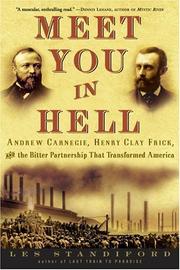
Les Standiford · 2005

How the Homestead strike turned Carnegie and Frick's partnership into a feud.
Where it sits in the reference 2

Biographies
Industries

Topics

General HistorySociology and CultureAmerican HistoryWork, labour and industrial society