Updates

  1. Person pages list letters, writing, profiles and links as sortable tables with filters, and show each person's companies as links; Fund letters show each letter's description in its own column.
  2. Experts show a checked job title and a short description of each person; 30 more people have photographs.
  3. Every company, fund, university and publication the experts work for has a page listing the people there.
  4. Fund letters show each letter's thesis and filter by it; 225 person pages list the essays, columns and newsletter issues the person wrote.
  5. Person pages list every essay and newsletter issue a person wrote, and their own books as a table in List view.
  6. Recommends shows the five largest kinds of book and the rest under More; browse pictures load sooner.
  7. Podcasts and talks link the original episode, filter by Audio and video or Press, and list each publisher once.
  8. Pages are wider, Recommends has List and Grid, and a filter clicked again turns off.
  9. Book cards sit in a ruled grid with Open Library and Goodreads links and each book's one-line note.
  10. Funds is now Investors; each investor's styles are buttons that filter the table.
  11. Podcasts and talks on a person's page filter by year and publisher and show as a list or a grid of pictures.
  12. Quotes show only people's own words: 472 summaries written by list sites are gone.
  13. Country pages open from Browse again, and every link on the shelf lands on a page.
  14. Subject and person pages show their sections as tabs, and each book appears once on a person's page.
  15. Book cards show the quote, who said it and the source; grids show five cards to a row.
  16. On a phone, a menu holds the sections, search, Updates, Feedback and dark mode.
  17. Feedback takes a screenshot of the page with no browser prompt, opens a screenshot full size when you click it, and clears itself once sent.
  18. Book cards are centred, search names the topic each book sits in, and any text cut short shows whole on hover.
  19. Search groups its results by kind: people, companies, geographies, subjects, topics, books, funds, fund letters and papers.
  20. The Books table lists who recommended each book by name, and the browser tab names the section you are in.
  21. Feedback can take a screenshot of the page, or one you paste or choose, and opens in the corner beside Updates.
  22. Each rail button reopens its section where you left it, and Browse, Table and People show on every book and subject page.
  23. Filters grey out choices that hold nothing instead of hiding them, and Books › People filters by authors or recommenders.
  24. Feedback takes a subject line and up to three screenshots.
  25. Biographies are grouped by the person they are about: 41 new pages, from Abraham Lincoln to Lee Kuan Yew.
  26. Sport splits into 23 sports, and Religion into one topic per faith.
  27. Book lists show as cards: the cover, one recommendation quote and every recommender by name.
  28. Seventeen subjects that had two or three pages under different names now have one page each.
  29. Every page lists its Experts as authors and recommenders, with a link to them on the Experts tab.
  30. Economics, Financial history, Financial panics and Accounting are subjects of their own, with one page per financial crisis.
  31. Book, person and subject pages open inside the app, so the tabs stay in view.
  32. 996 more book covers, and photographs or logos for 227 more people and companies.
  33. Books › Browse shows every subject as cards, and the rail holds Fund letters, Papers, Experts, Books and Funds.
  34. Every topic over 150 books splits into narrower topics, each with a page of its own.

Send feedback

What is it?
Screenshots, up to 3 (optional)
or paste one with Ctrl+V

We use your email only to reply to you.

Steel Titan: The Life of Charles M. Schwab

Steel Titan: The Life of Charles M. Schwab

Robert Hessen
1975
T2 376 pages · about 6h 16m to read Open Librarygoodreads

The operator Carnegie promoted; the best view of how the mills ran.

Summary

Robert Hessen wrote the standard biography of Charles Schwab, who rose from stake driver at Andrew Carnegie's Braddock works to president of Carnegie Steel by his mid-thirties, became the first president of United States Steel, and then built Bethlehem Steel into the second largest American producer.

The business material covers three distinct careers. At Carnegie Steel, Schwab ran the Homestead works after 1892 and then the whole company, and Hessen documents his operating methods, particularly his handling of men and his use of competition between shifts and plants. The 1900 dinner speech at the University Club in New York, in which he described the possibilities of a consolidated steel industry to an audience including J. P. Morgan, led directly to the formation of United States Steel in 1901. Schwab resigned from that company within two years, partly over conflicts with the board and partly over publicity about his gambling in Monte Carlo.

The Bethlehem chapters are the most interesting for an operator. Schwab acquired the company personally and rebuilt it around the grey rolled wide-flange structural beam developed by Henry Grey, which Bethlehem alone could produce and which changed building construction. Hessen documents the financing, the shipbuilding and armaments business during the First World War, and Schwab's eventual loss of his fortune in the 1930s. Hessen is sympathetic to his subject and writes from a position broadly favourable to industrial capitalism, which readers should note.

Key takeaways 7

  1. Schwab's advantage as an operator was managing men rather than technical knowledge, and Hessen documents the specific methods.
  2. His 1900 speech to an audience including Morgan produced the consolidation that became United States Steel.
  3. Schwab left United States Steel within two years because a consolidation built to stabilise prices had no use for his competitive instincts.
  4. Bethlehem's position was built on an exclusive licence for the Grey wide-flange structural beam, which changed the economics of tall buildings.
  5. Acquiring Bethlehem personally rather than corporately let Schwab commit to a single technology bet that a board would have refused.
  6. First World War armaments and shipbuilding orders supplied the capital that funded Bethlehem's expansion into a major producer.
  7. Schwab lost his fortune through personal borrowing and spending, which Hessen treats as continuous with the risk appetite that built it.

Who should read it

Operators and investors interested in industrial leadership and in how a single technology licence created a durable competitive position.

Similar books 6

Chosen by shared topics, the entries that hold them, and the people who recommended both.
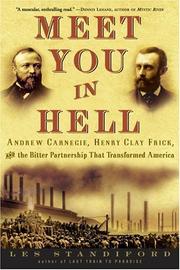
Les Standiford · 2005

How the Homestead strike turned Carnegie and Frick's partnership into a feud.
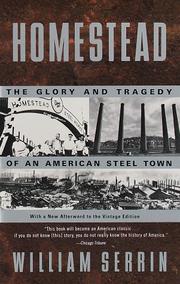
William Serrin · 1992

A Pennsylvania steel town from Carnegie's purchase in 1883 to the 1986 closure.

Quentin R. Skrabec · 2010

Henry Clay Frick: Carnegie's partner, the Homestead Strike and his philanthropy.

Matthew Josephson · 1934

How Vanderbilt, Gould, Rockefeller, Morgan and others built 19th-century fortunes.

Recommended by: Larry Ellison

Charles R. Morris · 2005

Carnegie, Rockefeller, Gould and Morgan and the economy they built

“on how four great builders of the 19th century built the world we live in today” — Marc Andreessen

Source: @pmarca, companion thread to 'It's Time to Build'

Recommended by: Marc Andreessen

David Nasaw · 2006

Carnegie's rise from a bobbin boy of thirteen to the richest man in the world.

Where it sits in the reference 2

Biographies
Industries

Topics

Biography and MemoirGeneral HistoryTycoons and Business DynastiesEconomic and Business HistoryAmerican industrialists