Updates

  1. Person pages list letters, writing, profiles and links as sortable tables with filters, and show each person's companies as links; Fund letters show each letter's description in its own column.
  2. Experts show a checked job title and a short description of each person; 30 more people have photographs.
  3. Every company, fund, university and publication the experts work for has a page listing the people there.
  4. Fund letters show each letter's thesis and filter by it; 225 person pages list the essays, columns and newsletter issues the person wrote.
  5. Person pages list every essay and newsletter issue a person wrote, and their own books as a table in List view.
  6. Recommends shows the five largest kinds of book and the rest under More; browse pictures load sooner.
  7. Podcasts and talks link the original episode, filter by Audio and video or Press, and list each publisher once.
  8. Pages are wider, Recommends has List and Grid, and a filter clicked again turns off.
  9. Book cards sit in a ruled grid with Open Library and Goodreads links and each book's one-line note.
  10. Funds is now Investors; each investor's styles are buttons that filter the table.
  11. Podcasts and talks on a person's page filter by year and publisher and show as a list or a grid of pictures.
  12. Quotes show only people's own words: 472 summaries written by list sites are gone.
  13. Country pages open from Browse again, and every link on the shelf lands on a page.
  14. Subject and person pages show their sections as tabs, and each book appears once on a person's page.
  15. Book cards show the quote, who said it and the source; grids show five cards to a row.
  16. On a phone, a menu holds the sections, search, Updates, Feedback and dark mode.
  17. Feedback takes a screenshot of the page with no browser prompt, opens a screenshot full size when you click it, and clears itself once sent.
  18. Book cards are centred, search names the topic each book sits in, and any text cut short shows whole on hover.
  19. Search groups its results by kind: people, companies, geographies, subjects, topics, books, funds, fund letters and papers.
  20. The Books table lists who recommended each book by name, and the browser tab names the section you are in.
  21. Feedback can take a screenshot of the page, or one you paste or choose, and opens in the corner beside Updates.
  22. Each rail button reopens its section where you left it, and Browse, Table and People show on every book and subject page.
  23. Filters grey out choices that hold nothing instead of hiding them, and Books › People filters by authors or recommenders.
  24. Feedback takes a subject line and up to three screenshots.
  25. Biographies are grouped by the person they are about: 41 new pages, from Abraham Lincoln to Lee Kuan Yew.
  26. Sport splits into 23 sports, and Religion into one topic per faith.
  27. Book lists show as cards: the cover, one recommendation quote and every recommender by name.
  28. Seventeen subjects that had two or three pages under different names now have one page each.
  29. Every page lists its Experts as authors and recommenders, with a link to them on the Experts tab.
  30. Economics, Financial history, Financial panics and Accounting are subjects of their own, with one page per financial crisis.
  31. Book, person and subject pages open inside the app, so the tabs stay in view.
  32. 996 more book covers, and photographs or logos for 227 more people and companies.
  33. Books › Browse shows every subject as cards, and the rail holds Fund letters, Papers, Experts, Books and Funds.
  34. Every topic over 150 books splits into narrower topics, each with a page of its own.

Send feedback

What is it?
Screenshots, up to 3 (optional)
or paste one with Ctrl+V

We use your email only to reply to you.

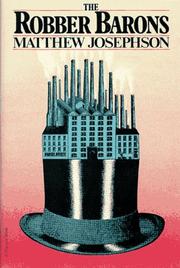
The Robber Barons

The Robber Barons

Matthew Josephson
1934
T2 Open Librarygoodreads

The framing of Rockefeller's generation that shaped US policy.

Summary

Josephson wrote this in 1934, at the depth of the Depression, and it fixed the popular American image of the nineteenth-century industrialists. It covers Vanderbilt, Gould, Fisk, Drew, Carnegie, Rockefeller, Morgan, Harriman and Frick, from the Civil War through the consolidation era.

The argument is that these fortunes were built by financial manipulation, political corruption, rate discrimination, watered stock and the deliberate destruction of competitors rather than by productive innovation. Josephson documents the Erie war, the Credit Mobilier scandal, the railroad rate rebates that let Standard Oil destroy rivals, the Homestead strike, and the corner attempts and stock manipulations of the period. He treats the resulting industrial consolidation as expropriation and connects it directly to the concentration of wealth that he saw producing the Depression.

The book has been contested for ninety years. Business historians including Chandler and Alfred Sloan's biographers argue that Josephson underweights the genuine organisational and technical achievement of the period, particularly the productivity gains from integrated railroads and from Rockefeller's refining efficiency, and that his sources are frequently muckraking journalism rather than records. Josephson was a literary figure writing with an explicit political purpose, and the term robber baron itself is his contribution to the language. It remains worth reading because it is the origin of the critical account, because the specific corruption it documents did happen, and because it shows how a period of consolidation looks from the losing side.

Key takeaways 7

  1. The great nineteenth-century American fortunes were built substantially through stock manipulation, political purchase and rate discrimination rather than through operating innovation.
  2. Railroad rebates and drawbacks gave Standard Oil a cost advantage that no rival refiner could match regardless of operating efficiency.
  3. Control of a railroad was primarily a financial position rather than an operating one, and the securities were manipulated independently of the underlying business.
  4. Legislative bodies at state and federal level were routinely purchased, and the cost of doing so was a normal business expense in the period.
  5. Industrial consolidation eliminated the competition that the consolidators had used to acquire their positions.
  6. The concentration of wealth produced in the consolidation era created the structural conditions Josephson blamed for the Depression.
  7. Philanthropy by the industrialists functioned as reputational repair undertaken after the fortunes were secure.

Who should read it

Readers who want the founding critical account of American industrial consolidation, understood as argument from a particular moment rather than settled history.

Who recommended it 1

Similar books 6

Chosen by shared topics, the entries that hold them, and the people who recommended both.

Charles R. Morris · 2005

Carnegie, Rockefeller, Gould and Morgan and the economy they built

“on how four great builders of the 19th century built the world we live in today” — Marc Andreessen

Source: @pmarca, companion thread to 'It's Time to Build'

Recommended by: Marc Andreessen

David Nasaw · 2012

Joseph P. Kennedy's life in banking, film, the stock market and politics.

Recommended by: Mohnish Pabrai, Morgan Housel
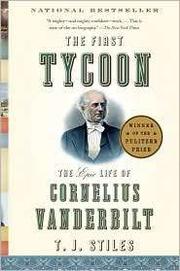
T. J. Stiles · 2009

Vanderbilt's rise through ferries, steamships and railroads.

Recommended by: Mohnish Pabrai
Naomi R. Lamoreaux · 1985

Why the first merger wave happened and why most of it disappointed.
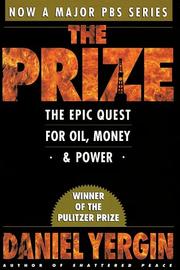
Daniel Yergin · 1991

The history of oil from the first Pennsylvania well to the Gulf War.

Ron Chernow · 1998

How Rockefeller built Standard Oil, faced its breakup and gave his fortune away.

“…books I've recommended, highlighted to death, or forced on friends.” — Andrew Wilkinson

Source: Andrew Wilkinson's Bookshelf, neverenough.com

Recommended by: Andrew Wilkinson, Charlie Munger and 12 others

Where it sits in the reference 4

Companies
Biographies
Business themes
Financial history

Topics

General HistoryBiography and MemoirTycoons and Business DynastiesEconomic and Business HistoryAmerican industrialists