Updates

  1. Person pages list letters, writing, profiles and links as sortable tables with filters, and show each person's companies as links; Fund letters show each letter's description in its own column.
  2. Experts show a checked job title and a short description of each person; 30 more people have photographs.
  3. Every company, fund, university and publication the experts work for has a page listing the people there.
  4. Fund letters show each letter's thesis and filter by it; 225 person pages list the essays, columns and newsletter issues the person wrote.
  5. Person pages list every essay and newsletter issue a person wrote, and their own books as a table in List view.
  6. Recommends shows the five largest kinds of book and the rest under More; browse pictures load sooner.
  7. Podcasts and talks link the original episode, filter by Audio and video or Press, and list each publisher once.
  8. Pages are wider, Recommends has List and Grid, and a filter clicked again turns off.
  9. Book cards sit in a ruled grid with Open Library and Goodreads links and each book's one-line note.
  10. Funds is now Investors; each investor's styles are buttons that filter the table.
  11. Podcasts and talks on a person's page filter by year and publisher and show as a list or a grid of pictures.
  12. Quotes show only people's own words: 472 summaries written by list sites are gone.
  13. Country pages open from Browse again, and every link on the shelf lands on a page.
  14. Subject and person pages show their sections as tabs, and each book appears once on a person's page.
  15. Book cards show the quote, who said it and the source; grids show five cards to a row.
  16. On a phone, a menu holds the sections, search, Updates, Feedback and dark mode.
  17. Feedback takes a screenshot of the page with no browser prompt, opens a screenshot full size when you click it, and clears itself once sent.
  18. Book cards are centred, search names the topic each book sits in, and any text cut short shows whole on hover.
  19. Search groups its results by kind: people, companies, geographies, subjects, topics, books, funds, fund letters and papers.
  20. The Books table lists who recommended each book by name, and the browser tab names the section you are in.
  21. Feedback can take a screenshot of the page, or one you paste or choose, and opens in the corner beside Updates.
  22. Each rail button reopens its section where you left it, and Browse, Table and People show on every book and subject page.
  23. Filters grey out choices that hold nothing instead of hiding them, and Books › People filters by authors or recommenders.
  24. Feedback takes a subject line and up to three screenshots.
  25. Biographies are grouped by the person they are about: 41 new pages, from Abraham Lincoln to Lee Kuan Yew.
  26. Sport splits into 23 sports, and Religion into one topic per faith.
  27. Book lists show as cards: the cover, one recommendation quote and every recommender by name.
  28. Seventeen subjects that had two or three pages under different names now have one page each.
  29. Every page lists its Experts as authors and recommenders, with a link to them on the Experts tab.
  30. Economics, Financial history, Financial panics and Accounting are subjects of their own, with one page per financial crisis.
  31. Book, person and subject pages open inside the app, so the tabs stay in view.
  32. 996 more book covers, and photographs or logos for 227 more people and companies.
  33. Books › Browse shows every subject as cards, and the rail holds Fund letters, Papers, Experts, Books and Funds.
  34. Every topic over 150 books splits into narrower topics, each with a page of its own.

Send feedback

What is it?
Screenshots, up to 3 (optional)
or paste one with Ctrl+V

We use your email only to reply to you.

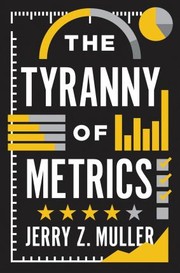
The Tyranny of Metrics

The Tyranny of Metrics

Jerry Z. Muller
2018
T2 237 pages · about 3h 57m to read Open Librarygoodreads

Summary

Muller, a historian, argues that organisations across sectors have adopted a belief he calls metric fixation, and that it damages the activities it is meant to improve.

He defines metric fixation as a cluster of beliefs: that it is possible and desirable to replace judgement based on experience with numerical indicators of comparative performance, that making these public ensures accountability, and that motivating people through rewards and penalties attached to measured performance improves it.

The failure mechanisms he identifies are specific. Goal displacement occurs when people pursue the measure rather than the purpose it was meant to represent. Measuring the most easily quantified aspects of a job causes the rest to be neglected, and the easily measured is rarely the most important. Short-termism follows because measurable results arrive faster than the outcomes that matter. Gaming takes several forms: creaming, where organisations select the easiest cases to improve their numbers; lowering standards to raise pass rates; and outright falsification.

The case material covers education, where school and university rankings changed institutional behaviour without improving learning; medicine, where surgeon mortality rankings caused surgeons to refuse high-risk patients; policing, where crime statistics were manipulated through reclassification; the military, where Vietnam-era body counts became the measure of progress; business, where pay linked to short-term financial metrics produced value destruction; and foreign aid and charity.

Muller does not argue against measurement. His position is that measurement should support judgement rather than replace it, that metrics should be developed by the people doing the work rather than imposed, and that they should not be tied to reward and punishment.

The argument is not new, since it restates Campbell's law and Goodhart's law, and the evidence is a collection of cases rather than a systematic assessment of when measurement helps. Muller acknowledges this and the book is short and clearly argued.

Key takeaways 7

  1. Attaching rewards and penalties to a measure causes people to pursue the measure rather than the purpose it represents.
  2. The most easily quantified aspects of a job are rarely the most important, so measurement systematically distorts effort.
  3. Publishing surgeon mortality rates caused surgeons to refuse the highest-risk patients, which harmed the patients most in need of surgery.
  4. Organisations select the easiest cases to improve their reported performance, which excludes the people the programme exists to serve.
  5. Metrics should be developed by the people doing the work rather than imposed from outside, or they will measure the wrong things.
  6. Measurement should inform judgement rather than replace it, and the substitution is what causes the damage.
  7. Compensation tied to short-term financial measures reliably produces decisions that destroy longer-term value.

Who should read it

Executives designing performance measurement and incentive systems who need the specific failure modes catalogued before they build one.

Similar books 6

Chosen by shared topics, the entries that hold them, and the people who recommended both.

Robert Jackall · 1988

Recommended by: Patrick Collison

Gillian Tett · 2015

How the way organisations divide work blinds them, and how some break down silos.

“Gillian Tett's new book the Silo Effect, a thoughtful discussion of the downside of narrow specialisation.” — Seth Klarman

Source: Klarman on Gillian Tett on the downside of specialisation

Recommended by: Seth Klarman

James C. Scott · 1998

Why large state plans fail when they override local, practical knowledge.

Peter F. Drucker · 2003

Selections on community and society

Where it sits in the reference 4

Business themes
Mental models
Mental models
Business themes

Topics

Sociology and CultureBusiness and ManagementPolitics and GovernmentRegulation, central banks and public policyWork, labour and industrial society