Updates

  1. Person pages list letters, writing, profiles and links as sortable tables with filters, and show each person's companies as links; Fund letters show each letter's description in its own column.
  2. Experts show a checked job title and a short description of each person; 30 more people have photographs.
  3. Every company, fund, university and publication the experts work for has a page listing the people there.
  4. Fund letters show each letter's thesis and filter by it; 225 person pages list the essays, columns and newsletter issues the person wrote.
  5. Person pages list every essay and newsletter issue a person wrote, and their own books as a table in List view.
  6. Recommends shows the five largest kinds of book and the rest under More; browse pictures load sooner.
  7. Podcasts and talks link the original episode, filter by Audio and video or Press, and list each publisher once.
  8. Pages are wider, Recommends has List and Grid, and a filter clicked again turns off.
  9. Book cards sit in a ruled grid with Open Library and Goodreads links and each book's one-line note.
  10. Funds is now Investors; each investor's styles are buttons that filter the table.
  11. Podcasts and talks on a person's page filter by year and publisher and show as a list or a grid of pictures.
  12. Quotes show only people's own words: 472 summaries written by list sites are gone.
  13. Country pages open from Browse again, and every link on the shelf lands on a page.
  14. Subject and person pages show their sections as tabs, and each book appears once on a person's page.
  15. Book cards show the quote, who said it and the source; grids show five cards to a row.
  16. On a phone, a menu holds the sections, search, Updates, Feedback and dark mode.
  17. Feedback takes a screenshot of the page with no browser prompt, opens a screenshot full size when you click it, and clears itself once sent.
  18. Book cards are centred, search names the topic each book sits in, and any text cut short shows whole on hover.
  19. Search groups its results by kind: people, companies, geographies, subjects, topics, books, funds, fund letters and papers.
  20. The Books table lists who recommended each book by name, and the browser tab names the section you are in.
  21. Feedback can take a screenshot of the page, or one you paste or choose, and opens in the corner beside Updates.
  22. Each rail button reopens its section where you left it, and Browse, Table and People show on every book and subject page.
  23. Filters grey out choices that hold nothing instead of hiding them, and Books › People filters by authors or recommenders.
  24. Feedback takes a subject line and up to three screenshots.
  25. Biographies are grouped by the person they are about: 41 new pages, from Abraham Lincoln to Lee Kuan Yew.
  26. Sport splits into 23 sports, and Religion into one topic per faith.
  27. Book lists show as cards: the cover, one recommendation quote and every recommender by name.
  28. Seventeen subjects that had two or three pages under different names now have one page each.
  29. Every page lists its Experts as authors and recommenders, with a link to them on the Experts tab.
  30. Economics, Financial history, Financial panics and Accounting are subjects of their own, with one page per financial crisis.
  31. Book, person and subject pages open inside the app, so the tabs stay in view.
  32. 996 more book covers, and photographs or logos for 227 more people and companies.
  33. Books › Browse shows every subject as cards, and the rail holds Fund letters, Papers, Experts, Books and Funds.
  34. Every topic over 150 books splits into narrower topics, each with a page of its own.

Send feedback

What is it?
Screenshots, up to 3 (optional)
or paste one with Ctrl+V

We use your email only to reply to you.

CM

Capitalism, markets and political economy

Arguments for and against free markets, government planning and alternative forms of ownership, from Friedman and Norberg to Chang, Raworth and the co-operative movement.

Start here

  1. Humanizing the EconomyJohn Restakis, 2010
  2. Owning Our FutureMarjorie Kelly, 2012
  3. Collective CourageJessica Gordon Nembhard, 2014
  4. Capitalism and FreedomMilton Friedman
  5. Free to Choose: A Personal StatementMilton Friedman, Rose Friedman
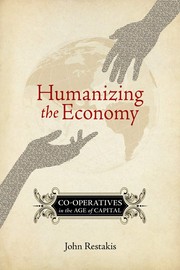
John Restakis · 2010

The global co-operative sector and how member ownership works.
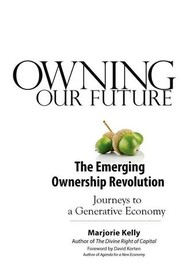
Marjorie Kelly · 2012

Survey of member, employee and trust ownership and how each pays out.
Jessica Gordon Nembhard · 2014

African American co-operative economics, a history largely written out.
Milton Friedman · 1962

Economic freedom as a condition of political freedom, applied to policy questions.

Recommended by: Marc Andreessen
Milton Friedman, Rose Friedman · 1980

The case for free markets and limited government, policy area by policy area.

Johan Norberg

A defence of global capitalism that answers critics on inequality, labour and nature.
James Burnham · 1941

Why managers and technocrats would replace capitalists as society's ruling class.

Recommended by: Marc Andreessen

Isabel Paterson · 1943

An inquiry into the nature of freedom and the uses of power.

Recommended by: Marc Andreessen
David D. Friedman · 1973

The case for anarcho-capitalism, a society run on markets without a state.

Recommended by: Marc Andreessen

George Gilder · 1992

Supply-side case for entrepreneurs as the actual source of growth

“on how economic systems that encourage aggressive entrepreneurship build the most for the benefit of the most” — Marc Andreessen

Source: @pmarca, companion thread to 'It's Time to Build'

Recommended by: Marc Andreessen
Peter Drucker · 1993

Essays on 'social ecology': how societies and institutions change, Japan included.
Bryan Caplan · 2007

Voters hold systematic biases about economics, so democracies choose bad policies.

“The median American is a moderate national socialist – statist to the core on both economic and social policy.” — Marc Andreessen

Source: @pmarca, 'Thread: Books I've recently read and recommend'

Recommended by: Marc Andreessen, Patrick Collison
Ha-Joon Chang · 2010

Twenty-three free-market claims, each set against counter-evidence.

Recommended by: Morgan Housel
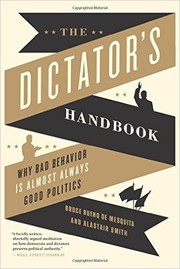
Alastair Smith, Bruce de Mesquita · 2011

Recommended by: Nat Eliason, Andrew Chen

Matt Ridley · 2015

Big changes in human affairs emerge from the bottom up rather than by design.

Recommended by: Naval Ravikant
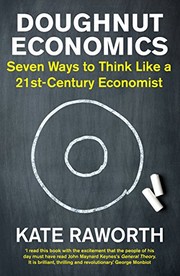
Tyler Cowen · 2018

Why societies should put sustainable long-run growth almost above all else.

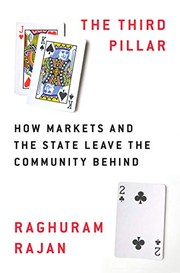
Raghuram G. Rajan

Recommended by: Vinod Khosla

More economics