Updates

  1. Person pages list letters, writing, profiles and links as sortable tables with filters, and show each person's companies as links; Fund letters show each letter's description in its own column.
  2. Experts show a checked job title and a short description of each person; 30 more people have photographs.
  3. Every company, fund, university and publication the experts work for has a page listing the people there.
  4. Fund letters show each letter's thesis and filter by it; 225 person pages list the essays, columns and newsletter issues the person wrote.
  5. Person pages list every essay and newsletter issue a person wrote, and their own books as a table in List view.
  6. Recommends shows the five largest kinds of book and the rest under More; browse pictures load sooner.
  7. Podcasts and talks link the original episode, filter by Audio and video or Press, and list each publisher once.
  8. Pages are wider, Recommends has List and Grid, and a filter clicked again turns off.
  9. Book cards sit in a ruled grid with Open Library and Goodreads links and each book's one-line note.
  10. Funds is now Investors; each investor's styles are buttons that filter the table.
  11. Podcasts and talks on a person's page filter by year and publisher and show as a list or a grid of pictures.
  12. Quotes show only people's own words: 472 summaries written by list sites are gone.
  13. Country pages open from Browse again, and every link on the shelf lands on a page.
  14. Subject and person pages show their sections as tabs, and each book appears once on a person's page.
  15. Book cards show the quote, who said it and the source; grids show five cards to a row.
  16. On a phone, a menu holds the sections, search, Updates, Feedback and dark mode.
  17. Feedback takes a screenshot of the page with no browser prompt, opens a screenshot full size when you click it, and clears itself once sent.
  18. Book cards are centred, search names the topic each book sits in, and any text cut short shows whole on hover.
  19. Search groups its results by kind: people, companies, geographies, subjects, topics, books, funds, fund letters and papers.
  20. The Books table lists who recommended each book by name, and the browser tab names the section you are in.
  21. Feedback can take a screenshot of the page, or one you paste or choose, and opens in the corner beside Updates.
  22. Each rail button reopens its section where you left it, and Browse, Table and People show on every book and subject page.
  23. Filters grey out choices that hold nothing instead of hiding them, and Books › People filters by authors or recommenders.
  24. Feedback takes a subject line and up to three screenshots.
  25. Biographies are grouped by the person they are about: 41 new pages, from Abraham Lincoln to Lee Kuan Yew.
  26. Sport splits into 23 sports, and Religion into one topic per faith.
  27. Book lists show as cards: the cover, one recommendation quote and every recommender by name.
  28. Seventeen subjects that had two or three pages under different names now have one page each.
  29. Every page lists its Experts as authors and recommenders, with a link to them on the Experts tab.
  30. Economics, Financial history, Financial panics and Accounting are subjects of their own, with one page per financial crisis.
  31. Book, person and subject pages open inside the app, so the tabs stay in view.
  32. 996 more book covers, and photographs or logos for 227 more people and companies.
  33. Books › Browse shows every subject as cards, and the rail holds Fund letters, Papers, Experts, Books and Funds.
  34. Every topic over 150 books splits into narrower topics, each with a page of its own.

Send feedback

What is it?
Screenshots, up to 3 (optional)
or paste one with Ctrl+V

We use your email only to reply to you.

23 Things They Don't Tell You About Capitali

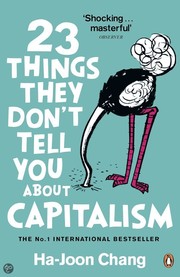
23 Things They Don't Tell You About Capitalism

Ha-Joon Chang
2010
T2 287 pages · about 4h 47m to read Open Librarygoodreads

Heterodox economist's case against free-market assumptions

Summary

Chang, a Cambridge development economist, presents twenty-three arguments against propositions he identifies as free market orthodoxy. Each chapter states the conventional claim, then presents his counter-argument and evidence.

The substantive positions include: there is no such thing as a free market, since every market rests on rules about what may be traded and by whom, and disputes about regulation are disputes about which rules rather than about how many; companies should not be run in the interest of their owners, because shareholders are the stakeholders least committed to the firm's long-run existence and can exit costlessly; the washing machine changed the world more than the internet, because it removed household labour and enabled women's entry into the workforce; people in poor countries are more entrepreneurial than people in rich ones, and the difference in outcomes comes from institutions and technology rather than individual quality; free market policies rarely make poor countries rich, and almost every developed economy industrialised behind protection; and greater macroeconomic stability has not made the world economy more stable, because financial deregulation increased volatility elsewhere.

Chang writes accessibly and each chapter stands alone. His development economics is serious work and the historical argument that developed countries industrialised behind protection is well supported.

The book is polemical and the twenty-three framing sometimes forces an argument to fit. Several chapters attack a version of free market economics that few economists hold, and the counter-evidence is selected. It is worth reading as a corrective to confident market-liberal assumptions rather than as a balanced treatment.

Key takeaways 7

  1. There is no such thing as a free market, since every market rests on rules about what may be traded and by whom, and regulation disputes are about which rules rather than how many.
  2. Shareholders are the stakeholders least committed to a firm's long-run existence because they can exit costlessly, which makes them poor principals for its governance.
  3. Almost every developed economy industrialised behind protection and subsidy, and now recommends policies to poor countries that it did not follow itself.
  4. People in poor countries are more entrepreneurial by any behavioural measure, and the difference in national outcomes comes from institutions and technology.
  5. The washing machine and household appliances changed economic life more than the internet, by removing labour that constrained half the population's participation.
  6. Macroeconomic stabilisation of inflation did not make the world economy more stable, because financial deregulation moved the volatility elsewhere.
  7. Education spending does not by itself produce economic growth, since the link between individual schooling and national productivity is far weaker than assumed.

Who should read it

Readers who want a corrective to market-liberal assumptions from a development economist, read as polemic rather than as balanced analysis.

Who recommended it 1 · 1 direct

Similar books 6

Chosen by shared topics, the entries that hold them, and the people who recommended both.
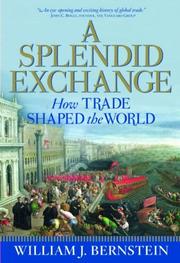
William J. Bernstein · 2008

Long-distance trade from Mesopotamia and the spice routes to modern globalisation.

Milton Friedman · 1962

Economic freedom as a condition of political freedom, applied to policy questions.

Recommended by: Marc Andreessen
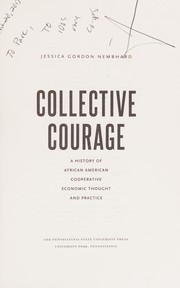
Jessica Gordon Nembhard · 2014

African American co-operative economics, a history largely written out.
Milton Friedman · 1980

The case for free markets and limited government, policy area by policy area.

Joseph E. Stiglitz · 2002

An attack on the IMF's one-size-fits-all policies in the crises of the 1990s.

Recommended by: Patrick Collison

Where it sits in the reference 2

Business themes
Economics

Topics

Economics