Updates

  1. Person pages list letters, writing, profiles and links as sortable tables with filters, and show each person's companies as links; Fund letters show each letter's description in its own column.
  2. Experts show a checked job title and a short description of each person; 30 more people have photographs.
  3. Every company, fund, university and publication the experts work for has a page listing the people there.
  4. Fund letters show each letter's thesis and filter by it; 225 person pages list the essays, columns and newsletter issues the person wrote.
  5. Person pages list every essay and newsletter issue a person wrote, and their own books as a table in List view.
  6. Recommends shows the five largest kinds of book and the rest under More; browse pictures load sooner.
  7. Podcasts and talks link the original episode, filter by Audio and video or Press, and list each publisher once.
  8. Pages are wider, Recommends has List and Grid, and a filter clicked again turns off.
  9. Book cards sit in a ruled grid with Open Library and Goodreads links and each book's one-line note.
  10. Funds is now Investors; each investor's styles are buttons that filter the table.
  11. Podcasts and talks on a person's page filter by year and publisher and show as a list or a grid of pictures.
  12. Quotes show only people's own words: 472 summaries written by list sites are gone.
  13. Country pages open from Browse again, and every link on the shelf lands on a page.
  14. Subject and person pages show their sections as tabs, and each book appears once on a person's page.
  15. Book cards show the quote, who said it and the source; grids show five cards to a row.
  16. On a phone, a menu holds the sections, search, Updates, Feedback and dark mode.
  17. Feedback takes a screenshot of the page with no browser prompt, opens a screenshot full size when you click it, and clears itself once sent.
  18. Book cards are centred, search names the topic each book sits in, and any text cut short shows whole on hover.
  19. Search groups its results by kind: people, companies, geographies, subjects, topics, books, funds, fund letters and papers.
  20. The Books table lists who recommended each book by name, and the browser tab names the section you are in.
  21. Feedback can take a screenshot of the page, or one you paste or choose, and opens in the corner beside Updates.
  22. Each rail button reopens its section where you left it, and Browse, Table and People show on every book and subject page.
  23. Filters grey out choices that hold nothing instead of hiding them, and Books › People filters by authors or recommenders.
  24. Feedback takes a subject line and up to three screenshots.
  25. Biographies are grouped by the person they are about: 41 new pages, from Abraham Lincoln to Lee Kuan Yew.
  26. Sport splits into 23 sports, and Religion into one topic per faith.
  27. Book lists show as cards: the cover, one recommendation quote and every recommender by name.
  28. Seventeen subjects that had two or three pages under different names now have one page each.
  29. Every page lists its Experts as authors and recommenders, with a link to them on the Experts tab.
  30. Economics, Financial history, Financial panics and Accounting are subjects of their own, with one page per financial crisis.
  31. Book, person and subject pages open inside the app, so the tabs stay in view.
  32. 996 more book covers, and photographs or logos for 227 more people and companies.
  33. Books › Browse shows every subject as cards, and the rail holds Fund letters, Papers, Experts, Books and Funds.
  34. Every topic over 150 books splits into narrower topics, each with a page of its own.

Send feedback

What is it?
Screenshots, up to 3 (optional)
or paste one with Ctrl+V

We use your email only to reply to you.

Doughnut Economics

Doughnut Economics

Kate Raworth
2017
T4 384 pages · about 6h 24m to read Open Librarygoodreads

Summary

Raworth, an economist who worked at Oxfam and the United Nations, proposes replacing growth as the objective of economics with a target range bounded on the inside by a social foundation, meaning the minimum resources every person needs, and on the outside by an ecological ceiling, meaning the planetary boundaries beyond which environmental systems break down. The safe and just space between them is the doughnut.

She presents seven ways of thinking she argues economics must adopt. Change the goal from GDP growth to the doughnut. Draw the whole picture, meaning include the household, the commons and the state rather than only the market. Nurture human nature, replacing the rational self-interested agent with what behavioural and experimental evidence actually shows. Get savvy with systems, replacing equilibrium with dynamic complexity. Design to distribute, meaning build distribution into the structure of ownership and enterprise rather than redistributing afterward. Create to regenerate, meaning design circular material flows rather than linear extraction and disposal. And be agnostic about growth, meaning build economies that can function without requiring growth.

The critique of existing economics is largely fair and draws on established heterodox and behavioural work. The book's weakness is the constructive half: the doughnut is a set of indicators rather than a model, and it does not supply a mechanism for allocating resources, setting prices or making trade-offs between the boundaries. Growth-agnosticism is asserted rather than shown to be achievable given debt structures and employment. The framework has been adopted by several city governments.

Key takeaways 7

  1. Economic activity should be bounded by a social foundation below and an ecological ceiling above, rather than aimed at maximum growth.
  2. GDP measures throughput rather than welfare, and using it as the objective directs policy toward the wrong outcomes.
  3. Standard economics excludes the household, the commons and unpaid work, which removes a large share of the activity that sustains an economy.
  4. Behavioural and experimental evidence contradicts the rational self-interested agent, and models built on it therefore describe a species that does not exist.
  5. Distribution should be built into the ownership structure of enterprises rather than corrected afterward through transfers.
  6. Material flows should be designed as circular from the start, since retrofitting recycling onto linear extraction recovers only a fraction.
  7. Economies should be built to function without requiring growth, because indefinite material growth on a finite planet is not available.

Who should read it

Readers who want the strongest current statement of the case against growth as an economic objective, with the constructive half treated as incomplete.

Who recommended it 1

Similar books 6

Chosen by shared topics, the entries that hold them, and the people who recommended both.

Andrew McAfee · 2019

Evidence that rich economies now grow while using fewer physical resources.

“on how modern technological economies can build more outputs with less inputs” — Marc Andreessen

Source: @pmarca, companion thread to 'It's Time to Build'

Recommended by: Marc Andreessen

Paul Hawken · 1999

Resource productivity framed as an unpriced balance-sheet asset.

Recommended by: Joe Gebbia

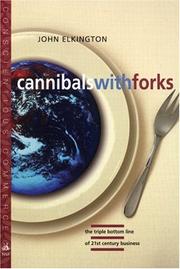
John Elkington · 1997

The triple bottom line: report on economic, environmental and social results.
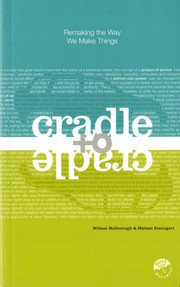
William McDonough, Michael Braungart · 2002

Design products on nature's model, where waste becomes food for the next cycle.

Recommended by: Joe Gebbia

John Elkington · 2020

The author's own recall of the triple bottom line.

Where it sits in the reference 2

Secular themes
Economics

Topics

EconomicsEnvironment and EnergyClimate change and sustainability