Updates

  1. Person pages list letters, writing, profiles and links as sortable tables with filters, and show each person's companies as links; Fund letters show each letter's description in its own column.
  2. Experts show a checked job title and a short description of each person; 30 more people have photographs.
  3. Every company, fund, university and publication the experts work for has a page listing the people there.
  4. Fund letters show each letter's thesis and filter by it; 225 person pages list the essays, columns and newsletter issues the person wrote.
  5. Person pages list every essay and newsletter issue a person wrote, and their own books as a table in List view.
  6. Recommends shows the five largest kinds of book and the rest under More; browse pictures load sooner.
  7. Podcasts and talks link the original episode, filter by Audio and video or Press, and list each publisher once.
  8. Pages are wider, Recommends has List and Grid, and a filter clicked again turns off.
  9. Book cards sit in a ruled grid with Open Library and Goodreads links and each book's one-line note.
  10. Funds is now Investors; each investor's styles are buttons that filter the table.
  11. Podcasts and talks on a person's page filter by year and publisher and show as a list or a grid of pictures.
  12. Quotes show only people's own words: 472 summaries written by list sites are gone.
  13. Country pages open from Browse again, and every link on the shelf lands on a page.
  14. Subject and person pages show their sections as tabs, and each book appears once on a person's page.
  15. Book cards show the quote, who said it and the source; grids show five cards to a row.
  16. On a phone, a menu holds the sections, search, Updates, Feedback and dark mode.
  17. Feedback takes a screenshot of the page with no browser prompt, opens a screenshot full size when you click it, and clears itself once sent.
  18. Book cards are centred, search names the topic each book sits in, and any text cut short shows whole on hover.
  19. Search groups its results by kind: people, companies, geographies, subjects, topics, books, funds, fund letters and papers.
  20. The Books table lists who recommended each book by name, and the browser tab names the section you are in.
  21. Feedback can take a screenshot of the page, or one you paste or choose, and opens in the corner beside Updates.
  22. Each rail button reopens its section where you left it, and Browse, Table and People show on every book and subject page.
  23. Filters grey out choices that hold nothing instead of hiding them, and Books › People filters by authors or recommenders.
  24. Feedback takes a subject line and up to three screenshots.
  25. Biographies are grouped by the person they are about: 41 new pages, from Abraham Lincoln to Lee Kuan Yew.
  26. Sport splits into 23 sports, and Religion into one topic per faith.
  27. Book lists show as cards: the cover, one recommendation quote and every recommender by name.
  28. Seventeen subjects that had two or three pages under different names now have one page each.
  29. Every page lists its Experts as authors and recommenders, with a link to them on the Experts tab.
  30. Economics, Financial history, Financial panics and Accounting are subjects of their own, with one page per financial crisis.
  31. Book, person and subject pages open inside the app, so the tabs stay in view.
  32. 996 more book covers, and photographs or logos for 227 more people and companies.
  33. Books › Browse shows every subject as cards, and the rail holds Fund letters, Papers, Experts, Books and Funds.
  34. Every topic over 150 books splits into narrower topics, each with a page of its own.

Send feedback

What is it?
Screenshots, up to 3 (optional)
or paste one with Ctrl+V

We use your email only to reply to you.

Natural Capitalism

Natural Capitalism

Paul Hawken
1999
T4 448 pages · about 7h 28m to read Open Librarygoodreads

Resource productivity framed as an unpriced balance-sheet asset.

Summary

Hawken, Amory Lovins and Hunter Lovins argue that the next industrial revolution will come from treating natural resources and ecosystem services as capital that must be maintained rather than as free inputs, and that doing so is profitable rather than costly.

They propose four principles. Radically increase resource productivity, which they argue can be achieved by factors of four to ten through design rather than through new technology, and they give worked examples in buildings, vehicles and industrial processes. Shift to biologically inspired production with closed material loops, so that waste from one process is input to another and nothing is disposed of. Move to a service and flow business model in which manufacturers retain ownership of products and sell their use, which aligns the producer's incentive with durability and recovery rather than with replacement. And reinvest in natural capital, meaning the ecosystem services that no market prices.

The resource productivity material is the strongest part. Lovins' argument that whole-system design produces savings that component-by-component optimisation cannot, because savings compound across a system, is well demonstrated with engineering examples including the hypercar concept and building retrofits.

The book is from 1999 and is advocacy. Its central claim that resource efficiency is generally profitable has been partly borne out and partly not, since many of the efficiency opportunities identified have not been taken up, which suggests barriers the analysis underweights. The service model has been adopted in some industries and not others.

Key takeaways 7

  1. Resource productivity can be raised by factors of four to ten through whole-system design rather than through new technology.
  2. Whole-system design produces savings that component-by-component optimisation cannot, because efficiency gains compound across the system.
  3. Selling the use of a product while retaining ownership aligns the manufacturer's incentive with durability and material recovery rather than with replacement.
  4. Waste is a design failure rather than an inevitable output, and closed material loops eliminate the category.
  5. Ecosystem services have enormous economic value and no price, which is why they are depleted despite being more valuable than what replaces them.
  6. Efficiency opportunities that are profitable frequently go untaken, which indicates institutional and incentive barriers rather than technical ones.
  7. Treating natural resources as capital to be maintained rather than as income to be spent changes what counts as a return on investment.

Who should read it

Operators in resource-intensive industries interested in whole-system efficiency design and product-as-service business models.

Who recommended it 1

Joe Gebbiareported

Similar books 6

Chosen by shared topics, the entries that hold them, and the people who recommended both.

Andrew McAfee · 2019

Evidence that rich economies now grow while using fewer physical resources.

“on how modern technological economies can build more outputs with less inputs” — Marc Andreessen

Source: @pmarca, companion thread to 'It's Time to Build'

Recommended by: Marc Andreessen

Arnaud Brohé, Nicholas Eyre, Nicholas Howarth · 2009

International business guide to allowances, offsets and registries.

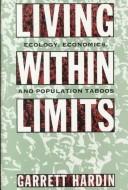
Garrett Hardin · 1993

Population and consumption face physical limits that economics ignores.

A. Denny Ellerman, Paul L. Joskow, Richard Schmalensee, Juan-Pablo Montero, Elizabeth M. Bailey · 2000

How the 1990 US sulphur dioxide allowance trading programme worked in practice.

Paul Sabin · 2013

Julian Simon and Paul Ehrlich's wager on metal prices, and their fight over scarcity.

Recommended by: Bill Gates

Where it sits in the reference 2

Secular themes
Economics

Topics

Environment and EnergyEconomicsClimate change and sustainability