Updates

  1. Person pages list letters, writing, profiles and links as sortable tables with filters, and show each person's companies as links; Fund letters show each letter's description in its own column.
  2. Experts show a checked job title and a short description of each person; 30 more people have photographs.
  3. Every company, fund, university and publication the experts work for has a page listing the people there.
  4. Fund letters show each letter's thesis and filter by it; 225 person pages list the essays, columns and newsletter issues the person wrote.
  5. Person pages list every essay and newsletter issue a person wrote, and their own books as a table in List view.
  6. Recommends shows the five largest kinds of book and the rest under More; browse pictures load sooner.
  7. Podcasts and talks link the original episode, filter by Audio and video or Press, and list each publisher once.
  8. Pages are wider, Recommends has List and Grid, and a filter clicked again turns off.
  9. Book cards sit in a ruled grid with Open Library and Goodreads links and each book's one-line note.
  10. Funds is now Investors; each investor's styles are buttons that filter the table.
  11. Podcasts and talks on a person's page filter by year and publisher and show as a list or a grid of pictures.
  12. Quotes show only people's own words: 472 summaries written by list sites are gone.
  13. Country pages open from Browse again, and every link on the shelf lands on a page.
  14. Subject and person pages show their sections as tabs, and each book appears once on a person's page.
  15. Book cards show the quote, who said it and the source; grids show five cards to a row.
  16. On a phone, a menu holds the sections, search, Updates, Feedback and dark mode.
  17. Feedback takes a screenshot of the page with no browser prompt, opens a screenshot full size when you click it, and clears itself once sent.
  18. Book cards are centred, search names the topic each book sits in, and any text cut short shows whole on hover.
  19. Search groups its results by kind: people, companies, geographies, subjects, topics, books, funds, fund letters and papers.
  20. The Books table lists who recommended each book by name, and the browser tab names the section you are in.
  21. Feedback can take a screenshot of the page, or one you paste or choose, and opens in the corner beside Updates.
  22. Each rail button reopens its section where you left it, and Browse, Table and People show on every book and subject page.
  23. Filters grey out choices that hold nothing instead of hiding them, and Books › People filters by authors or recommenders.
  24. Feedback takes a subject line and up to three screenshots.
  25. Biographies are grouped by the person they are about: 41 new pages, from Abraham Lincoln to Lee Kuan Yew.
  26. Sport splits into 23 sports, and Religion into one topic per faith.
  27. Book lists show as cards: the cover, one recommendation quote and every recommender by name.
  28. Seventeen subjects that had two or three pages under different names now have one page each.
  29. Every page lists its Experts as authors and recommenders, with a link to them on the Experts tab.
  30. Economics, Financial history, Financial panics and Accounting are subjects of their own, with one page per financial crisis.
  31. Book, person and subject pages open inside the app, so the tabs stay in view.
  32. 996 more book covers, and photographs or logos for 227 more people and companies.
  33. Books › Browse shows every subject as cards, and the rail holds Fund letters, Papers, Experts, Books and Funds.
  34. Every topic over 150 books splits into narrower topics, each with a page of its own.

Send feedback

What is it?
Screenshots, up to 3 (optional)
or paste one with Ctrl+V

We use your email only to reply to you.

Carbon Markets

Carbon Markets

Arnaud Brohé, Nicholas Eyre, Nicholas Howarth
2009
T4 328 pages · about 5h 28m to read Open Librarygoodreads

International business guide to allowances, offsets and registries.

Summary

The reference has not verified this book in detail; the summary states only what the title, author and subject establish.

Brohe, Eyre and Howarth wrote a practitioner and student reference on carbon markets, covering the mechanisms, the instruments and the operation of the schemes existing around 2009. The reference has not verified the detailed contents.

The subject divides into distinct systems. Cap and trade schemes set a total limit on emissions, allocate or auction allowances covering that total, and permit trading so that reductions occur where they are cheapest. The European Union Emissions Trading System was and remains the largest, and its early phases were characterised by over-allocation of free allowances, which collapsed the price and produced windfall profits for recipients who had received allowances free and passed the notional cost through to customers.

Offset mechanisms permit emitters to fund reductions elsewhere in place of reducing their own. The Kyoto Protocol's Clean Development Mechanism was the main such system, and the recurring problem is additionality, meaning whether the funded reduction would have occurred anyway, which cannot be verified with certainty because it requires establishing a counterfactual.

The volume would also cover baseline setting, monitoring and verification, registry infrastructure, the voluntary market and its standards, project development and finance, and carbon taxes as the alternative instrument.

The field has changed substantially since 2009. The European scheme was reformed with a market stability reserve, prices rose substantially, the Clean Development Mechanism was largely wound down, Article 6 of the Paris Agreement established a new framework, and voluntary market credit quality has been the subject of extensive criticism. Readers should verify current market structure and rules.

Key takeaways 7

  1. A cap and trade scheme sets a quantity limit and lets the price emerge, while a carbon tax sets a price and lets the quantity emerge.
  2. Trading allows reductions to occur where they are cheapest, which is the entire efficiency argument for the instrument.
  3. Free allocation of allowances produced windfall profits for recipients who passed the notional cost through to customers.
  4. Over-allocation in the European scheme's early phases collapsed the allowance price and removed the abatement incentive.
  5. Offset additionality requires establishing what would have happened otherwise, which cannot be verified with certainty.
  6. Monitoring, reporting and verification infrastructure determines whether a scheme's reported reductions are real.
  7. The market structures described are from 2009 and have been substantially reformed since.

Who should read it

Practitioners entering carbon markets who need the mechanism design and instrument basics, verified against current rules and prices.

Similar books 6

Chosen by shared topics, the entries that hold them, and the people who recommended both.

A. Denny Ellerman, Paul L. Joskow, Richard Schmalensee, Juan-Pablo Montero, Elizabeth M. Bailey · 2000

How the 1990 US sulphur dioxide allowance trading programme worked in practice.
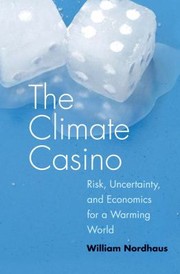
William Nordhaus · 2013

The economics of climate change, and why a universal carbon price works best.

Jonas Meckling · 2011

How business lobbies built emissions trading as the chosen instrument.
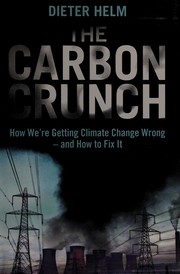
Dieter Helm · 2012

Why climate policy failed to cut emissions as coal use kept rising.
Garrett Hardin · 1993

Population and consumption face physical limits that economics ignores.

Andrew McAfee · 2019

Evidence that rich economies now grow while using fewer physical resources.

“on how modern technological economies can build more outputs with less inputs” — Marc Andreessen

Source: @pmarca, companion thread to 'It's Time to Build'

Recommended by: Marc Andreessen

Where it sits in the reference 2

Assets
Economics

Topics

Environment and EnergyEconomicsPolitics and GovernmentRegulation, central banks and public policyClimate change and sustainability