Updates

  1. Person pages list letters, writing, profiles and links as sortable tables with filters, and show each person's companies as links; Fund letters show each letter's description in its own column.
  2. Experts show a checked job title and a short description of each person; 30 more people have photographs.
  3. Every company, fund, university and publication the experts work for has a page listing the people there.
  4. Fund letters show each letter's thesis and filter by it; 225 person pages list the essays, columns and newsletter issues the person wrote.
  5. Person pages list every essay and newsletter issue a person wrote, and their own books as a table in List view.
  6. Recommends shows the five largest kinds of book and the rest under More; browse pictures load sooner.
  7. Podcasts and talks link the original episode, filter by Audio and video or Press, and list each publisher once.
  8. Pages are wider, Recommends has List and Grid, and a filter clicked again turns off.
  9. Book cards sit in a ruled grid with Open Library and Goodreads links and each book's one-line note.
  10. Funds is now Investors; each investor's styles are buttons that filter the table.
  11. Podcasts and talks on a person's page filter by year and publisher and show as a list or a grid of pictures.
  12. Quotes show only people's own words: 472 summaries written by list sites are gone.
  13. Country pages open from Browse again, and every link on the shelf lands on a page.
  14. Subject and person pages show their sections as tabs, and each book appears once on a person's page.
  15. Book cards show the quote, who said it and the source; grids show five cards to a row.
  16. On a phone, a menu holds the sections, search, Updates, Feedback and dark mode.
  17. Feedback takes a screenshot of the page with no browser prompt, opens a screenshot full size when you click it, and clears itself once sent.
  18. Book cards are centred, search names the topic each book sits in, and any text cut short shows whole on hover.
  19. Search groups its results by kind: people, companies, geographies, subjects, topics, books, funds, fund letters and papers.
  20. The Books table lists who recommended each book by name, and the browser tab names the section you are in.
  21. Feedback can take a screenshot of the page, or one you paste or choose, and opens in the corner beside Updates.
  22. Each rail button reopens its section where you left it, and Browse, Table and People show on every book and subject page.
  23. Filters grey out choices that hold nothing instead of hiding them, and Books › People filters by authors or recommenders.
  24. Feedback takes a subject line and up to three screenshots.
  25. Biographies are grouped by the person they are about: 41 new pages, from Abraham Lincoln to Lee Kuan Yew.
  26. Sport splits into 23 sports, and Religion into one topic per faith.
  27. Book lists show as cards: the cover, one recommendation quote and every recommender by name.
  28. Seventeen subjects that had two or three pages under different names now have one page each.
  29. Every page lists its Experts as authors and recommenders, with a link to them on the Experts tab.
  30. Economics, Financial history, Financial panics and Accounting are subjects of their own, with one page per financial crisis.
  31. Book, person and subject pages open inside the app, so the tabs stay in view.
  32. 996 more book covers, and photographs or logos for 227 more people and companies.
  33. Books › Browse shows every subject as cards, and the rail holds Fund letters, Papers, Experts, Books and Funds.
  34. Every topic over 150 books splits into narrower topics, each with a page of its own.

Send feedback

What is it?
Screenshots, up to 3 (optional)
or paste one with Ctrl+V

We use your email only to reply to you.

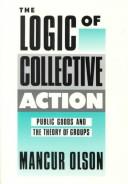
The Logic of Collective Action

The Logic of Collective Action

Mancur Olson
1965
T4 186 pages · about 3h 6m to read Open Librarygoodreads

Summary

Olson attacked the assumption, common in political science and sociology at the time, that individuals with a shared interest will act together to advance it. His argument is that a rational individual in a large group will not contribute to a collective good, because the individual bears the full cost of contributing while receiving only a tiny fraction of the benefit, and because the good will be available whether or not the individual contributes.

The argument produces a size prediction. Small groups organise successfully because each member's share of the benefit is large enough to justify the cost, and because members can observe each other. Very small groups exhibit what Olson called the exploitation of the great by the small, where the largest member provides the good and the others free-ride on it. Large groups fail to organise unless they use selective incentives, meaning private benefits withheld from non-contributors, or coercion.

The explanatory payoff is that lobbies representing concentrated producers routinely defeat dispersed consumers and taxpayers, not because producers are more numerous or more virtuous, but because they can organise and the others cannot. Olson used union closed shops, professional associations and farm groups as evidence, and he later extended the framework to national economic decline in The Rise and Decline of Nations.

The theory has been challenged by evidence that people contribute to public goods more than the model predicts, by experimental economics on conditional cooperation, and by Elinor Ostrom's work showing that communities govern common resources through institutions Olson did not anticipate. The core insight about concentrated versus dispersed interests remains standard.

Key takeaways 7

  1. Rational individuals in large groups will not voluntarily contribute to a good they receive whether or not they pay.
  2. Group size is the primary determinant of whether a shared interest gets organised, not the intensity of the interest.
  3. Large organisations survive by offering selective private benefits or by compelling membership, not by delivering collective goods.
  4. In small groups the largest member typically provides the collective good and the smaller members free-ride.
  5. Concentrated producer interests defeat dispersed consumer interests systematically, and this is a structural result rather than corruption.
  6. Trade unions require the closed shop or equivalent compulsion because their wage gains are available to non-members.
  7. Shared interest is not sufficient evidence that a group will act, so political analysis must examine organisational incentives directly.

Who should read it

Founders and investors dealing with regulation, industry associations or coalition building, who need to predict which interests will actually mobilise.

Who recommended it 1 · 1 direct

Similar books 6

Chosen by shared topics, the entries that hold them, and the people who recommended both.

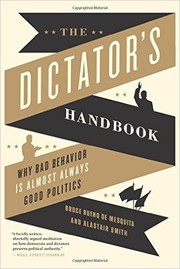
Alastair Smith, Bruce de Mesquita · 2011

Recommended by: Nat Eliason, Andrew Chen
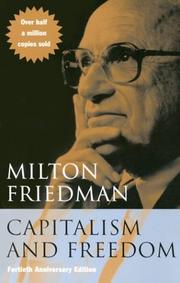
Milton Friedman · 1962

Economic freedom as a condition of political freedom, applied to policy questions.

Recommended by: Marc Andreessen

Milton Friedman · 1980

The case for free markets and limited government, policy area by policy area.

Isabel Paterson · 1943

An inquiry into the nature of freedom and the uses of power.

Recommended by: Marc Andreessen

Where it sits in the reference 2

Mental models
Economics

Topics

EconomicsSociology and CulturePolitics and GovernmentPolitical philosophy and ideologySocial behaviour and collective action