Behavioural economics and uncertainty
Books on how people depart from rational choice and how chance and rare events shape outcomes, by Thaler, Ariely, Shiller and Taleb.
Start here
- Radical UncertaintyJohn Kay, Mervyn King, 2020
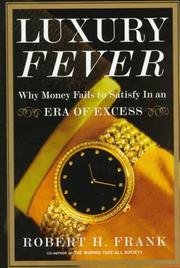
- Luxury FeverRobert H. Frank, 1999
- Antifragile: Things That Gain from DisorderNassim Nicholas Taleb
- Fooled by RandomnessNassim Nicholas Taleb
- Stumbling on HappinessDaniel Gilbert
Why economics misapplies probability to problems where the future is unknowable.
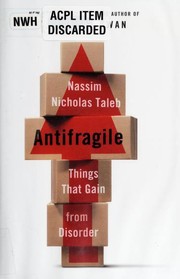
Incerto volume 4
“Nassim Taleb, author of the new book Antifragile, praises volatility and criticises those who would artificially damp it at great unseen cost. Taleb advises us to be 'anti-fragile'. This is exactly…” — Seth Klarman
Source: Klarman on Taleb's praise of volatility and what Baupost strives for
Recommended by: Mohnish Pabrai, Nat Eliason and 25 others
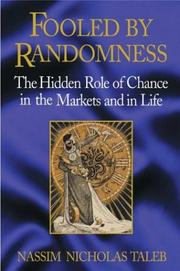
Why people mistake luck for skill, above all in markets.
“Fooled by Randomness is a serious, intellectually sophisticated book, well worth reading carefully. At times, the book is condescending. Nevertheless, there are some great insights.” — Barton Biggs
Source: Biggs on a sophisticated book worth reading carefully
Recommended by: Barton Biggs, Michael Mauboussin and 11 others
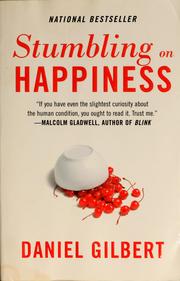
Daniel Gilbert's accessible account of affective forecasting — our poor ability to predict what will make us happy. His research on immune neglect and focalism is less cited than Kahneman's work but equally well-evidenced.
Recommended by: Andrew Wilkinson, Mohnish Pabrai and 3 others

Experiments showing most cheating is many people cheating a little.
Recommended by: Mohnish Pabrai
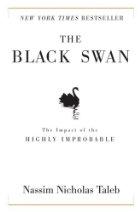
Rare, unforeseen, high-impact events drive history, explained only after the fact.
“The message of The Black Swan is how important it is to realize that the things everyone rules out can still come to pass.” — Howard Marks
Source: Oaktree memo 'The Limits to Negativism'
Recommended by: Howard Marks, Marc Andreessen, Nat Eliason and 18 others

Recommended by: Mohnish Pabrai
Nudge: The Final Edition published 2021.
Recommended by: Tristan Harris
Experiments showing that people depart from rational choice in repeatable ways.
Recommended by: Mohnish Pabrai, Alfred Lin, Anna Cheng and 6 others

Recommended by: Mohnish Pabrai
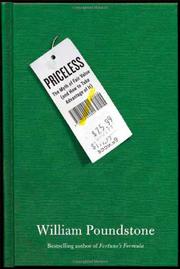
People have no fixed sense of value, so context and anchors set the prices they pay.
Recommended by: Mohnish Pabrai, Patrick O'Shaughnessy

Mullainathan and Shafir's research on cognitive bandwidth shows that financial scarcity — not just poverty but any experience of not having enough — tunnels attention in ways that make long-term planning harder and short-term mistakes more likely. It reframes willpower-based explanations of financial failure without excusing the structural causes.
Recommended by: Mohnish Pabrai, Daniel Kahneman and 1 other
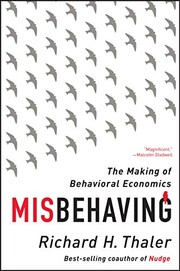
How behavioural economics was built against economists who assumed rational agents.
“He opens his new book, Misbehaving, with Vilfredo Pareto's assertion” — Howard Marks
Source: Oaktree memo 'On the Couch'
Recommended by: Howard Marks, Peter Mallouk, Tyler Cowen


Chance shapes success more than people think; what that means for fairer economies.
Recommended by: Mohnish Pabrai

How popular stories spread like epidemics and drive economic events.
Recommended by: Jackie Vullinghs
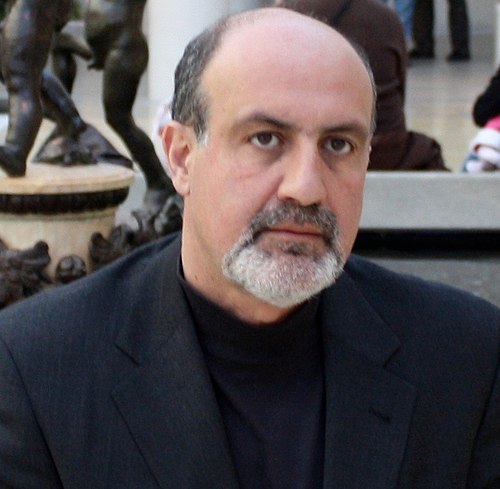 Nassim Nicholas Talebwrote 3 books here
 Richard H. Thalerwrote 3 books here
 Robert J. Shillerwrote 3 books here
 Dan Arielywrote 2 books here
 Mohnish Pabrairecommends 10 books here
 Howard Marksrecommends 3 books here
 Ev Williamsrecommends 3 books here
 James Altucherrecommends 3 books here
 Matt Mullenwegrecommends 3 books here
 Naval Ravikantrecommends 3 books here
 Marc Andreessenrecommends 2 books hereNassim Nicholas Talebrecommends 2 books here
 Tyler Cowenrecommends 2 books here
Show all 53
 Ryan Holidayrecommends 2 books here
 Patrick Collisonrecommends 2 books here
 Tim Ferrissrecommends 2 books here
 Tom Bilyeurecommends 2 books here
 Tristan Harrisrecommends 2 books here
 Vlad Tenevrecommends 2 books here
 Daniel Kahnemanrecommends 1 book here
 Peter Thielrecommends 1 book here
 Seth Klarmanrecommends 1 book here
 Simon Sinekrecommends 1 book here
 Albert Wengerrecommends 1 book here
 Alfred Linrecommends 1 book here
 Bill Gatesrecommends 1 book here
 Changpeng Zhaorecommends 1 book here
 Esther Dysonrecommends 1 book here
 Jeff Bezosrecommends 1 book here
 Keith Raboisrecommends 1 book here
 Max Levchinrecommends 1 book here
 Ryan Petersonrecommends 1 book here
 Tobi Lütkerecommends 1 book here
 Vinod Khoslarecommends 1 book here