
Loss Aversion and Prospect Theory
People evaluate outcomes as gains and losses from a reference point, and losses weigh roughly twice as heavily as equal gains. The signature investor symptom is selling winners early while nursing losers so the paper loss never becomes real. The defence is to set exit rules before entry and to judge every holding on forward prospects rather than cost basis.
Start here
- Predictably IrrationalDan Ariely, 2008
- MisbehavingRichard H. Thaler, 2015
- Thinking, Fast and SlowDaniel Kahneman, 2011
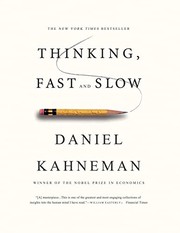
Kahneman's synthesis of behavioral economics is the cognitive science underpinning every negotiation tactic. Anchoring, loss aversion, framing effects, and the planning fallacy — understanding why these biases operate, not just that they exist, makes you harder to exploit and more honest about your own irrationality.
“…books I've recommended, highlighted to death, or forced on friends.” — Andrew Wilkinson
Source: Andrew Wilkinson's Bookshelf, neverenough.com
Recommended by: Andrew Wilkinson, Charles de Vaulx and 32 others
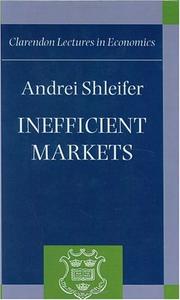
“In his excellent book, Inefficient Markets, Andrei Shleifer describes the three arguments that comprise the theoretical foundation for market efficiency.” — Michael Mauboussin
Source: Capital Ideas Revisited (Legg Mason Capital Management)
Recommended by: Michael Mauboussin
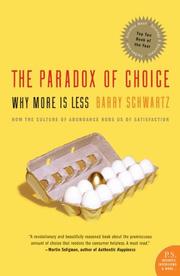
Beyond a point, more options make people less likely to choose and less satisfied.
“It is almost ten years since Barry Schwartz published his popular psychology book "The Paradox of Choice".” — Nick Sleep
Source: Nomad Investment Partnership, Annual Letter for the period ended December 31st, 2013, p. 216
Recommended by: Nat Eliason, Nick Sleep and 1 other
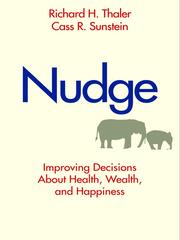
Nudge: The Final Edition published 2021.
Recommended by: Tristan Harris
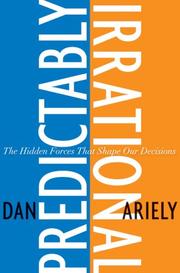
Experiments showing that people depart from rational choice in repeatable ways.
Recommended by: Mohnish Pabrai, Alfred Lin, Anna Cheng and 6 others
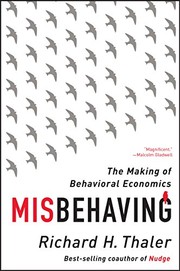
How behavioural economics was built against economists who assumed rational agents.
“He opens his new book, Misbehaving, with Vilfredo Pareto's assertion” — Howard Marks
Source: Oaktree memo 'On the Couch'
Recommended by: Howard Marks, Peter Mallouk, Tyler Cowen
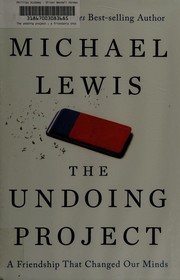
Michael Lewis's account of the Kahneman-Tversky collaboration works as intellectual biography and as a second path through the research for readers who find academic writing slow. The friendship and its eventual fracture clarifies how two very different minds produced work that neither could have done alone.
Recommended by: Andrew Wilkinson, Mohnish Pabrai, Ray Dalio and 6 others
 Richard H. Thalerwrote 2 books here
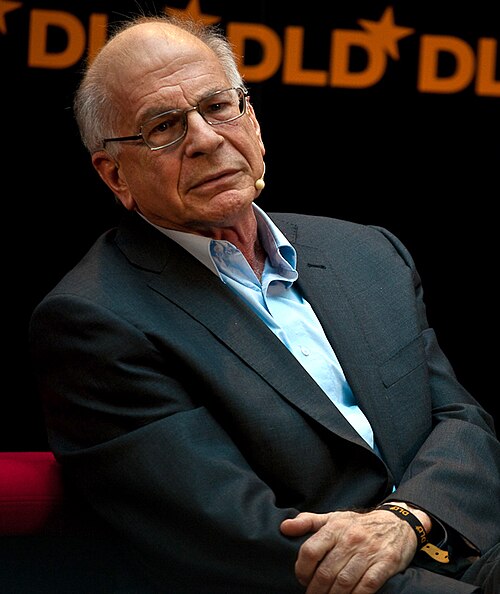 Daniel Kahnemanwrote 1 book here
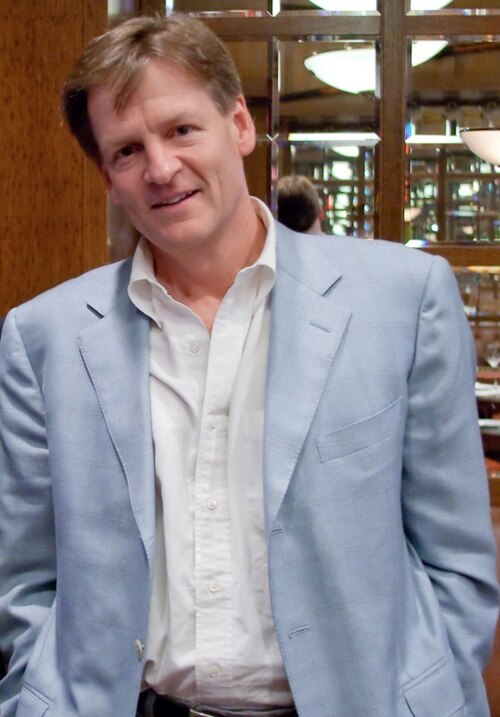 Michael Lewiswrote 1 book here
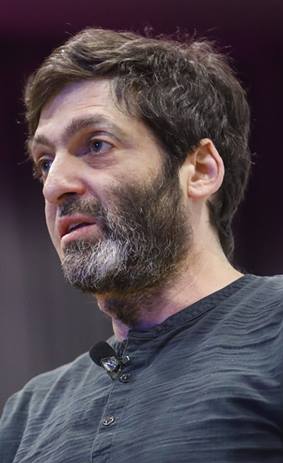 Dan Arielywrote 1 book here
 Mohnish Pabrairecommends 3 books here
 Alfred Linrecommends 3 books here
 Tristan Harrisrecommends 3 books here
 Nassim Nicholas Talebrecommends 2 books here
 Ray Daliorecommends 2 books here
 Charlie Mungerrecommends 1 book here
 Howard Marksrecommends 1 book here
 Marc Andreessenrecommends 1 book here
Show all 49
 Seth Klarmanrecommends 1 book here
 Tyler Cowenrecommends 1 book here
 Albert Wengerrecommends 1 book here
 Amy Hoodrecommends 1 book here
 Bill Gatesrecommends 1 book here
 Bryan Johnsonrecommends 1 book here
 Daniel Burkarecommends 1 book here
 Ev Williamsrecommends 1 book here
 Julie Zhuorecommends 1 book here
 Keith Raboisrecommends 1 book here
 Mark Cubanrecommends 1 book here
 Max Levchinrecommends 1 book here
 Naval Ravikantrecommends 1 book here
 Ron Conwayrecommends 1 book here
 Sam Altmanrecommends 1 book here
 Satya Nadellarecommends 1 book here
 Stewart Brandrecommends 1 book here
 Tom Bilyeurecommends 1 book here
- The Value of Probabilistic ThinkingShane Parrish · essay · Bayesian updating, fat tails and asymmetries together.
- Selling OutHoward Marks · memo · Why interrupting compounding usually costs more than it saves.
- The Three Sides of RiskMorgan Housel · essay · Odds, average consequence, and the tail that ends you.