Updates

  1. Person pages list letters, writing, profiles and links as sortable tables with filters, and show each person's companies as links; Fund letters show each letter's description in its own column.
  2. Experts show a checked job title and a short description of each person; 30 more people have photographs.
  3. Every company, fund, university and publication the experts work for has a page listing the people there.
  4. Fund letters show each letter's thesis and filter by it; 225 person pages list the essays, columns and newsletter issues the person wrote.
  5. Person pages list every essay and newsletter issue a person wrote, and their own books as a table in List view.
  6. Recommends shows the five largest kinds of book and the rest under More; browse pictures load sooner.
  7. Podcasts and talks link the original episode, filter by Audio and video or Press, and list each publisher once.
  8. Pages are wider, Recommends has List and Grid, and a filter clicked again turns off.
  9. Book cards sit in a ruled grid with Open Library and Goodreads links and each book's one-line note.
  10. Funds is now Investors; each investor's styles are buttons that filter the table.
  11. Podcasts and talks on a person's page filter by year and publisher and show as a list or a grid of pictures.
  12. Quotes show only people's own words: 472 summaries written by list sites are gone.
  13. Country pages open from Browse again, and every link on the shelf lands on a page.
  14. Subject and person pages show their sections as tabs, and each book appears once on a person's page.
  15. Book cards show the quote, who said it and the source; grids show five cards to a row.
  16. On a phone, a menu holds the sections, search, Updates, Feedback and dark mode.
  17. Feedback takes a screenshot of the page with no browser prompt, opens a screenshot full size when you click it, and clears itself once sent.
  18. Book cards are centred, search names the topic each book sits in, and any text cut short shows whole on hover.
  19. Search groups its results by kind: people, companies, geographies, subjects, topics, books, funds, fund letters and papers.
  20. The Books table lists who recommended each book by name, and the browser tab names the section you are in.
  21. Feedback can take a screenshot of the page, or one you paste or choose, and opens in the corner beside Updates.
  22. Each rail button reopens its section where you left it, and Browse, Table and People show on every book and subject page.
  23. Filters grey out choices that hold nothing instead of hiding them, and Books › People filters by authors or recommenders.
  24. Feedback takes a subject line and up to three screenshots.
  25. Biographies are grouped by the person they are about: 41 new pages, from Abraham Lincoln to Lee Kuan Yew.
  26. Sport splits into 23 sports, and Religion into one topic per faith.
  27. Book lists show as cards: the cover, one recommendation quote and every recommender by name.
  28. Seventeen subjects that had two or three pages under different names now have one page each.
  29. Every page lists its Experts as authors and recommenders, with a link to them on the Experts tab.
  30. Economics, Financial history, Financial panics and Accounting are subjects of their own, with one page per financial crisis.
  31. Book, person and subject pages open inside the app, so the tabs stay in view.
  32. 996 more book covers, and photographs or logos for 227 more people and companies.
  33. Books › Browse shows every subject as cards, and the rail holds Fund letters, Papers, Experts, Books and Funds.
  34. Every topic over 150 books splits into narrower topics, each with a page of its own.

Send feedback

What is it?
Screenshots, up to 3 (optional)
or paste one with Ctrl+V

We use your email only to reply to you.

Narrative Economics

Narrative Economics

Robert J. Shiller
2019
T4 400 pages · about 6h 40m to read Open Librarygoodreads

Summary

Shiller argues that popular stories spread through a population in a way that can be modelled epidemiologically, and that these narratives are a genuine cause of economic events rather than a description of them. He proposes that economists should study the spread of narratives with the same seriousness they apply to interest rates and money supply.

His method borrows from epidemiology directly: the Kermack-McKendrick model of contagion, with a contagion rate and a recovery rate, applied to the spread of an idea. He uses digitised text databases including Google Ngrams and newspaper archives to trace the frequency of specific phrases over time and to show that economic narratives rise and fall in patterns resembling epidemic curves.

He identifies nine perennial narratives that recur in different forms, including panic versus confidence, frugality versus conspicuous consumption, the gold standard versus bimetallism, labour-saving machines replacing jobs, real estate booms, stock market bubbles, boycotts and profiteers, and evil business and labour unions. He argues the 1920 to 1921 depression, the Depression, and the 2008 crisis each involved narrative contagion that the standard accounts omit.

The idea is important and Shiller's authority makes it worth taking seriously. The execution is the weak part. The evidence is largely word frequency counts, which establish that a phrase became common without establishing that it caused anything, and the epidemiological models are illustrative rather than fitted and tested. Shiller acknowledges this and presents the book as an agenda rather than a result, which is the right way to read it.

Key takeaways 7

  1. Popular narratives spread through a population in patterns that resemble epidemics, with identifiable contagion and recovery rates.
  2. Narratives cause economic events rather than merely describing them, because people act on the story they believe about what is happening.
  3. A small number of perennial narratives recur across centuries in updated forms, including panic and confidence, frugality, machines replacing jobs and real estate booms.
  4. Economic forecasting fails partly because it omits narrative contagion, which is a real variable that standard models do not include.
  5. The severity of the 1920 to 1921 depression and of the 1930s cannot be explained without accounting for the stories people told about them.
  6. Narratives mutate as they spread, and the version that becomes dominant is the one that is most repeatable rather than the most accurate.
  7. Digitised text archives make narrative spread measurable for the first time, which is what makes this a research programme rather than a speculation.

Who should read it

Investors interested in how stories move markets, read as a research agenda rather than as a demonstrated result.

About Robert J. Shiller

Sterling Professor of Economics Emeritus, Yale University; co-creator of the Case-Shiller home price indices; Nobel laureate in economics 2013

Excess-volatility work and Irrational Exuberance are the primary sources for the empirical case that asset prices move far more than fundamentals justify.

Yale University

Who recommended it 1

Similar books 6

Chosen by shared topics, the entries that hold them, and the people who recommended both.

Robert J. Shiller, George A. Akerlof · 2009

Recommended by: Mohnish Pabrai

Robert J. Shiller, George A. Akerlof · 2015
Nassim Nicholas Taleb · 2001

Why people mistake luck for skill, above all in markets.

“Fooled by Randomness is a serious, intellectually sophisticated book, well worth reading carefully. At times, the book is condescending. Nevertheless, there are some great insights.” — Barton Biggs

Source: Biggs on a sophisticated book worth reading carefully

Recommended by: Barton Biggs, Michael Mauboussin and 11 others
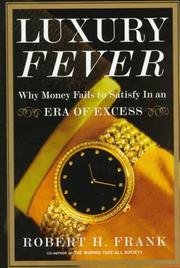
Robert H. Frank · 1999

The economics of positional goods and status competition.

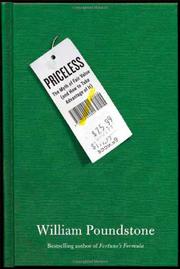
William Poundstone · 2010

People have no fixed sense of value, so context and anchors set the prices they pay.

Where it sits in the reference 3

Academics
Mental models
Economics

Topics

EconomicsPsychology and BehaviourBehavioural finance and the psychology of money