
Owning Our Future
Survey of member, employee and trust ownership and how each pays out.
Summary
Marjorie Kelly co-founded Business Ethics magazine and argues here that ownership design determines what a company does, and that the standard investor-owned corporation is built to extract value while other designs are built to generate it. Her distinction is between extractive ownership and generative ownership.
Extractive designs, in her account, share features: absentee ownership, a governing purpose of maximising financial return to owners, capital markets that treat companies as tradeable, and networks of finance that impose the same logic on every firm. Generative designs have living purpose, rooted membership by people connected to the enterprise, stakeholder governance, and finance that seeks a fair rather than maximum return. She presents cases: John Lewis Partnership in Britain, employee-owned firms, cooperatives including the Basque group Mondragon, community land trusts, credit unions, foundation-owned Danish companies including Novo Nordisk, and the emerging benefit corporation form.
The book is advocacy and works by accumulating examples rather than by testing the claim comparatively. Kelly does not seriously engage with the capital constraints these forms face, with their governance difficulties at scale, or with cases where they have failed. She also uses organic metaphors extensively, which readers who want analysis will find unhelpful. The catalogue of ownership designs, and the specific institutional mechanisms each uses to prevent capture, is the useful content.
Key takeaways 7
- Ownership design determines a firm's purpose more directly than management intent or stated values do.
- Absentee ownership through tradeable shares imposes a return requirement that the enterprise's own participants would not choose.
- Foundation ownership, as at several large Danish companies, prevents sale of the enterprise while permitting commercial operation.
- Employee and community ownership root decision rights in people affected by the outcome rather than in holders of a tradeable claim.
- Kelly argues that capital should be treated as an input entitled to a fair return rather than as the residual claimant entitled to everything.
- Mission-locked legal forms prevent a successful enterprise from being sold to an owner with a different purpose.
- Financial markets impose a uniform logic across firms regardless of what each enterprise is for.
Who should read it
Founders and owners choosing a legal and ownership structure who want a survey of alternatives to the investor-owned corporation and what each protects against.
Similar books 6
Chosen by shared topics, the entries that hold them, and the people who recommended both.

African American co-operative economics, a history largely written out.

The global co-operative sector and how member ownership works.
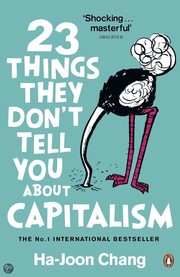
Twenty-three free-market claims, each set against counter-evidence.
Recommended by: Morgan Housel
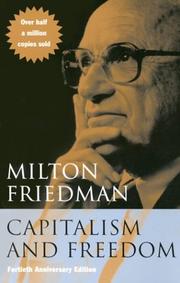
Economic freedom as a condition of political freedom, applied to policy questions.
Recommended by: Marc Andreessen

The case for free markets and limited government, policy area by policy area.
Recommended by: Brian Armstrong, Mohnish Pabrai and 2 others
Where it sits in the reference 2
Topics