
Recapturing the Spirit of Enterprise
Supply-side case for entrepreneurs as the actual source of growth
Summary
This is a revised edition of Gilder's The Spirit of Enterprise, and it argues that economic growth comes from individual entrepreneurs who accept risk that cannot be calculated, and that mainstream economics has no place for them because its models assume known probability distributions.
Gilder's method is biographical. He profiles entrepreneurs across industries, including immigrants who built businesses from nothing, semiconductor founders, and operators in unglamorous sectors, and uses each case to argue that the essential act is giving before receiving: the entrepreneur invests capital and effort in advance of any assurance of return, and the return is a response by others to something offered rather than something extracted. He treats this as the moral and economic core of capitalism and argues that redistribution, regulation and high marginal taxation damage growth mainly by discouraging this act rather than through the price effects economists measure.
He also argues that entrepreneurial knowledge is specific, local and non-transferable, which is why central planning and large corporate bureaucracies cannot substitute for it.
The book is written as advocacy in a confident register and the evidence is selected biography rather than data. Gilder's economic claims are not tested against the counter-evidence, and his forecasting record on technology and markets is uneven. The reference has not verified the specific biographical details. It is worth reading as a well-argued statement of the entrepreneurial case, and it should not be mistaken for empirical economics.
Key takeaways 7
- Economic growth comes from individual entrepreneurs accepting risk that cannot be calculated in advance, which standard economic models exclude by assumption.
- The entrepreneurial act consists in giving before receiving, since capital and effort are committed before any return is assured.
- Entrepreneurial knowledge is specific, local and non-transferable, which is why planning bodies and corporate bureaucracies cannot substitute for it.
- High marginal taxation damages growth primarily by discouraging the entrepreneurial commitment rather than through the substitution effects economists measure.
- Wealth is created by supplying something others value rather than by capturing an existing surplus, which makes the process positive-sum.
- Immigrants and outsiders start a disproportionate share of new businesses because they have less to lose in existing arrangements.
- Large established firms cannot generate the same risk-taking because the individuals within them bear career costs for failure without capturing the returns from success.
Who should read it
Readers who want the entrepreneurial case for capitalism argued through biography, read as advocacy rather than as empirical economics.
Who recommended it 1 · 1 direct
“on how economic systems that encourage aggressive entrepreneurship build the most for the benefit of the most”
Similar books 6
Chosen by shared topics, the entries that hold them, and the people who recommended both.

Why most government efforts to build venture capital sectors fail.
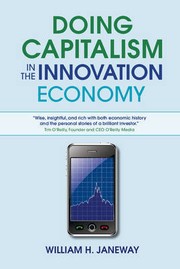
Innovation as a game played by the state, capital markets and competition.
“He wrote this book, which I really recommend, it's called Doing Capitalism” — Marc Andreessen
Source: Dwarkesh Podcast — Marc Andreessen (transcript)
Recommended by: Marc Andreessen

Economic freedom as a condition of political freedom, applied to policy questions.
Recommended by: Marc Andreessen

The case for free markets and limited government, policy area by policy area.
Recommended by: Brian Armstrong, Mohnish Pabrai and 2 others
Recommended by: Marc Andreessen
Where it sits in the reference 3
Topics