Updates

  1. Person pages list letters, writing, profiles and links as sortable tables with filters, and show each person's companies as links; Fund letters show each letter's description in its own column.
  2. Experts show a checked job title and a short description of each person; 30 more people have photographs.
  3. Every company, fund, university and publication the experts work for has a page listing the people there.
  4. Fund letters show each letter's thesis and filter by it; 225 person pages list the essays, columns and newsletter issues the person wrote.
  5. Person pages list every essay and newsletter issue a person wrote, and their own books as a table in List view.
  6. Recommends shows the five largest kinds of book and the rest under More; browse pictures load sooner.
  7. Podcasts and talks link the original episode, filter by Audio and video or Press, and list each publisher once.
  8. Pages are wider, Recommends has List and Grid, and a filter clicked again turns off.
  9. Book cards sit in a ruled grid with Open Library and Goodreads links and each book's one-line note.
  10. Funds is now Investors; each investor's styles are buttons that filter the table.
  11. Podcasts and talks on a person's page filter by year and publisher and show as a list or a grid of pictures.
  12. Quotes show only people's own words: 472 summaries written by list sites are gone.
  13. Country pages open from Browse again, and every link on the shelf lands on a page.
  14. Subject and person pages show their sections as tabs, and each book appears once on a person's page.
  15. Book cards show the quote, who said it and the source; grids show five cards to a row.
  16. On a phone, a menu holds the sections, search, Updates, Feedback and dark mode.
  17. Feedback takes a screenshot of the page with no browser prompt, opens a screenshot full size when you click it, and clears itself once sent.
  18. Book cards are centred, search names the topic each book sits in, and any text cut short shows whole on hover.
  19. Search groups its results by kind: people, companies, geographies, subjects, topics, books, funds, fund letters and papers.
  20. The Books table lists who recommended each book by name, and the browser tab names the section you are in.
  21. Feedback can take a screenshot of the page, or one you paste or choose, and opens in the corner beside Updates.
  22. Each rail button reopens its section where you left it, and Browse, Table and People show on every book and subject page.
  23. Filters grey out choices that hold nothing instead of hiding them, and Books › People filters by authors or recommenders.
  24. Feedback takes a subject line and up to three screenshots.
  25. Biographies are grouped by the person they are about: 41 new pages, from Abraham Lincoln to Lee Kuan Yew.
  26. Sport splits into 23 sports, and Religion into one topic per faith.
  27. Book lists show as cards: the cover, one recommendation quote and every recommender by name.
  28. Seventeen subjects that had two or three pages under different names now have one page each.
  29. Every page lists its Experts as authors and recommenders, with a link to them on the Experts tab.
  30. Economics, Financial history, Financial panics and Accounting are subjects of their own, with one page per financial crisis.
  31. Book, person and subject pages open inside the app, so the tabs stay in view.
  32. 996 more book covers, and photographs or logos for 227 more people and companies.
  33. Books › Browse shows every subject as cards, and the rail holds Fund letters, Papers, Experts, Books and Funds.
  34. Every topic over 150 books splits into narrower topics, each with a page of its own.

Send feedback

What is it?
Screenshots, up to 3 (optional)
or paste one with Ctrl+V

We use your email only to reply to you.

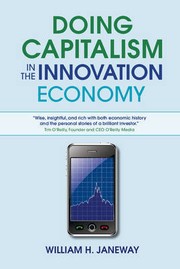
Doing Capitalism in the Innovation Economy

Doing Capitalism in the Innovation Economy

William H. Janeway
2012
T2 345 pages · about 5h 45m to read Open Librarygoodreads

A venture veteran on the state, bubbles and how innovation gets funded

Summary

Janeway spent decades as a venture capitalist at Warburg Pincus and holds a Cambridge doctorate in economics, and this book combines the two. His argument is that the innovation economy runs on what he calls the three-player game between the state, the capital markets and market competition, and that speculative bubbles and government funding have both been necessary to the deployment of every general purpose technology.

His historical claim is that transformational infrastructure, including canals, railways, electrification and the internet, was financed by speculative capital that destroyed itself in the process. Investors lost their money and society kept the infrastructure. He calls this productive waste and argues that no rational allocation process would have funded these projects at the required scale. Separately, the state funded the upstream science and served as the initial customer for computing, semiconductors and networking, which private capital would not have done.

His practical material comes from investing. He distinguishes between building a company with cash flow that funds itself and building one dependent on continued access to capital, and argues the second requires the investor to manage the funding market rather than the business. His concept of cash and control, meaning that a venture investor should hold enough of both to survive being wrong, is the operating principle he draws from his own record.

The book moves between memoir, economic history and Keynesian and Minskyan theory, and the transitions are not always smooth. Readers wanting a practical venture manual will find the theory demanding, and readers wanting the economics will find the memoir intrusive.

Key takeaways 7

  1. Transformational infrastructure has been financed by speculative bubbles whose investors lost their capital while society retained the assets.
  2. The state funded the upstream science and acted as the first customer for computing and networking, which private capital would not have done at that stage.
  3. The innovation economy requires all three of state funding, speculative capital and market competition, and removing any one stops the process.
  4. A venture investor must hold sufficient cash and sufficient control to survive being wrong, because the probability of being wrong is high and unmanageable.
  5. Companies dependent on continued access to capital require the investor to manage the funding market as the primary risk, not the business.
  6. Financial speculation is economically productive only when it funds durable assets, which is why the technology bubbles left more behind than the credit bubbles did.
  7. The efficiency of capital allocation is the wrong criterion for judging innovation finance, since the returns to the funder and the returns to society diverge systematically.

Who should read it

Venture investors and founders who want the economic history of how innovation is actually financed alongside a practitioner's operating principles.

Who recommended it 1 · 1 direct

“He wrote this book, which I really recommend, it's called Doing Capitalism”

Similar books 6

Chosen by shared topics, the entries that hold them, and the people who recommended both.

Josh Lerner · 2009

Why most government efforts to build venture capital sectors fail.

George Gilder · 1992

Supply-side case for entrepreneurs as the actual source of growth

“on how economic systems that encourage aggressive entrepreneurship build the most for the benefit of the most” — Marc Andreessen

Source: @pmarca, companion thread to 'It's Time to Build'

Recommended by: Marc Andreessen

Jason Calacanis · 2017

An angel investor's rules for picking, backing and helping early-stage startups.
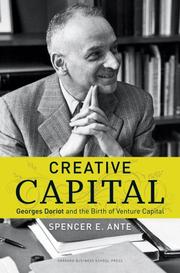
Spencer E. Ante · 2008

Georges Doriot, who showed that investing in small, risky firms could pay.

Recommended by: Patrick Collison

Where it sits in the reference 2

Assets
Economics

Topics

Entrepreneurship and StartupsInvestingEconomics