Technology, innovation and the digital economy
Books on how technology, automation, platforms and the internet change economies, firms and work, and on how innovation and venture finance operate.
Start here
- Platform RevolutionGeoffrey G. Parker, Marshall W. Van Alstyne, Sangeet Paul Choudary, 2016
- Game OverDavid Sheff, 1993
- Innovation and Its DiscontentsAdam B. Jaffe, Josh Lerner, 2004
- Invisible EnginesDavid S. Evans, Andrei Hagiu, Richard Schmalensee, 2006
- Innovation and the StateDan Breznitz, 2007

How platforms create value by matching groups, unlike linear pipeline businesses.
Recommended by: Reid Hoffman

How 1980s changes turned the US patent system from aid to obstacle for innovation.
Software platforms as two-sided markets, and how they price and grow.

How Israel, Taiwan and Ireland each used the state to build IT industries.

Why most government efforts to build venture capital sectors fail.

Digital costs near zero mean goods can be given away, which changes whole industries.

How multi-sided platforms such as card networks get both sides on board at once.

AI as a fall in the cost of prediction, and what that does to decisions and jobs.
Recommended by: Daniel Petre, Patrick O'Shaughnessy

Recommended by: Patrick Collison, Kevin Kelly

Recommended by: Mohnish Pabrai

Economics for information goods: pricing, versioning, lock-in and network effects.
Recommended by: Mohnish Pabrai, Tim O’Reilly


Recommended by: Patrick Collison, Mike Maples, Jr.
Computing is becoming a utility supplied over a network, as electricity did.
Recommended by: Marc Benioff
Why Israel produces so many tech start-ups, from military service to immigration.
Recommended by: Balaji S. Srinivasan

Innovation as a game played by the state, capital markets and competition.
“He wrote this book, which I really recommend, it's called Doing Capitalism” — Marc Andreessen
Source: Dwarkesh Podcast — Marc Andreessen (transcript)
Recommended by: Marc Andreessen
How entrepreneurs spread four centuries of progress to the world's excluded majority.
Recommended by: Mohnish Pabrai

How fashion, cuisine and other fields thrive on copying without patents or copyright.
Recommended by: Mohnish Pabrai
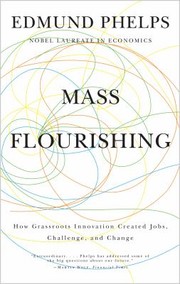
Recommended by: Patrick Collison
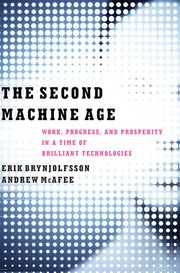
Brynjolfsson and McAfee provide the economic context: AI as a general-purpose technology that decouples productivity from employment. The alignment problem doesn't exist in a vacuum — it plays out in economies where AI is already restructuring labor markets in ways that are hard to reverse.
Recommended by: Mohnish Pabrai, Patrick Collison and 4 others


How machine learning and robots will displace work faster than institutions adapt.
Recommended by: Antonio García Martínez, Brian Armstrong


Recommended by: Alfred Lin, Reid Hoffman
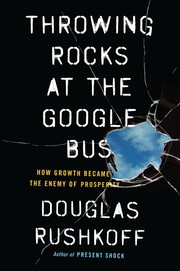
Recommended by: George Hatzis


The case that blockchain architectures displace the centralised web
Recommended by: Peter Thiel

Recommended by: Satya Nadella

How Google and others turn behaviour into data to predict and steer what people do.
Recommended by: Benedict Evans, Vinod Khosla

Recommended by: Balaji S. Srinivasan, Patrick Collison

Innovation is gradual, collective and bottom-up, not the work of lone inventors.
“It's a must-read for entrepreneurs and government officials who want to either be innovative themselves or foster innovation.” — Naval Ravikant
Source: Nav.al — 'Matt Ridley: How Innovation Works, Part 2'
Recommended by: Naval Ravikant, Balaji S. Srinivasan


 Mohnish Pabrairecommends 8 books here
 Patrick Collisonrecommends 6 books here
 Balaji S. Srinivasanrecommends 3 books here
 Reid Hoffmanrecommends 2 books here
 Antonio García Martínezrecommends 2 books here
 Naval Ravikantrecommends 2 books here
 Tim O’Reillyrecommends 2 books here
 Marc Andreessenrecommends 1 book here
 Peter Thielrecommends 1 book here
 Brad Feldrecommends 1 book here
 Kevin Kellyrecommends 1 book here
 Marc Benioffrecommends 1 book here
Show all 26
 Alfred Linrecommends 1 book here
 Bill Gatesrecommends 1 book here
 Brian Armstrongrecommends 1 book here
 Ev Williamsrecommends 1 book here
 Satya Nadellarecommends 1 book here
 Vinod Khoslarecommends 1 book here