Updates

  1. Person pages list letters, writing, profiles and links as sortable tables with filters, and show each person's companies as links; Fund letters show each letter's description in its own column.
  2. Experts show a checked job title and a short description of each person; 30 more people have photographs.
  3. Every company, fund, university and publication the experts work for has a page listing the people there.
  4. Fund letters show each letter's thesis and filter by it; 225 person pages list the essays, columns and newsletter issues the person wrote.
  5. Person pages list every essay and newsletter issue a person wrote, and their own books as a table in List view.
  6. Recommends shows the five largest kinds of book and the rest under More; browse pictures load sooner.
  7. Podcasts and talks link the original episode, filter by Audio and video or Press, and list each publisher once.
  8. Pages are wider, Recommends has List and Grid, and a filter clicked again turns off.
  9. Book cards sit in a ruled grid with Open Library and Goodreads links and each book's one-line note.
  10. Funds is now Investors; each investor's styles are buttons that filter the table.
  11. Podcasts and talks on a person's page filter by year and publisher and show as a list or a grid of pictures.
  12. Quotes show only people's own words: 472 summaries written by list sites are gone.
  13. Country pages open from Browse again, and every link on the shelf lands on a page.
  14. Subject and person pages show their sections as tabs, and each book appears once on a person's page.
  15. Book cards show the quote, who said it and the source; grids show five cards to a row.
  16. On a phone, a menu holds the sections, search, Updates, Feedback and dark mode.
  17. Feedback takes a screenshot of the page with no browser prompt, opens a screenshot full size when you click it, and clears itself once sent.
  18. Book cards are centred, search names the topic each book sits in, and any text cut short shows whole on hover.
  19. Search groups its results by kind: people, companies, geographies, subjects, topics, books, funds, fund letters and papers.
  20. The Books table lists who recommended each book by name, and the browser tab names the section you are in.
  21. Feedback can take a screenshot of the page, or one you paste or choose, and opens in the corner beside Updates.
  22. Each rail button reopens its section where you left it, and Browse, Table and People show on every book and subject page.
  23. Filters grey out choices that hold nothing instead of hiding them, and Books › People filters by authors or recommenders.
  24. Feedback takes a subject line and up to three screenshots.
  25. Biographies are grouped by the person they are about: 41 new pages, from Abraham Lincoln to Lee Kuan Yew.
  26. Sport splits into 23 sports, and Religion into one topic per faith.
  27. Book lists show as cards: the cover, one recommendation quote and every recommender by name.
  28. Seventeen subjects that had two or three pages under different names now have one page each.
  29. Every page lists its Experts as authors and recommenders, with a link to them on the Experts tab.
  30. Economics, Financial history, Financial panics and Accounting are subjects of their own, with one page per financial crisis.
  31. Book, person and subject pages open inside the app, so the tabs stay in view.
  32. 996 more book covers, and photographs or logos for 227 more people and companies.
  33. Books › Browse shows every subject as cards, and the rail holds Fund letters, Papers, Experts, Books and Funds.
  34. Every topic over 150 books splits into narrower topics, each with a page of its own.

Send feedback

What is it?
Screenshots, up to 3 (optional)
or paste one with Ctrl+V

We use your email only to reply to you.

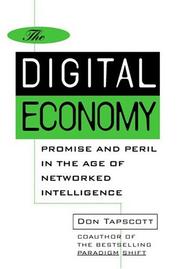
The Digital Economy

The Digital Economy

Don Tapscott
1995
T3 342 pages · about 5h 42m to read Open Librarygoodreads

Summary

Tapscott's 1995 book was among the first to argue that networked information technology would reorganise business rather than merely make existing operations more efficient.

His twelve themes included: knowledge as the primary economic input; digitisation of information changing what can be moved and reproduced at no cost; virtualisation, in which physical things and organisations are replaced by their informational equivalents; molecularisation, meaning the breaking of large organisations into small units that can be recombined; integration and internetworking, in which value is created by networks of firms rather than by individual ones; disintermediation, removing layers between producer and consumer; convergence of computing, communications and content; innovation as the primary source of value; prosumption, in which consumers participate in producing what they consume; immediacy, meaning real-time operation; globalisation; and discordance, meaning the social conflicts the transition would produce.

Several were correct in direction. Disintermediation, convergence, network-based value creation and consumer participation in production all occurred substantially as described. The predictions about timing were optimistic, the specific companies and technologies named are largely gone, and the treatment of the transition's social costs is brief despite discordance being listed as a theme.

The book is a period document written at the beginning of commercial internet adoption. It has no analytical framework beyond the themes and no evidence beyond example. Shapiro and Varian's Information Rules is the analytically serious book on the same economics.

Key takeaways 7

  1. Networked information technology reorganises business rather than merely making existing operations more efficient.
  2. Digitising information makes it reproducible and transportable at no cost, which changes the economics of every business built on distributing it.
  3. Large organisations break into small units that can be recombined, which changes the firm's boundaries and what must be owned.
  4. Value is created by networks of firms rather than by individual ones, which makes the relevant competitive unit the network.
  5. Disintermediation removes layers between producer and consumer wherever those layers exist only to move information.
  6. Consumers participate in producing what they consume, which changes the relationship between the firm and its market.
  7. The book is a 1995 period document, and Shapiro and Varian's Information Rules is the analytically serious treatment of the same economics.

Who should read it

Readers interested in an early statement of digital business themes, with Information Rules as the rigorous source.

About Don Tapscott

Canadian business author and consultant, co-founder of the Blockchain Research Institute, who wrote The Digital Economy and Wikinomics.

The Digital Economy set out early how networks would redraw firm boundaries, and Wikinomics documented mass collaboration - open source, peer production, crowdsourced research - as a working production model rather than a curiosity. Blockchain Revolution extends the argument to distributed ledgers and their business applications.

Blockchain Research Institute

Who recommended it 1 · 1 direct

Similar books 6

Chosen by shared topics, the entries that hold them, and the people who recommended both.

Carl Shapiro, Hal R. Varian · 1998

Economics for information goods: pricing, versioning, lock-in and network effects.

Peter Huber · 1987

A report on competition in the telephone industry.

Recommended by: Mohnish Pabrai

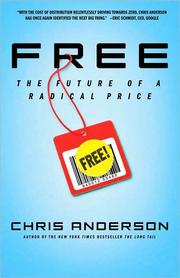
T2 Free
Chris Anderson · 2009

Digital costs near zero mean goods can be given away, which changes whole industries.
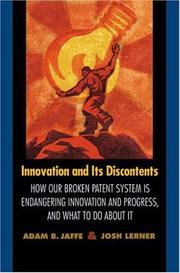
Adam B. Jaffe, Josh Lerner · 2004

How 1980s changes turned the US patent system from aid to obstacle for innovation.
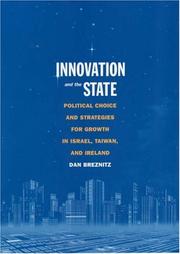
Dan Breznitz · 2007

How Israel, Taiwan and Ireland each used the state to build IT industries.

Where it sits in the reference 2

Strategists
Economics

Topics

Technology and ComputingEconomicsTech strategy and platform economics