Updates

  1. Person pages list letters, writing, profiles and links as sortable tables with filters, and show each person's companies as links; Fund letters show each letter's description in its own column.
  2. Experts show a checked job title and a short description of each person; 30 more people have photographs.
  3. Every company, fund, university and publication the experts work for has a page listing the people there.
  4. Fund letters show each letter's thesis and filter by it; 225 person pages list the essays, columns and newsletter issues the person wrote.
  5. Person pages list every essay and newsletter issue a person wrote, and their own books as a table in List view.
  6. Recommends shows the five largest kinds of book and the rest under More; browse pictures load sooner.
  7. Podcasts and talks link the original episode, filter by Audio and video or Press, and list each publisher once.
  8. Pages are wider, Recommends has List and Grid, and a filter clicked again turns off.
  9. Book cards sit in a ruled grid with Open Library and Goodreads links and each book's one-line note.
  10. Funds is now Investors; each investor's styles are buttons that filter the table.
  11. Podcasts and talks on a person's page filter by year and publisher and show as a list or a grid of pictures.
  12. Quotes show only people's own words: 472 summaries written by list sites are gone.
  13. Country pages open from Browse again, and every link on the shelf lands on a page.
  14. Subject and person pages show their sections as tabs, and each book appears once on a person's page.
  15. Book cards show the quote, who said it and the source; grids show five cards to a row.
  16. On a phone, a menu holds the sections, search, Updates, Feedback and dark mode.
  17. Feedback takes a screenshot of the page with no browser prompt, opens a screenshot full size when you click it, and clears itself once sent.
  18. Book cards are centred, search names the topic each book sits in, and any text cut short shows whole on hover.
  19. Search groups its results by kind: people, companies, geographies, subjects, topics, books, funds, fund letters and papers.
  20. The Books table lists who recommended each book by name, and the browser tab names the section you are in.
  21. Feedback can take a screenshot of the page, or one you paste or choose, and opens in the corner beside Updates.
  22. Each rail button reopens its section where you left it, and Browse, Table and People show on every book and subject page.
  23. Filters grey out choices that hold nothing instead of hiding them, and Books › People filters by authors or recommenders.
  24. Feedback takes a subject line and up to three screenshots.
  25. Biographies are grouped by the person they are about: 41 new pages, from Abraham Lincoln to Lee Kuan Yew.
  26. Sport splits into 23 sports, and Religion into one topic per faith.
  27. Book lists show as cards: the cover, one recommendation quote and every recommender by name.
  28. Seventeen subjects that had two or three pages under different names now have one page each.
  29. Every page lists its Experts as authors and recommenders, with a link to them on the Experts tab.
  30. Economics, Financial history, Financial panics and Accounting are subjects of their own, with one page per financial crisis.
  31. Book, person and subject pages open inside the app, so the tabs stay in view.
  32. 996 more book covers, and photographs or logos for 227 more people and companies.
  33. Books › Browse shows every subject as cards, and the rail holds Fund letters, Papers, Experts, Books and Funds.
  34. Every topic over 150 books splits into narrower topics, each with a page of its own.

Send feedback

What is it?
Screenshots, up to 3 (optional)
or paste one with Ctrl+V

We use your email only to reply to you.

EA

Entrepreneurship and the Economy

These books examine entrepreneurship at the level of a city, country or economy: startup ecosystems, national innovation records, development and the history of enterprise.

Start here

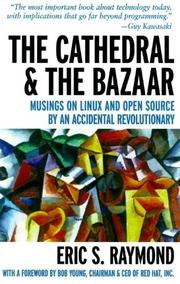
  1. The Cathedral and the BazaarEric S. Raymond, 1999
  2. Creating Modern CapitalismThomas K. McCraw, 1997
  3. Boulevard of Broken DreamsJosh Lerner, 2009
  4. Start-Up NationDan Senor, Saul Singer, 2009
  5. MakersChris Anderson, 2013
Eric S. Raymond · 1999

Essays on open-source software and its model of collaborative development.

Recommended by: Paul Graham, Ryan Holiday
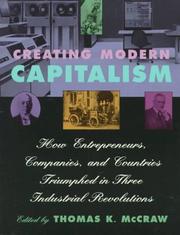
Thomas K. McCraw · 1997

How Britain, Germany, Japan and the US each built their own form of capitalism.

Recommended by: Mohnish Pabrai

Josh Lerner · 2009

Why most government efforts to build venture capital sectors fail.
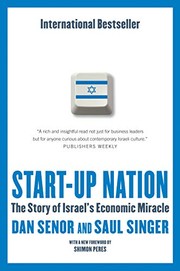
Dan Senor, Saul Singer · 2009

Why Israel produces so many tech start-ups, from military service to immigration.

Recommended by: Balaji S. Srinivasan
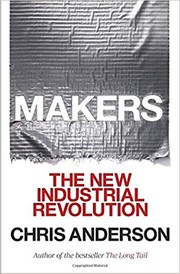
Chris Anderson · 2013

How 3D printing and other tools let anyone start a manufacturing business.

Recommended by: Jack Ma

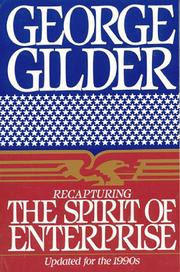
George Gilder · 1992

Supply-side case for entrepreneurs as the actual source of growth

“on how economic systems that encourage aggressive entrepreneurship build the most for the benefit of the most” — Marc Andreessen

Source: @pmarca, companion thread to 'It's Time to Build'

Recommended by: Marc Andreessen
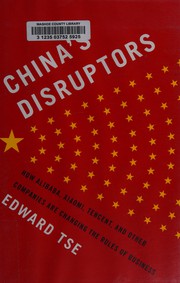
Edward Tse · 2015

How Chinese private champions including Alibaba actually built scale.

Bitange Ndemo, Tim Weiss · 2016

How Kenya's tech startups and M-Pesa grew, with interviews with their founders.

Diane Mulcahy · 2016

A worker's guide to the gig economy and how platforms price labour.

Joseph F. Coughlin · 2017

What older consumers want and buy, against the stereotypes firms design for.
C.K. Prahalad · 2004

How companies can serve the world's poor profitably and reduce poverty in doing so.

Recommended by: Mohnish Pabrai

Brad Feld · 2012

Subtitled 'Building an Entrepreneurial Ecosystem in Your City'

Philip Auerswald · 2012

How entrepreneurs spread four centuries of progress to the world's excluded majority.

Recommended by: Mohnish Pabrai
Christopher M. Schroeder · 2013

How entrepreneurs and tech investors are building companies in the Middle East.

Recommended by: Andrew Chen, Brad Feld

John Dearie, Courtney Geduldig · 2013

Recommended by: Brad Feld

Hiroshi Mikitani, Ryoichi Mikitani · 2014

Rakuten's founder and his economist father debate how Japan can compete again.

Recommended by: Bill Gates, Mohnish Pabrai
Alexa Clay, Kyra Maya Phillips · 2015

Recommended by: Jason Fried

Avi Jorisch · 2018

Case studies of Israeli technologies and how they were commercialised.
Clayton Christensen, Efosa Ojomo, Karen Dillon · 2019
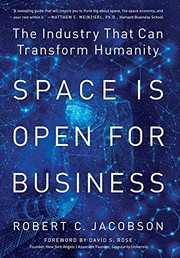
Robert C. Jacobson · 2020

One of the few attempts at a survey of the commercial sector.
More entrepreneurship and startups