Updates

  1. Person pages list letters, writing, profiles and links as sortable tables with filters, and show each person's companies as links; Fund letters show each letter's description in its own column.
  2. Experts show a checked job title and a short description of each person; 30 more people have photographs.
  3. Every company, fund, university and publication the experts work for has a page listing the people there.
  4. Fund letters show each letter's thesis and filter by it; 225 person pages list the essays, columns and newsletter issues the person wrote.
  5. Person pages list every essay and newsletter issue a person wrote, and their own books as a table in List view.
  6. Recommends shows the five largest kinds of book and the rest under More; browse pictures load sooner.
  7. Podcasts and talks link the original episode, filter by Audio and video or Press, and list each publisher once.
  8. Pages are wider, Recommends has List and Grid, and a filter clicked again turns off.
  9. Book cards sit in a ruled grid with Open Library and Goodreads links and each book's one-line note.
  10. Funds is now Investors; each investor's styles are buttons that filter the table.
  11. Podcasts and talks on a person's page filter by year and publisher and show as a list or a grid of pictures.
  12. Quotes show only people's own words: 472 summaries written by list sites are gone.
  13. Country pages open from Browse again, and every link on the shelf lands on a page.
  14. Subject and person pages show their sections as tabs, and each book appears once on a person's page.
  15. Book cards show the quote, who said it and the source; grids show five cards to a row.
  16. On a phone, a menu holds the sections, search, Updates, Feedback and dark mode.
  17. Feedback takes a screenshot of the page with no browser prompt, opens a screenshot full size when you click it, and clears itself once sent.
  18. Book cards are centred, search names the topic each book sits in, and any text cut short shows whole on hover.
  19. Search groups its results by kind: people, companies, geographies, subjects, topics, books, funds, fund letters and papers.
  20. The Books table lists who recommended each book by name, and the browser tab names the section you are in.
  21. Feedback can take a screenshot of the page, or one you paste or choose, and opens in the corner beside Updates.
  22. Each rail button reopens its section where you left it, and Browse, Table and People show on every book and subject page.
  23. Filters grey out choices that hold nothing instead of hiding them, and Books › People filters by authors or recommenders.
  24. Feedback takes a subject line and up to three screenshots.
  25. Biographies are grouped by the person they are about: 41 new pages, from Abraham Lincoln to Lee Kuan Yew.
  26. Sport splits into 23 sports, and Religion into one topic per faith.
  27. Book lists show as cards: the cover, one recommendation quote and every recommender by name.
  28. Seventeen subjects that had two or three pages under different names now have one page each.
  29. Every page lists its Experts as authors and recommenders, with a link to them on the Experts tab.
  30. Economics, Financial history, Financial panics and Accounting are subjects of their own, with one page per financial crisis.
  31. Book, person and subject pages open inside the app, so the tabs stay in view.
  32. 996 more book covers, and photographs or logos for 227 more people and companies.
  33. Books › Browse shows every subject as cards, and the rail holds Fund letters, Papers, Experts, Books and Funds.
  34. Every topic over 150 books splits into narrower topics, each with a page of its own.

Send feedback

What is it?
Screenshots, up to 3 (optional)
or paste one with Ctrl+V

We use your email only to reply to you.

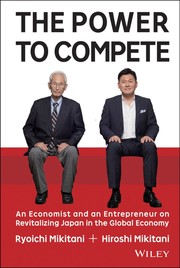
The Power to Compete

The Power to Compete

Hiroshi Mikitani, Ryoichi Mikitani
2014
T4 240 pages · about 4h to read Open Librarygoodreads

Summary

This is a dialogue between Hiroshi Mikitani, who founded Rakuten, and his father Ryoichi Mikitani, an economist who had worked with Joseph Stiglitz and who was terminally ill during its writing. They discuss why Japan's economy stopped growing and what would restore it.

The son's diagnosis is about corporate practice and openness. He argues that Japanese companies became inward-looking, that the seniority system prevents capable people from having authority, that consensus decision-making produces slowness that global competition punishes, that the education system and the language barrier isolate Japanese business from international markets, and that regulation protects incumbents. His most publicised action, making English the official internal language of Rakuten, is defended here as necessary for hiring and for operating internationally rather than as symbolism.

The father's contribution is macroeconomic and more measured, covering monetary policy, deflation, the banking crisis and structural reform, and he pushes back on some of his son's positions. The dialogue form lets disagreements stand.

The book was written during the early Abe government and treats its programme as promising, which dates it. It is short and readable, and its use is as a first-hand statement of what a successful Japanese entrepreneur thought was wrong with Japanese business, which is more direct than most outside analysis. The economics is not rigorous, the sample is one company's experience generalised, and the reforms proposed have been partially attempted with mixed results in the decade since. The reference has not verified the specific data claims made in the dialogue.

Key takeaways 7

  1. Japanese corporate decline came from inward orientation and closed hiring rather than from technology or capital shortage.
  2. Seniority-based promotion prevents capable people from holding authority while they are still capable of using it.
  3. Consensus decision-making produces slowness that is fatal in markets where competitors decide quickly.
  4. Making English the internal working language of a Japanese company is necessary for international hiring and operation, not a symbolic gesture.
  5. Regulation in Japan systematically protects incumbent firms and blocks the entry that would force improvement.
  6. Entrepreneurship requires a social tolerance of failure that Japanese institutions do not supply.
  7. Monetary policy alone cannot restore growth without structural changes to labour markets, corporate governance and market entry.

Who should read it

Investors and operators with Japanese exposure who want a founder's direct account of what constrains Japanese corporate competitiveness.

Who recommended it 2 · 2 direct

Similar books 6

Chosen by shared topics, the entries that hold them, and the people who recommended both.
Gita Piramal · 1996

Profiles of the family houses that still dominate the index.

Recommended by: Mohnish Pabrai

Thomas J. Tierney · 2011

Recommended by: Andrew Wilkinson, Bill Gates

Paul Brest, Hal Harvey · 2008

Recommended by: Bill Gates

Where it sits in the reference 3

Business themes
Business themes
Economics

Topics

Entrepreneurship and StartupsBusiness and ManagementEntrepreneurship and the Economy