Updates

  1. Person pages list letters, writing, profiles and links as sortable tables with filters, and show each person's companies as links; Fund letters show each letter's description in its own column.
  2. Experts show a checked job title and a short description of each person; 30 more people have photographs.
  3. Every company, fund, university and publication the experts work for has a page listing the people there.
  4. Fund letters show each letter's thesis and filter by it; 225 person pages list the essays, columns and newsletter issues the person wrote.
  5. Person pages list every essay and newsletter issue a person wrote, and their own books as a table in List view.
  6. Recommends shows the five largest kinds of book and the rest under More; browse pictures load sooner.
  7. Podcasts and talks link the original episode, filter by Audio and video or Press, and list each publisher once.
  8. Pages are wider, Recommends has List and Grid, and a filter clicked again turns off.
  9. Book cards sit in a ruled grid with Open Library and Goodreads links and each book's one-line note.
  10. Funds is now Investors; each investor's styles are buttons that filter the table.
  11. Podcasts and talks on a person's page filter by year and publisher and show as a list or a grid of pictures.
  12. Quotes show only people's own words: 472 summaries written by list sites are gone.
  13. Country pages open from Browse again, and every link on the shelf lands on a page.
  14. Subject and person pages show their sections as tabs, and each book appears once on a person's page.
  15. Book cards show the quote, who said it and the source; grids show five cards to a row.
  16. On a phone, a menu holds the sections, search, Updates, Feedback and dark mode.
  17. Feedback takes a screenshot of the page with no browser prompt, opens a screenshot full size when you click it, and clears itself once sent.
  18. Book cards are centred, search names the topic each book sits in, and any text cut short shows whole on hover.
  19. Search groups its results by kind: people, companies, geographies, subjects, topics, books, funds, fund letters and papers.
  20. The Books table lists who recommended each book by name, and the browser tab names the section you are in.
  21. Feedback can take a screenshot of the page, or one you paste or choose, and opens in the corner beside Updates.
  22. Each rail button reopens its section where you left it, and Browse, Table and People show on every book and subject page.
  23. Filters grey out choices that hold nothing instead of hiding them, and Books › People filters by authors or recommenders.
  24. Feedback takes a subject line and up to three screenshots.
  25. Biographies are grouped by the person they are about: 41 new pages, from Abraham Lincoln to Lee Kuan Yew.
  26. Sport splits into 23 sports, and Religion into one topic per faith.
  27. Book lists show as cards: the cover, one recommendation quote and every recommender by name.
  28. Seventeen subjects that had two or three pages under different names now have one page each.
  29. Every page lists its Experts as authors and recommenders, with a link to them on the Experts tab.
  30. Economics, Financial history, Financial panics and Accounting are subjects of their own, with one page per financial crisis.
  31. Book, person and subject pages open inside the app, so the tabs stay in view.
  32. 996 more book covers, and photographs or logos for 227 more people and companies.
  33. Books › Browse shows every subject as cards, and the rail holds Fund letters, Papers, Experts, Books and Funds.
  34. Every topic over 150 books splits into narrower topics, each with a page of its own.

Send feedback

What is it?
Screenshots, up to 3 (optional)
or paste one with Ctrl+V

We use your email only to reply to you.

Business Maharajas

Business Maharajas

Gita Piramal
1996
T3 474 pages · about 7h 54m to read Open Librarygoodreads

Profiles of the family houses that still dominate the index.

Summary

Piramal, a business historian who came from an Indian industrial family, wrote profiles of leading Indian business figures based on extensive interviews, published shortly after the 1991 liberalisation.

The subjects include Dhirubhai Ambani of Reliance, Rahul Bajaj of Bajaj Auto, Aditya Birla, Bharat Ram, Brij Mohan Khaitan, Rama Prasad Goenka and Ratan Tata. Piramal had access to most of them directly.

The substantive value is in what the profiles reveal about doing business under the licence system. Until 1991, Indian industrial production required government permission specifying what could be produced, in what quantity, and where, and expansion required fresh approval. Capacity, imports, foreign exchange and technology licensing were all controlled. Piramal documents how each subject navigated this: the relationships with officials and politicians, the use of licence applications to block competitors, the practice of applying for more capacity than intended to deny it to others, and the specific skills that this environment rewarded, which were political and procedural rather than operational.

Dhirubhai Ambani's profile is the most detailed and the most instructive. Piramal traces his construction of Reliance from a yarn trading business into a vertically integrated textiles and petrochemicals group, the use of retail equity raising to fund it when institutional finance was closed to him, and the intensity of his engagement with the licensing system.

The book was published in 1996 and captures a business class at the moment its operating environment changed fundamentally. The subjects' subsequent trajectories diverged sharply depending on whether the capabilities that suited the licence system transferred to a competitive one, which is the natural question the book raises and cannot answer.

Key takeaways 7

  1. Industrial production under the licence system required government permission specifying product, quantity and location.
  2. The system rewarded political and procedural skill rather than operational or competitive capability.
  3. Licence applications were used to block competitors by claiming capacity the applicant did not intend to build.
  4. Dhirubhai Ambani funded Reliance through retail equity raising when institutional finance was closed to him.
  5. Vertical integration in a licensed economy protected a firm from the input shortages that licensing created.
  6. Family control was the dominant ownership form and shaped succession, capital allocation and diversification decisions.
  7. The capabilities that succeeded under licensing did not necessarily transfer to the competitive environment after 1991.

Who should read it

Investors and operators in India who want the business history of the licence period and the origins of the groups that still dominate.

Who recommended it 1 · 1 direct

Similar books 6

Chosen by shared topics, the entries that hold them, and the people who recommended both.

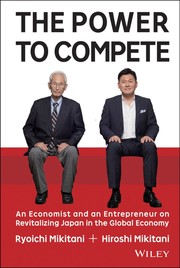
Hiroshi Mikitani, Ryoichi Mikitani · 2014

Rakuten's founder and his economist father debate how Japan can compete again.

Recommended by: Bill Gates, Mohnish Pabrai

Acha Leke, Mutsa Chironga, Georges Desvaux · 2018

McKinsey survey of operating companies; Ghana appears among the consumer-market cases.

Where it sits in the reference 3

Geographies
Business themes
Business themes

Topics

Biography and MemoirBusiness and ManagementTycoons and Business DynastiesIndian business houses