
Clayton Christensen
Developed the theory of disruptive innovation in The Innovator's Dilemma (1997); The Economist called him the most influential management thinker of his time. Died in 2020.
 Harvard Business SchoolInnosightRose Park AdvisorsClayton Christensen Institute
The Innovator's Dilemma turned disruption into a primary framework that the rest of the strategy and innovation literature argues with rather than around.
11 books of their own · 13 articles
Start here
- The Innovator's Dilemma1997
- Innovation and the General Manager1999
- The Innovator's SolutionMichael E. Raynor, 2003
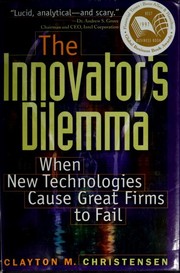
Why well-run firms lose to cheaper, worse products that enter at the market's bottom.
“Awesome book. May move soon to my Top Ten List. If anything will keep CEOs awake at night, reading this book certainly will.” — Mohnish Pabrai
Source: Mohnish's Bookshelf — Books on Sales & Marketing, entry 66
Recommended by: Jim Collins, Mohnish Pabrai, Aaron Levie and 27 others
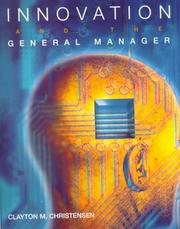
Irwin/McGraw-Hill case textbook
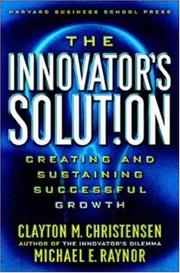
How a company can build new businesses through low-end and new-market disruption.
Recommended by: Jeff Bezos, Keith Rabois
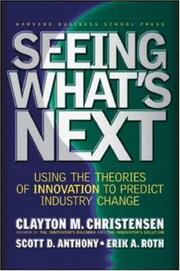
Disruption theory used to forecast how industries will change.
Recommended by: Ev Williams
Business strategy theories applied to career, family and integrity.
Recommended by: Ali Abdaal, Mohnish Pabrai, Patrick Collison and 6 others

Religious book, outside his management writing

Customers hire products to do a job; innovate by finding the job, not the buyer type.

 The Innovator's Dilemma | Why well-run firms lose to cheaper, worse products that enter at the market's bottom. | 1997 | T1 | Jim Collins, Mohnish Pabrai, Aaron Levie and 27 others |
 Innovation and the General Manager | Irwin/McGraw-Hill case textbook | 1999 | T4 | – |
 The Innovator's Solution | How a company can build new businesses through low-end and new-market disruption. | 2003 | T1 | Jeff Bezos, Keith Rabois |
 Seeing What's Next | Disruption theory used to forecast how industries will change. | 2004 | T4 | Ev Williams |
 Disrupting Class | – | 2008 | – | |
| The Innovator's Prescription | – | 2009 | T4 | – |
 The Innovator's DNA | – | 2011 | T4 | – |
 How Will You Measure Your Life? | Business strategy theories applied to career, family and integrity. | 2012 | T4 | Ali Abdaal, Mohnish Pabrai, Patrick Collison and 6 others |
 The Power of Everyday Missionaries | Religious book, outside his management writing | 2012 | – | |
 Competing Against Luck | Customers hire products to do a job; innovate by finding the job, not the buyer type. | 2016 | T2 | – |
 The Prosperity Paradox | – | 2019 | T4 | – |
| Know Your Customers' "Jobs to Be Done" | Harvard Business Review | 2016 |
| Clayton Christensen: What I'll Miss About Andy Grove | Harvard Business Review | 2016 |
| What Is Disruptive Innovation? | Harvard Business Review | 2015 |
| The Capitalist's Dilemma | Harvard Business Review | 2014 |
| Consulting on the Cusp of Disruption | Harvard Business Review | 2013 |
| How Will You Measure Your Life? | Harvard Business Review | 2010 |
| The Innovator's DNA | Harvard Business Review | 2009 |
| Innovation Killers: How Financial Tools Destroy Your Capacity to Do New Things | Harvard Business Review | 2008 |
| Reinventing Your Business Model | Harvard Business Review | 2008 |
| Marketing Malpractice: The Cause and the Cure | Harvard Business Review | 2005 |
| Why Hard-Nosed Executives Should Care About Management Theory | Harvard Business Review | 2003 |
| Meeting the Challenge of Disruptive Change | Harvard Business Review | 2000 |
| Disruptive Technologies: Catching the Wave | Harvard Business Review | 1995 |
| Clayton Christensen, Guru of ‘Disruptive Innovation,’ Dies at 67 Paywall | The New York Times | 2020 |
| The Man Who Saw Tomorrow’s Disruption Paywall | The Atlantic | 2020 |
| Clayton Christensen dies at 67 after lifetime of business, spiritual influence | Deseret News | 2020 |
| Clayton Christensen moves on from the dissing of disruption Paywall | Financial Times | 2016 |
| Clayton Christensen on disruptive innovation | Harvard Magazine | 2014 |
| The Disruption Machine Paywall | The New Yorker | 2014 |
| Clayton Christensen’s Theory of Disruption Paywall | The New Yorker | 2012 |