
How Will You Measure Your Life?
Summary
Christensen applies theories he developed for business strategy to personal decisions about career, family and integrity. The book grew from a lecture he gave to his Harvard Business School graduating class after his cancer diagnosis, and it is co-written with Allworth and Dillon.
The theories transfer explicitly. Herzberg's motivation theory distinguishes hygiene factors, including salary, status and job security, which cause dissatisfaction when absent but do not produce satisfaction when present, from true motivators including responsibility, learning and contribution. Christensen argues that people take jobs optimising hygiene factors and then find themselves dissatisfied without understanding why. The distinction between deliberate and emergent strategy applies to careers, where a plan should be held loosely enough for unanticipated opportunities and where a person should identify what assumptions must be true for their plan to work.
Resource allocation theory carries the central argument about family. Christensen argues that people allocate time and energy to whatever produces the most immediate visible return, which is nearly always work, and that relationships give returns on a long delay, so the allocation process starves them without any decision ever being made. He uses the theory of jobs to be done to argue that a person should ask what job their spouse or child is hiring them to do rather than assume they know.
The final section on integrity argues that marginal-cost reasoning is what causes ethical failure, since the cost of doing something wrong once always looks lower than the principle is worth. The book is short, the examples repeat from Christensen's other work, and it draws heavily on his personal life and Mormon faith. It contains no evidence about outcomes, and the theories were built for firms rather than people. The resource allocation and marginal-cost arguments are the ones readers apply.
Key takeaways 8
- Salary, status and job security prevent dissatisfaction but do not produce satisfaction, which comes from responsibility, learning and contribution.
- People allocate resources to whatever gives the fastest visible return, which means careers systematically starve relationships without any explicit decision.
- A career strategy should hold deliberate plans loosely and remain open to emergent opportunities, particularly early on.
- Any plan should be examined by asking what assumptions must prove true for it to work, and then testing the cheapest of those first.
- A person should ask what job a spouse or child is hiring them to do rather than assume the answer, since the perceived need is usually different.
- Outsourcing capabilities, whether in a firm or in raising children, removes the capacity to do the thing later, and the loss is invisible at the time.
- Culture forms from how problems get solved repeatedly, so a family or a company acquires one whether or not anyone designed it.
- Ethical failure comes from marginal-cost reasoning, in which doing the wrong thing just this once always appears cheaper than the principle is worth.
Who should read it
Operators and founders weighing career intensity against family, who want business theory applied honestly to personal allocation decisions.
About Clayton Christensen
Kim B. Clark Professor of Business Administration, Harvard Business School 1992-2020; co-founder of Innosight, Rose Park Advisors and the Clayton Christensen Institute; died 23 January 2020
The Innovator's Dilemma turned disruption into a primary framework that the rest of the strategy and innovation literature argues with rather than around.
Harvard Business School, Innosight, Rose Park Advisors, Clayton Christensen Institute
Who recommended it 9 · 4 direct
Similar books 6
Chosen by shared topics, the entries that hold them, and the people who recommended both.

Recommended by: Mohnish Pabrai, Ryan Holiday
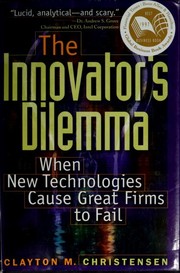
Why well-run firms lose to cheaper, worse products that enter at the market's bottom.
“Awesome book. May move soon to my Top Ten List. If anything will keep CEOs awake at night, reading this book certainly will.” — Mohnish Pabrai
Source: Mohnish's Bookshelf — Books on Sales & Marketing, entry 66
Recommended by: Jim Collins, Mohnish Pabrai, Aaron Levie and 27 others

Run your career the way an entrepreneur runs a startup.
Recommended by: Mohnish Pabrai, Jack Dorsey and 4 others
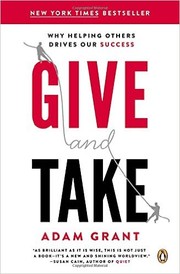
Givers, takers and matchers, and why givers end up both at the bottom and the top.
Recommended by: Mohnish Pabrai, Alex Lieberman and 4 others

Why few women reach senior roles, and what women and firms can do about it.
Recommended by: Mohnish Pabrai, Richard Branson and 3 others

Valuable work now needs people who do what can't be written into a job description.
Recommended by: Ann Handley, Michael Batko, Tom Bilyeu and 2 others
Where it sits in the reference 3
Topics