Updates

  1. Person pages list letters, writing, profiles and links as sortable tables with filters, and show each person's companies as links; Fund letters show each letter's description in its own column.
  2. Experts show a checked job title and a short description of each person; 30 more people have photographs.
  3. Every company, fund, university and publication the experts work for has a page listing the people there.
  4. Fund letters show each letter's thesis and filter by it; 225 person pages list the essays, columns and newsletter issues the person wrote.
  5. Person pages list every essay and newsletter issue a person wrote, and their own books as a table in List view.
  6. Recommends shows the five largest kinds of book and the rest under More; browse pictures load sooner.
  7. Podcasts and talks link the original episode, filter by Audio and video or Press, and list each publisher once.
  8. Pages are wider, Recommends has List and Grid, and a filter clicked again turns off.
  9. Book cards sit in a ruled grid with Open Library and Goodreads links and each book's one-line note.
  10. Funds is now Investors; each investor's styles are buttons that filter the table.
  11. Podcasts and talks on a person's page filter by year and publisher and show as a list or a grid of pictures.
  12. Quotes show only people's own words: 472 summaries written by list sites are gone.
  13. Country pages open from Browse again, and every link on the shelf lands on a page.
  14. Subject and person pages show their sections as tabs, and each book appears once on a person's page.
  15. Book cards show the quote, who said it and the source; grids show five cards to a row.
  16. On a phone, a menu holds the sections, search, Updates, Feedback and dark mode.
  17. Feedback takes a screenshot of the page with no browser prompt, opens a screenshot full size when you click it, and clears itself once sent.
  18. Book cards are centred, search names the topic each book sits in, and any text cut short shows whole on hover.
  19. Search groups its results by kind: people, companies, geographies, subjects, topics, books, funds, fund letters and papers.
  20. The Books table lists who recommended each book by name, and the browser tab names the section you are in.
  21. Feedback can take a screenshot of the page, or one you paste or choose, and opens in the corner beside Updates.
  22. Each rail button reopens its section where you left it, and Browse, Table and People show on every book and subject page.
  23. Filters grey out choices that hold nothing instead of hiding them, and Books › People filters by authors or recommenders.
  24. Feedback takes a subject line and up to three screenshots.
  25. Biographies are grouped by the person they are about: 41 new pages, from Abraham Lincoln to Lee Kuan Yew.
  26. Sport splits into 23 sports, and Religion into one topic per faith.
  27. Book lists show as cards: the cover, one recommendation quote and every recommender by name.
  28. Seventeen subjects that had two or three pages under different names now have one page each.
  29. Every page lists its Experts as authors and recommenders, with a link to them on the Experts tab.
  30. Economics, Financial history, Financial panics and Accounting are subjects of their own, with one page per financial crisis.
  31. Book, person and subject pages open inside the app, so the tabs stay in view.
  32. 996 more book covers, and photographs or logos for 227 more people and companies.
  33. Books › Browse shows every subject as cards, and the rail holds Fund letters, Papers, Experts, Books and Funds.
  34. Every topic over 150 books splits into narrower topics, each with a page of its own.

Send feedback

What is it?
Screenshots, up to 3 (optional)
or paste one with Ctrl+V

We use your email only to reply to you.

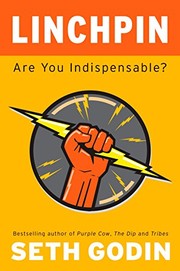
Linchpin

Linchpin

Seth Godin
1960
T2 244 pages · about 4h 4m to read Open Librarygoodreads

Summary

Godin argues that the industrial economy created jobs that required compliance and replaceability, and that the remaining valuable work requires people who do things that cannot be specified in advance. His term for such a person is a linchpin, meaning someone who is essential rather than interchangeable, and his argument is that this is a choice rather than a talent.

The qualities he identifies as making someone indispensable include providing a unique interface between the organisation and people outside it, delivering unique creativity, managing complex situations without a manual, leading customers, inspiring colleagues, providing deep domain knowledge, and possessing unique talent. He argues that following instructions well is now the least valuable capability because it is the most easily replaced.

His explanation for why people do not do this work is what he calls the resistance, located in the amygdala, which he calls the lizard brain. He argues that fear of failure and of standing out produces the behaviour of hiding inside a defined role, and that the specific manifestations are procrastination, perfectionism, and the search for permission.

He also argues for what he calls the art of giving gifts, meaning contributions made without a defined transactional return, which he holds is what builds the position that makes a person indispensable. The book has no evidence and is written as exhortation. The neuroscience is loose and the lizard brain framing is not accurate. The advice presupposes work that permits discretion, and many jobs do not. The argument that following instructions is the least defensible position has become more accurate rather than less since publication.

Key takeaways 8

  1. Work that consists of following instructions well is the most easily replaced and therefore the least valuable position a person can hold.
  2. Becoming indispensable is a choice about how to work rather than a talent some people are born with.
  3. Indispensability comes from doing work that cannot be specified in advance, including judgment in unusual situations and connection with people outside the organisation.
  4. Fear of standing out produces the behaviour of hiding inside a defined role, which Godin identifies as the actual obstacle rather than lack of ability.
  5. Procrastination, perfectionism and waiting for permission are the observable forms that fear takes.
  6. Contributions made without a defined transactional return build the position that eventually makes a person indispensable.
  7. Shipping the work, meaning actually completing and releasing it, is the discipline that separates people who could be indispensable from those who are.
  8. The advice presupposes a role that permits discretion, and many jobs do not offer that latitude.

Who should read it

Employees with discretion in how they work who need an argument for taking initiative rather than executing a defined role.

About Seth Godin

American marketing writer, founder of Yoyodyne and Squidoo, who has published a daily marketing blog for two decades.

Permission Marketing argued for earning attention through opt-in years before that became the default of email and content marketing, and Purple Cow made remarkability the product's job rather than the advertising budget's. The Dip supplies a decision rule for when to quit a market and when the difficulty itself is the barrier worth pushing through.

Yoyodyne, Squidoo

Who recommended it 5

Ann Handleyreported
Tom Bilyeureported
Tony Hsiehreported
Tony Robbinsreported

Similar books 6

Chosen by shared topics, the entries that hold them, and the people who recommended both.
Seth Godin · 2007

When to push through a hard stretch and when to quit a dead end.

Reid Hoffman, Ben Casnocha · 2012

Run your career the way an entrepreneur runs a startup.

Where it sits in the reference 3

Strategists
Business themes
Business themes

Topics

Business and ManagementProductivity and HabitsCareers, learning, creative work and simple living