
Artificial Intelligence
The current dominant capital-allocation story, spanning technical capability, economic displacement and control risk.
Start here
- Prediction MachinesAjay Agrawal, Joshua Gans, Avi Goldfarb, 2018
- The Alignment ProblemBrian Christian, 2020
- SuperintelligenceNick Bostrom, 2014

Why machines smarter than humans pose a control problem to solve before they arrive.
Recommended by: Patrick Collison, Brad Feld, Brett Adcock and 6 others

Why AI must be redesigned from the ground up to keep superhuman machines in check.
Recommended by: Andrew Wilkinson, Elon Musk, Sam Altman

The struggle to make machine learning systems do what people actually intend.
Recommended by: Sam Altman
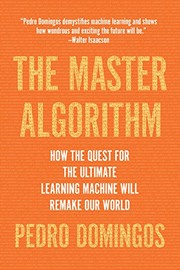
The five schools of machine learning, and the search for one algorithm to unite them.
Recommended by: Shane Parrish, Sam Altman, Vinod Khosla
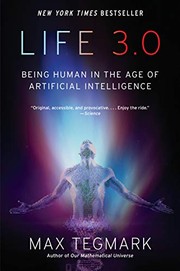
How AI could change crime, war, justice, jobs and what it means to be human.
Recommended by: Andrew Wilkinson, Bill Gates, Elon Musk and 2 others

AI as a fall in the cost of prediction, and what that does to decisions and jobs.

How Hinton, LeCun and Bengio kept neural networks alive until deep learning took off.

How chips became the key to economic and military power, made in a few chokepoints.
Recommended by: Andrew Wilkinson

Jensen Huang and how Nvidia came to power the move to artificial intelligence.

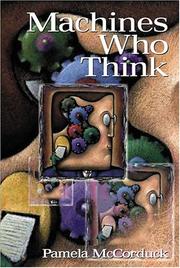
The founding of AI research, from interviews with McCarthy, Minsky and others.
AI research from Dartmouth in 1956 to the funding cuts, told by the field's leaders.
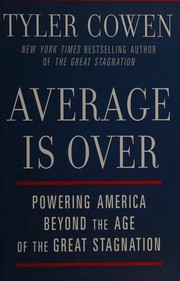
Work is splitting between those who work well with smart machines and the rest.
“Tyler Cowen... dedicates a chapter to freestyle chess in his terrific book, Average Is Over.” — Michael Mauboussin
Source: Lessons from Freestyle Chess: Merging Fundamental and Quantitative Analysis (Credit Suisse)
Recommended by: Michael Mauboussin, Ryan Holiday
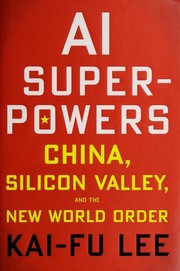
Why China may match the US in AI now that applying it matters more than research.
Recommended by: Balaji S. Srinivasan, Alfred Lin and 2 others

Autonomy from the incumbent and Waymo side.

The self-driving contest Tesla bet its valuation on.

Why AI and synthetic biology will spread fast and cheaply, and how to contain them.
“Everything is about to be changed by AI in a radical, scary way” — Andrew Wilkinson
Source: Newsletter
Recommended by: Andrew Wilkinson, Bill Gates and 1 other
The founder scene around OpenAI, reported from inside the funding rounds.

Traces AI to its physical costs: lithium mines, data-centre labour, military money.

Iansiti and Lakhani examined AI-native firms — Ant Financial, Ocado, Amazon — and documented how AI changes firm architecture, not just processes. The shift from traditional operating models to AI-driven ones turns out to restructure competitive dynamics in ways that standard strategy frameworks miss.
Recommended by: Satya Nadella

Harari's concern — that humans may cede decision-making to opaque systems through preference rather than coercion — reframes the alignment problem as a cultural and political challenge, not only a technical one. Less rigorous than Bostrom or Russell, but more widely read, making it a useful lens for understanding public discourse.
Recommended by: Andrew Wilkinson, Bill Gates, Nat Eliason and 7 others

Agrawal, Gans, and Goldfarb apply economic logic to AI's real contribution: cheap prediction. The framework — AI as prediction machine that changes the relative value of judgment and data — is more useful for understanding where AI creates and destroys value than any amount of case studies.
Recommended by: Andrew Wilkinson

Yudkowsky's collected LessWrong essays, free online and in compiled book form, develop the epistemic foundations that underpin his AI doom arguments. The reasoning about cognitive biases, Bayesian updating, and decision theory is independently useful; the AI safety arguments that follow are the most influential non-peer-reviewed work in the field.
Recommended by: Emmett Shear
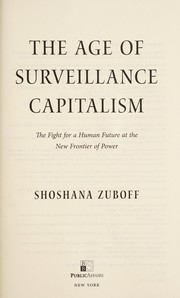
How Google and others turn behaviour into data to predict and steer what people do.
Recommended by: Benedict Evans, Vinod Khosla

Ord, a philosopher at Oxford's Future of Humanity Institute, places AI risk within a broader taxonomy of existential threats and attempts probability estimates for each. His calibrated approach — acknowledging uncertainty while still arguing for prioritization — offers a useful epistemological model for evaluating AI timeline and risk claims.
Recommended by: Tobi Lütke, Vitalik Buterin
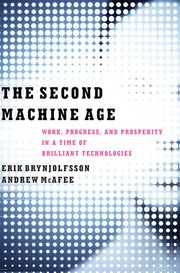
Brynjolfsson and McAfee provide the economic context: AI as a general-purpose technology that decouples productivity from employment. The alignment problem doesn't exist in a vacuum — it plays out in economies where AI is already restructuring labor markets in ways that are hard to reverse.
Recommended by: Mohnish Pabrai, Patrick Collison and 4 others

Kurzweil's optimistic counterpoint to the safety literature. His law of accelerating returns and the vision of intelligence explosion as fundamentally benign is the premise that alignment researchers are most directly arguing against. Reading it gives the other side of the debate its strongest formulation.
Recommended by: Brian Armstrong, Patrick Collison and 6 others
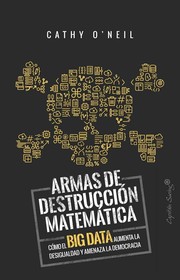
Cathy O'Neil catalogues algorithmic systems deployed in hiring, lending, policing, and education that reinforce rather than correct existing inequities. The book's value is empirical: these are real systems with documented effects, not speculative risks.
Recommended by: Tom Peters
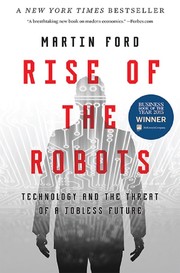
Recommended by: Daniel Petre, Patrick O'Shaughnessy
Recommended by: Patrick Collison
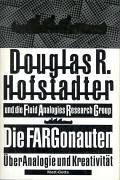
Recommended by: Patrick Collison
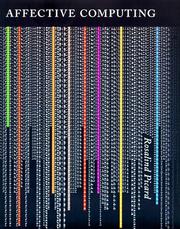
Recommended by: Rana el Kaliouby

Predictions of computers passing the human brain and merging with human life.
Recommended by: Steve Jurvetson

How a game designer built artificial life from simple rules of biology.
Recommended by: Mohnish Pabrai, Jeff Bezos
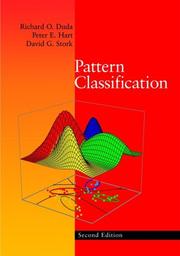
Recommended by: Eric Weinstein
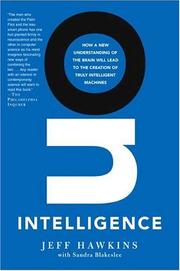
Recommended by: Patrick Collison, Ev Williams, Keith Rabois

Recommended by: Patrick Collison

Recommended by: Patrick Collison

Popular account of algorithms taking over trading and other trades.
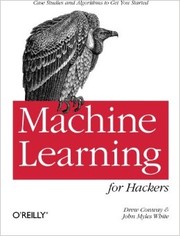
Recommended by: Patrick Collison

Recommended by: Patrick Collison


How machine learning and robots will displace work faster than institutions adapt.
Recommended by: Antonio García Martínez, Brian Armstrong

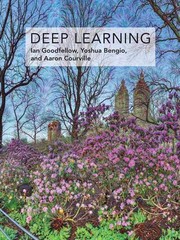
The textbook on deep learning: how machines learn layered concepts from data.
Recommended by: Vinod Khosla, Elon Musk, Satya Nadella
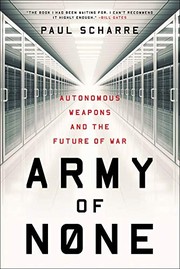


The rationalists around LessWrong and their fear of artificial intelligence risk.
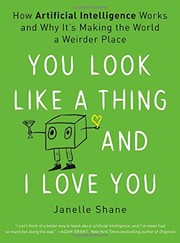
Recommended by: Susan Cain

Recommended by: Bill Gates
Subtitled 'Amplifying Our Humanity Through AI'; co-written with GPT-4
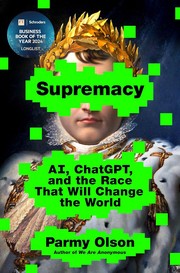
The OpenAI-DeepMind race that set the shape of Nvidia's customer base.
Recommended by: Andrew Wilkinson

Recommended by: Andrew Wilkinson

Fifteen years of AI through Demis Hassabis and DeepMind, from AlphaGo to AlphaFold.

Recommended by: Paul Graham, Patrick Collison

Recommended by: Brad Feld
An argument that consciousness is not algorithmic and rests on quantum mechanics.
Recommended by: Patrick Collison

Japan's drive to build fifth-generation AI computers, and its stakes for America.
Recommended by: Patrick Collison


Recommended by: Ev Williams


 Patrick Collisonrecommends 15 books here
 Bill Gatesrecommends 6 books here
 Elon Muskrecommends 5 books here
 Sam Altmanrecommends 5 books here
 Vinod Khoslarecommends 4 books here
 Keith Raboisrecommends 3 books here
 Satya Nadellarecommends 3 books here
 Brad Feldrecommends 2 books here
 Mohnish Pabrairecommends 2 books here
 Antonio García Martínezrecommends 2 books here
Show all 51
 Brian Armstrongrecommends 2 books here
 Demis Hassabisrecommends 2 books here
 Ev Williamsrecommends 2 books here
 Naval Ravikantrecommends 2 books here
 Stewart Brandrecommends 2 books here
 Paul Grahamrecommends 1 book here
 Ryan Holidayrecommends 1 book here
 Alfred Linrecommends 1 book here
 Arianna Huffingtonrecommends 1 book here
 Balaji S. Srinivasanrecommends 1 book here
 Bertalan Meskórecommends 1 book here
 Brett Adcockrecommends 1 book here
 Emmett Shearrecommends 1 book here
 Eric Weinsteinrecommends 1 book here
 Jeff Bezosrecommends 1 book here
 Jensen Huangrecommends 1 book here
 Matt Mullenwegrecommends 1 book here
 Peter Diamandisrecommends 1 book here
 Rana el Kalioubyrecommends 1 book here
 Richard Bransonrecommends 1 book here
 Steve Jurvetsonrecommends 1 book here
 Susan Cainrecommends 1 book here
 Tim O’Reillyrecommends 1 book here
 Tobi Lütkerecommends 1 book here
 Tony Robbinsrecommends 1 book here
 Vitalik Buterinrecommends 1 book here