Updates

  1. Person pages list letters, writing, profiles and links as sortable tables with filters, and show each person's companies as links; Fund letters show each letter's description in its own column.
  2. Experts show a checked job title and a short description of each person; 30 more people have photographs.
  3. Every company, fund, university and publication the experts work for has a page listing the people there.
  4. Fund letters show each letter's thesis and filter by it; 225 person pages list the essays, columns and newsletter issues the person wrote.
  5. Person pages list every essay and newsletter issue a person wrote, and their own books as a table in List view.
  6. Recommends shows the five largest kinds of book and the rest under More; browse pictures load sooner.
  7. Podcasts and talks link the original episode, filter by Audio and video or Press, and list each publisher once.
  8. Pages are wider, Recommends has List and Grid, and a filter clicked again turns off.
  9. Book cards sit in a ruled grid with Open Library and Goodreads links and each book's one-line note.
  10. Funds is now Investors; each investor's styles are buttons that filter the table.
  11. Podcasts and talks on a person's page filter by year and publisher and show as a list or a grid of pictures.
  12. Quotes show only people's own words: 472 summaries written by list sites are gone.
  13. Country pages open from Browse again, and every link on the shelf lands on a page.
  14. Subject and person pages show their sections as tabs, and each book appears once on a person's page.
  15. Book cards show the quote, who said it and the source; grids show five cards to a row.
  16. On a phone, a menu holds the sections, search, Updates, Feedback and dark mode.
  17. Feedback takes a screenshot of the page with no browser prompt, opens a screenshot full size when you click it, and clears itself once sent.
  18. Book cards are centred, search names the topic each book sits in, and any text cut short shows whole on hover.
  19. Search groups its results by kind: people, companies, geographies, subjects, topics, books, funds, fund letters and papers.
  20. The Books table lists who recommended each book by name, and the browser tab names the section you are in.
  21. Feedback can take a screenshot of the page, or one you paste or choose, and opens in the corner beside Updates.
  22. Each rail button reopens its section where you left it, and Browse, Table and People show on every book and subject page.
  23. Filters grey out choices that hold nothing instead of hiding them, and Books › People filters by authors or recommenders.
  24. Feedback takes a subject line and up to three screenshots.
  25. Biographies are grouped by the person they are about: 41 new pages, from Abraham Lincoln to Lee Kuan Yew.
  26. Sport splits into 23 sports, and Religion into one topic per faith.
  27. Book lists show as cards: the cover, one recommendation quote and every recommender by name.
  28. Seventeen subjects that had two or three pages under different names now have one page each.
  29. Every page lists its Experts as authors and recommenders, with a link to them on the Experts tab.
  30. Economics, Financial history, Financial panics and Accounting are subjects of their own, with one page per financial crisis.
  31. Book, person and subject pages open inside the app, so the tabs stay in view.
  32. 996 more book covers, and photographs or logos for 227 more people and companies.
  33. Books › Browse shows every subject as cards, and the rail holds Fund letters, Papers, Experts, Books and Funds.
  34. Every topic over 150 books splits into narrower topics, each with a page of its own.

Send feedback

What is it?
Screenshots, up to 3 (optional)
or paste one with Ctrl+V

We use your email only to reply to you.

The Coming Wave

The Coming Wave

Mustafa Suleyman, Michael Bhaskar
2023
T2 Open Librarygoodreads

DeepMind co-founder on containment; the rival lab's view.

Summary

Suleyman co-founded DeepMind and later Inflection AI, and argues that artificial intelligence and synthetic biology together constitute a wave of technology that will be extraordinarily powerful, will spread rapidly and cheaply, and cannot be contained by any currently available mechanism.

His central problem is what he calls the containment problem. He argues that these technologies have four features making containment unusually difficult: asymmetry, meaning small actors can produce large effects; hyper-evolution, meaning development is faster than institutional response; omni-use, meaning the same capability serves beneficial and harmful purposes and cannot be separated; and autonomy, meaning systems increasingly act without direct human instruction.

He argues that the incentives running against containment are overwhelming, including geopolitical competition, commercial return, research prestige and genuine benefit, and that historically no technology of substantial value has been successfully suppressed. His proposed response has ten components including technical safety research, audits, choke points at the level of hardware and compute, developer accountability, business model changes, government capability building, international treaties, a culture of restraint within the research community, public participation, and coherence across all of them. He is explicit that he does not consider any of them sufficient.

The book is written by someone with substantial commercial interests in the technology he is warning about, which he acknowledges. Critics argue that the framing serves incumbent interests by favouring regulation that established firms can afford, and that the treatment of near-term harms is thin relative to the speculative risks. The containment framing and the four features are the analytical contribution.

Key takeaways 8

  1. Artificial intelligence and synthetic biology together form a wave whose containment is harder than that of any previous technology.
  2. Asymmetry means small actors can produce effects previously requiring state resources, which changes who must be constrained.
  3. Omni-use means the same capability serves beneficial and harmful purposes and the two cannot be separated at the technical level.
  4. Development is faster than institutional response, which means regulation addresses the previous generation of capability.
  5. No technology of substantial value has been successfully suppressed historically, which sets the base rate against containment.
  6. Hardware and compute represent the most practical choke points, since they are physical, concentrated and countable.
  7. Suleyman proposes ten components for containment and states explicitly that none of them is sufficient.
  8. The author holds substantial commercial interests in the technology he is warning about, which he acknowledges and which shapes the argument.

Who should read it

Investors and founders in artificial intelligence and biotechnology who want the containment framing from someone inside the industry, with his interests in view.

Who recommended it 3 · 3 direct

“Everything is about to be changed by AI in a radical, scary way”

Similar books 6

Chosen by shared topics, the entries that hold them, and the people who recommended both.

Brian Christian · 2020

The struggle to make machine learning systems do what people actually intend.

Recommended by: Sam Altman
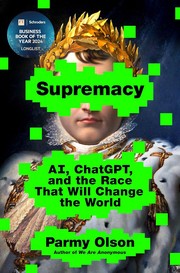
Parmy Olson · 2024

The OpenAI-DeepMind race that set the shape of Nvidia's customer base.

Recommended by: Andrew Wilkinson

Karen Hao · 2025

A reported history of OpenAI and the industry it created.

Cade Metz · 2021

How Hinton, LeCun and Bengio kept neural networks alive until deep learning took off.

Tom Chivers · 2019

The rationalists around LessWrong and their fear of artificial intelligence risk.

Where it sits in the reference 3

Companies
Business themes
Industries

Topics

Artificial IntelligenceTechnology and ComputingPolitics and GovernmentGeopolitics and international relationsAI and machine learning