Updates

  1. Person pages list letters, writing, profiles and links as sortable tables with filters, and show each person's companies as links; Fund letters show each letter's description in its own column.
  2. Experts show a checked job title and a short description of each person; 30 more people have photographs.
  3. Every company, fund, university and publication the experts work for has a page listing the people there.
  4. Fund letters show each letter's thesis and filter by it; 225 person pages list the essays, columns and newsletter issues the person wrote.
  5. Person pages list every essay and newsletter issue a person wrote, and their own books as a table in List view.
  6. Recommends shows the five largest kinds of book and the rest under More; browse pictures load sooner.
  7. Podcasts and talks link the original episode, filter by Audio and video or Press, and list each publisher once.
  8. Pages are wider, Recommends has List and Grid, and a filter clicked again turns off.
  9. Book cards sit in a ruled grid with Open Library and Goodreads links and each book's one-line note.
  10. Funds is now Investors; each investor's styles are buttons that filter the table.
  11. Podcasts and talks on a person's page filter by year and publisher and show as a list or a grid of pictures.
  12. Quotes show only people's own words: 472 summaries written by list sites are gone.
  13. Country pages open from Browse again, and every link on the shelf lands on a page.
  14. Subject and person pages show their sections as tabs, and each book appears once on a person's page.
  15. Book cards show the quote, who said it and the source; grids show five cards to a row.
  16. On a phone, a menu holds the sections, search, Updates, Feedback and dark mode.
  17. Feedback takes a screenshot of the page with no browser prompt, opens a screenshot full size when you click it, and clears itself once sent.
  18. Book cards are centred, search names the topic each book sits in, and any text cut short shows whole on hover.
  19. Search groups its results by kind: people, companies, geographies, subjects, topics, books, funds, fund letters and papers.
  20. The Books table lists who recommended each book by name, and the browser tab names the section you are in.
  21. Feedback can take a screenshot of the page, or one you paste or choose, and opens in the corner beside Updates.
  22. Each rail button reopens its section where you left it, and Browse, Table and People show on every book and subject page.
  23. Filters grey out choices that hold nothing instead of hiding them, and Books › People filters by authors or recommenders.
  24. Feedback takes a subject line and up to three screenshots.
  25. Biographies are grouped by the person they are about: 41 new pages, from Abraham Lincoln to Lee Kuan Yew.
  26. Sport splits into 23 sports, and Religion into one topic per faith.
  27. Book lists show as cards: the cover, one recommendation quote and every recommender by name.
  28. Seventeen subjects that had two or three pages under different names now have one page each.
  29. Every page lists its Experts as authors and recommenders, with a link to them on the Experts tab.
  30. Economics, Financial history, Financial panics and Accounting are subjects of their own, with one page per financial crisis.
  31. Book, person and subject pages open inside the app, so the tabs stay in view.
  32. 996 more book covers, and photographs or logos for 227 more people and companies.
  33. Books › Browse shows every subject as cards, and the rail holds Fund letters, Papers, Experts, Books and Funds.
  34. Every topic over 150 books splits into narrower topics, each with a page of its own.

Send feedback

What is it?
Screenshots, up to 3 (optional)
or paste one with Ctrl+V

We use your email only to reply to you.

The AI Does Not Hate You

The AI Does Not Hate You

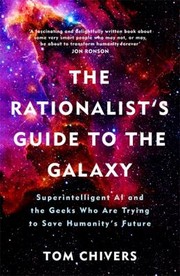
Tom Chivers
2019
T4 304 pages · about 5h 4m to read Open Librarygoodreads

The rationalist milieu behind OpenAI's founders and its board fight.

Summary

Tom Chivers, a British science journalist, reports on the rationalist community and its concern with artificial intelligence risk. His subjects are the people around LessWrong, the Machine Intelligence Research Institute, Effective Altruism and the Future of Humanity Institute, and he interviews many of them.

The book does two things. It explains the argument for AI risk as its proponents make it: that an artificial general intelligence pursuing any objective would develop instrumental goals including self-preservation and resource acquisition, that specifying human values precisely enough to constrain such a system is unsolved, and that the transition from human-level to substantially superhuman capability could be fast enough that correction after the fact is impossible. Chivers presents this carefully and does not caricature it.

It also reports on the community as a social phenomenon: the writing of Eliezer Yudkowsky, the Sequences, the emphasis on Bayesian reasoning and on calibration, the group houses, the polyamory, the internal disputes, and the ways in which the community resembles and does not resemble a religious movement. Chivers is sympathetic without being a member, and he is honest that he found the risk argument more persuasive than he expected. The book was published in 2019, before large language models made these questions general rather than niche, and it is now a useful record of what the argument looked like before that.

Key takeaways 7

  1. An artificial system pursuing any objective would develop instrumental goals including self-preservation and resource acquisition.
  2. Specifying human values precisely enough for a powerful optimiser to follow safely is an unsolved technical problem.
  3. The risk argument does not require the system to be hostile, only to pursue an objective that was specified imperfectly.
  4. Chivers argues that the rationalist community's epistemic practices, including calibration and explicit probability estimates, are worth adopting independently of its conclusions.
  5. The community shares features with religious movements including apocalyptic timelines and charismatic founders, which does not by itself refute its arguments.
  6. Effective Altruism and AI risk concern emerged from the same community and the same style of reasoning.
  7. The book records what the AI risk argument looked like when it was still a marginal position, which the subsequent years changed.

Who should read it

Investors and technologists who want the AI risk argument presented fairly alongside a report on the community that developed it.

Similar books 6

Chosen by shared topics, the entries that hold them, and the people who recommended both.
Brian Christian · 2020

The struggle to make machine learning systems do what people actually intend.

Recommended by: Sam Altman

Karen Hao · 2025

A reported history of OpenAI and the industry it created.

Cade Metz · 2021

How Hinton, LeCun and Bengio kept neural networks alive until deep learning took off.
Parmy Olson · 2024

The OpenAI-DeepMind race that set the shape of Nvidia's customer base.

Recommended by: Andrew Wilkinson
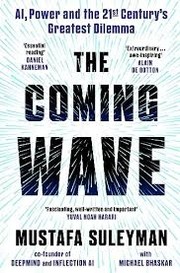
Mustafa Suleyman, Michael Bhaskar · 2023

Why AI and synthetic biology will spread fast and cheaply, and how to contain them.

“Everything is about to be changed by AI in a radical, scary way” — Andrew Wilkinson

Source: Newsletter

Recommended by: Andrew Wilkinson, Bill Gates and 1 other

Nick Bostrom · 2014

Why machines smarter than humans pose a control problem to solve before they arrive.

Where it sits in the reference 2

Companies
Business themes

Topics

Artificial IntelligenceTechnology and ComputingPhilosophyTechnology, nature and the futureAI and machine learning