Updates

  1. Person pages list letters, writing, profiles and links as sortable tables with filters, and show each person's companies as links; Fund letters show each letter's description in its own column.
  2. Experts show a checked job title and a short description of each person; 30 more people have photographs.
  3. Every company, fund, university and publication the experts work for has a page listing the people there.
  4. Fund letters show each letter's thesis and filter by it; 225 person pages list the essays, columns and newsletter issues the person wrote.
  5. Person pages list every essay and newsletter issue a person wrote, and their own books as a table in List view.
  6. Recommends shows the five largest kinds of book and the rest under More; browse pictures load sooner.
  7. Podcasts and talks link the original episode, filter by Audio and video or Press, and list each publisher once.
  8. Pages are wider, Recommends has List and Grid, and a filter clicked again turns off.
  9. Book cards sit in a ruled grid with Open Library and Goodreads links and each book's one-line note.
  10. Funds is now Investors; each investor's styles are buttons that filter the table.
  11. Podcasts and talks on a person's page filter by year and publisher and show as a list or a grid of pictures.
  12. Quotes show only people's own words: 472 summaries written by list sites are gone.
  13. Country pages open from Browse again, and every link on the shelf lands on a page.
  14. Subject and person pages show their sections as tabs, and each book appears once on a person's page.
  15. Book cards show the quote, who said it and the source; grids show five cards to a row.
  16. On a phone, a menu holds the sections, search, Updates, Feedback and dark mode.
  17. Feedback takes a screenshot of the page with no browser prompt, opens a screenshot full size when you click it, and clears itself once sent.
  18. Book cards are centred, search names the topic each book sits in, and any text cut short shows whole on hover.
  19. Search groups its results by kind: people, companies, geographies, subjects, topics, books, funds, fund letters and papers.
  20. The Books table lists who recommended each book by name, and the browser tab names the section you are in.
  21. Feedback can take a screenshot of the page, or one you paste or choose, and opens in the corner beside Updates.
  22. Each rail button reopens its section where you left it, and Browse, Table and People show on every book and subject page.
  23. Filters grey out choices that hold nothing instead of hiding them, and Books › People filters by authors or recommenders.
  24. Feedback takes a subject line and up to three screenshots.
  25. Biographies are grouped by the person they are about: 41 new pages, from Abraham Lincoln to Lee Kuan Yew.
  26. Sport splits into 23 sports, and Religion into one topic per faith.
  27. Book lists show as cards: the cover, one recommendation quote and every recommender by name.
  28. Seventeen subjects that had two or three pages under different names now have one page each.
  29. Every page lists its Experts as authors and recommenders, with a link to them on the Experts tab.
  30. Economics, Financial history, Financial panics and Accounting are subjects of their own, with one page per financial crisis.
  31. Book, person and subject pages open inside the app, so the tabs stay in view.
  32. 996 more book covers, and photographs or logos for 227 more people and companies.
  33. Books › Browse shows every subject as cards, and the rail holds Fund letters, Papers, Experts, Books and Funds.
  34. Every topic over 150 books splits into narrower topics, each with a page of its own.

Send feedback

What is it?
Screenshots, up to 3 (optional)
or paste one with Ctrl+V

We use your email only to reply to you.

AA

AI and machine learning

This niche holds textbooks, histories and arguments about artificial intelligence and machine learning, from early symbolic AI and cybernetics to deep learning, OpenAI and DeepMind.

Start here

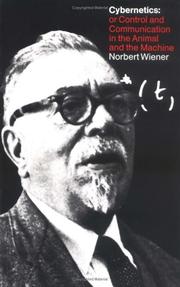
  1. CyberneticsNorbert Wiener, 1948
  2. The Master AlgorithmPedro Domingos, 2015
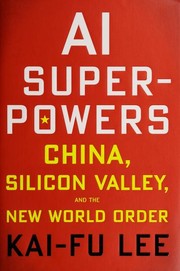
  3. AI SuperpowersKai-Fu Lee, 2018
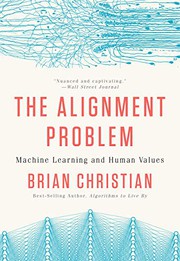
  4. The Alignment ProblemBrian Christian, 2020
  5. Genius MakersCade Metz, 2021
Norbert Wiener · 1948

Control and communication in animals and machines run on the same principles.
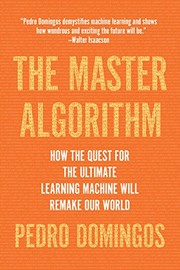
Pedro Domingos · 2015

The five schools of machine learning, and the search for one algorithm to unite them.

Kai-Fu Lee · 2018

Why China may match the US in AI now that applying it matters more than research.

Brian Christian · 2020

The struggle to make machine learning systems do what people actually intend.

Recommended by: Sam Altman
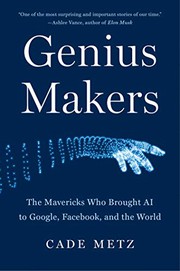
Cade Metz · 2021

How Hinton, LeCun and Bengio kept neural networks alive until deep learning took off.
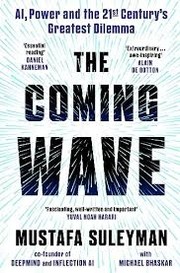
Mustafa Suleyman, Michael Bhaskar · 2023

Why AI and synthetic biology will spread fast and cheaply, and how to contain them.

“Everything is about to be changed by AI in a radical, scary way” — Andrew Wilkinson

Source: Newsletter

Recommended by: Andrew Wilkinson, Bill Gates and 1 other
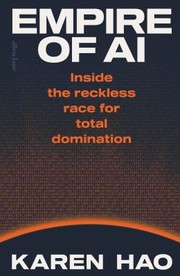
Karen Hao · 2025

A reported history of OpenAI and the industry it created.

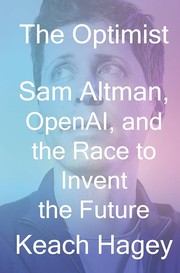
Keach Hagey · 2025

Sam Altman's life, including his November 2023 firing and return at OpenAI.

Recommended by: Andrew Wilkinson
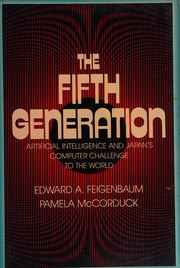
Pamela McCorduck · 1979

The founding of AI research, from interviews with McCarthy, Minsky and others.
Daniel Crevier · 1993

AI research from Dartmouth in 1956 to the funding cuts, told by the field's leaders.
Lawrence D. Burns, Christopher Shulgan · 2018

Autonomy from the incumbent and Waymo side.
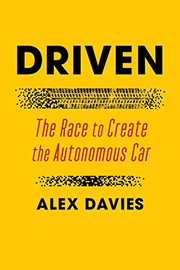
Alex Davies · 2021

The self-driving contest Tesla bet its valuation on.
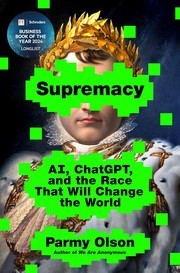
Parmy Olson · 2024

The OpenAI-DeepMind race that set the shape of Nvidia's customer base.

Recommended by: Andrew Wilkinson

Gary Rivlin · 2025

The founder scene around OpenAI, reported from inside the funding rounds.
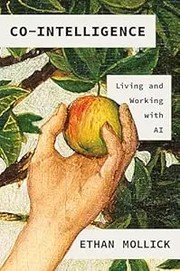
Ethan Mollick

How to work alongside large language models across many kinds of knowledge work.
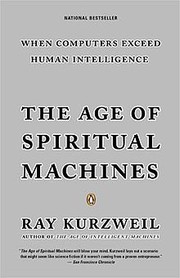
Ray Kurzweil · 1999

Predictions of computers passing the human brain and merging with human life.

Recommended by: Steve Jurvetson
Ian Goodfellow · 2016

The textbook on deep learning: how machines learn layered concepts from data.

Tom Chivers · 2019

The rationalists around LessWrong and their fear of artificial intelligence risk.
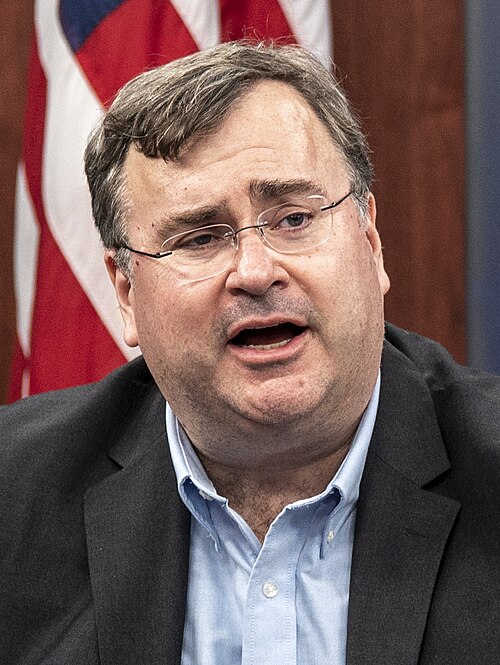
Reid Hoffman · 2023

Subtitled 'Amplifying Our Humanity Through AI'; co-written with GPT-4
Reid Hoffman, Greg Beato · 2025

Recommended by: Brad Feld

More technology