Updates

  1. Person pages list letters, writing, profiles and links as sortable tables with filters, and show each person's companies as links; Fund letters show each letter's description in its own column.
  2. Experts show a checked job title and a short description of each person; 30 more people have photographs.
  3. Every company, fund, university and publication the experts work for has a page listing the people there.
  4. Fund letters show each letter's thesis and filter by it; 225 person pages list the essays, columns and newsletter issues the person wrote.
  5. Person pages list every essay and newsletter issue a person wrote, and their own books as a table in List view.
  6. Recommends shows the five largest kinds of book and the rest under More; browse pictures load sooner.
  7. Podcasts and talks link the original episode, filter by Audio and video or Press, and list each publisher once.
  8. Pages are wider, Recommends has List and Grid, and a filter clicked again turns off.
  9. Book cards sit in a ruled grid with Open Library and Goodreads links and each book's one-line note.
  10. Funds is now Investors; each investor's styles are buttons that filter the table.
  11. Podcasts and talks on a person's page filter by year and publisher and show as a list or a grid of pictures.
  12. Quotes show only people's own words: 472 summaries written by list sites are gone.
  13. Country pages open from Browse again, and every link on the shelf lands on a page.
  14. Subject and person pages show their sections as tabs, and each book appears once on a person's page.
  15. Book cards show the quote, who said it and the source; grids show five cards to a row.
  16. On a phone, a menu holds the sections, search, Updates, Feedback and dark mode.
  17. Feedback takes a screenshot of the page with no browser prompt, opens a screenshot full size when you click it, and clears itself once sent.
  18. Book cards are centred, search names the topic each book sits in, and any text cut short shows whole on hover.
  19. Search groups its results by kind: people, companies, geographies, subjects, topics, books, funds, fund letters and papers.
  20. The Books table lists who recommended each book by name, and the browser tab names the section you are in.
  21. Feedback can take a screenshot of the page, or one you paste or choose, and opens in the corner beside Updates.
  22. Each rail button reopens its section where you left it, and Browse, Table and People show on every book and subject page.
  23. Filters grey out choices that hold nothing instead of hiding them, and Books › People filters by authors or recommenders.
  24. Feedback takes a subject line and up to three screenshots.
  25. Biographies are grouped by the person they are about: 41 new pages, from Abraham Lincoln to Lee Kuan Yew.
  26. Sport splits into 23 sports, and Religion into one topic per faith.
  27. Book lists show as cards: the cover, one recommendation quote and every recommender by name.
  28. Seventeen subjects that had two or three pages under different names now have one page each.
  29. Every page lists its Experts as authors and recommenders, with a link to them on the Experts tab.
  30. Economics, Financial history, Financial panics and Accounting are subjects of their own, with one page per financial crisis.
  31. Book, person and subject pages open inside the app, so the tabs stay in view.
  32. 996 more book covers, and photographs or logos for 227 more people and companies.
  33. Books › Browse shows every subject as cards, and the rail holds Fund letters, Papers, Experts, Books and Funds.
  34. Every topic over 150 books splits into narrower topics, each with a page of its own.

Send feedback

What is it?
Screenshots, up to 3 (optional)
or paste one with Ctrl+V

We use your email only to reply to you.

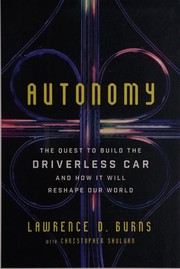
Autonomy: The Quest to Build the Driverless

Autonomy: The Quest to Build the Driverless Car

Lawrence D. Burns, Christopher Shulgan
2018
T3 179 pages · about 2h 59m to read Open Librarygoodreads

Autonomy from the incumbent and Waymo side.

Summary

Burns ran research and development at General Motors and later advised Google's self-driving programme, and wrote this with Christopher Shulgan as both a history of autonomous vehicle development and an argument about what it would mean.

The history covers the DARPA Grand Challenges of 2004, 2005 and the 2007 Urban Challenge, which brought together the researchers who subsequently built the commercial programmes, including Sebastian Thrun's Stanford team, Chris Urmson's Carnegie Mellon team and the participants who later founded or led most of the industry. Burns covers the founding of Google's programme, the technical approach based on detailed prior mapping combined with lidar and machine learning, and the internal debates about whether to pursue driver assistance or full autonomy.

His argument about the industry is that the incumbent automakers were structurally unable to pursue this. He describes his own attempts inside General Motors and the reasons they failed: the business model depends on selling vehicles to individuals, the engineering organisation was built around mechanical systems, and the investment required had no return within the planning horizon.

His economic argument is that autonomy combined with electrification and shared ownership would reduce the cost per mile of transport by an order of magnitude, which would change urban form, vehicle ownership and the automobile industry's structure entirely.

The book was published in 2018 and the timeline it implies has not been met. Full autonomy proved far harder than the participants expected, several well-funded programmes closed, and deployment has been limited to defined areas with extensive mapping. Burns is an advocate and a participant, and the book's confidence about the transition should be read against what has happened since.

Key takeaways 7

  1. The DARPA challenges assembled the researchers who subsequently built nearly every commercial autonomous vehicle programme.
  2. Google's approach combined detailed prior mapping with lidar and machine learning rather than attempting to drive from sensors alone.
  3. Incumbent automakers could not pursue full autonomy because their business model, engineering organisation and planning horizon all worked against it.
  4. Driver assistance and full autonomy are different technical problems, and pursuing one does not lead to the other.
  5. Autonomy combined with electrification and shared use would reduce cost per mile by an order of magnitude if it worked.
  6. A cost per mile reduction of that scale would change vehicle ownership and urban form rather than only the automobile industry.
  7. The timeline the book implies has not been met, and deployment has been limited to extensively mapped defined areas.

Who should read it

Investors and operators in transport and automation who want the technical history and the incumbent's account of why established firms could not pursue it.

Similar books 6

Chosen by shared topics, the entries that hold them, and the people who recommended both.
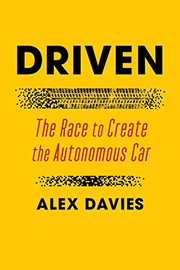
Alex Davies · 2021

The self-driving contest Tesla bet its valuation on.
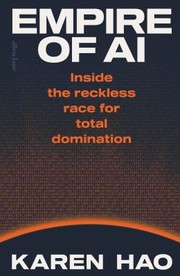
Karen Hao · 2025

A reported history of OpenAI and the industry it created.

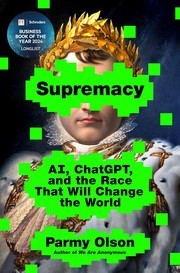
Parmy Olson · 2024

The OpenAI-DeepMind race that set the shape of Nvidia's customer base.

Recommended by: Andrew Wilkinson
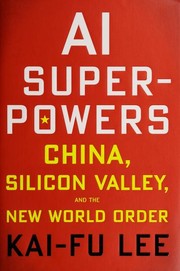
Kai-Fu Lee · 2018

Why China may match the US in AI now that applying it matters more than research.

Daniel Crevier · 1993

AI research from Dartmouth in 1956 to the funding cuts, told by the field's leaders.

Where it sits in the reference 2

Companies
Business themes

Topics

Technology and ComputingArtificial IntelligenceCompany HistoriesAI and machine learning