Updates

  1. Person pages list letters, writing, profiles and links as sortable tables with filters, and show each person's companies as links; Fund letters show each letter's description in its own column.
  2. Experts show a checked job title and a short description of each person; 30 more people have photographs.
  3. Every company, fund, university and publication the experts work for has a page listing the people there.
  4. Fund letters show each letter's thesis and filter by it; 225 person pages list the essays, columns and newsletter issues the person wrote.
  5. Person pages list every essay and newsletter issue a person wrote, and their own books as a table in List view.
  6. Recommends shows the five largest kinds of book and the rest under More; browse pictures load sooner.
  7. Podcasts and talks link the original episode, filter by Audio and video or Press, and list each publisher once.
  8. Pages are wider, Recommends has List and Grid, and a filter clicked again turns off.
  9. Book cards sit in a ruled grid with Open Library and Goodreads links and each book's one-line note.
  10. Funds is now Investors; each investor's styles are buttons that filter the table.
  11. Podcasts and talks on a person's page filter by year and publisher and show as a list or a grid of pictures.
  12. Quotes show only people's own words: 472 summaries written by list sites are gone.
  13. Country pages open from Browse again, and every link on the shelf lands on a page.
  14. Subject and person pages show their sections as tabs, and each book appears once on a person's page.
  15. Book cards show the quote, who said it and the source; grids show five cards to a row.
  16. On a phone, a menu holds the sections, search, Updates, Feedback and dark mode.
  17. Feedback takes a screenshot of the page with no browser prompt, opens a screenshot full size when you click it, and clears itself once sent.
  18. Book cards are centred, search names the topic each book sits in, and any text cut short shows whole on hover.
  19. Search groups its results by kind: people, companies, geographies, subjects, topics, books, funds, fund letters and papers.
  20. The Books table lists who recommended each book by name, and the browser tab names the section you are in.
  21. Feedback can take a screenshot of the page, or one you paste or choose, and opens in the corner beside Updates.
  22. Each rail button reopens its section where you left it, and Browse, Table and People show on every book and subject page.
  23. Filters grey out choices that hold nothing instead of hiding them, and Books › People filters by authors or recommenders.
  24. Feedback takes a subject line and up to three screenshots.
  25. Biographies are grouped by the person they are about: 41 new pages, from Abraham Lincoln to Lee Kuan Yew.
  26. Sport splits into 23 sports, and Religion into one topic per faith.
  27. Book lists show as cards: the cover, one recommendation quote and every recommender by name.
  28. Seventeen subjects that had two or three pages under different names now have one page each.
  29. Every page lists its Experts as authors and recommenders, with a link to them on the Experts tab.
  30. Economics, Financial history, Financial panics and Accounting are subjects of their own, with one page per financial crisis.
  31. Book, person and subject pages open inside the app, so the tabs stay in view.
  32. 996 more book covers, and photographs or logos for 227 more people and companies.
  33. Books › Browse shows every subject as cards, and the rail holds Fund letters, Papers, Experts, Books and Funds.
  34. Every topic over 150 books splits into narrower topics, each with a page of its own.

Send feedback

What is it?
Screenshots, up to 3 (optional)
or paste one with Ctrl+V

We use your email only to reply to you.

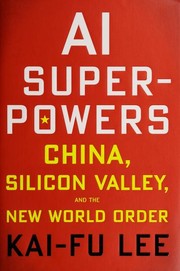
AI Superpowers

AI Superpowers

Kai-Fu Lee
2018
T2 256 pages · about 4h 16m to read Open Librarygoodreads

The Chinese platform ecosystem Alibaba competes inside.

Summary

Lee ran Google China, founded Sinovation Ventures, and worked in speech recognition research earlier in his career, which gives him standing in both the American and Chinese technology sectors. He argues that the era of fundamental research breakthroughs in machine learning has given way to an era of implementation, and that this shift favours China.

His argument rests on four advantages he attributes to China: abundant data generated by a population that conducts more of its life through mobile applications, an entrepreneurial culture he describes as gladiatorial and willing to copy aggressively, a large pool of trained engineers who do not need to be researchers, and government policy that funds and clears obstacles.

He describes the Chinese internet sector's development, arguing that the copying phase produced companies with operational capability that then innovated in ways Western companies did not, particularly in the integration of online and offline services, mobile payments and local delivery. The second half addresses employment. Lee gives a framework classifying jobs by whether they are optimisation-based or compassion-based and by whether they require social interaction, and predicts substantial displacement in routine cognitive and physical work. His proposed response, developed after his own cancer diagnosis, emphasises care work and human connection rather than a basic income.

The book was published in 2018 and predates the generative model era entirely, which undercuts its central claim that fundamental research was finished. Chinese regulatory intervention against its technology sector after 2020 also cuts against the government advantage argument. Lee has commercial interests in the sector he assesses. The description of how Chinese consumer internet companies actually operate remains the most valuable part.

Key takeaways 8

  1. Machine learning has shifted from a research-driven phase to an implementation-driven phase, which changes which capabilities matter most.
  2. Data quantity generated by everyday activity provides an advantage that research talent alone cannot overcome.
  3. Chinese consumer internet companies integrated online services with physical delivery and payment in ways Western companies did not attempt.
  4. A copying phase produced operational capability that later supported genuine innovation, which Western observers misread as permanent imitation.
  5. Government policy that funds infrastructure and removes regulatory obstacles materially accelerates deployment.
  6. Displacement will concentrate in routine cognitive and physical work, and the framework for predicting it depends on whether a job requires compassion and social interaction.
  7. Lee proposes care work and human connection rather than a basic income as the response to displacement, arguing that meaning rather than income is the harder problem.
  8. The book predates generative models entirely, which contradicts its claim that fundamental research breakthroughs had ended.

Who should read it

Investors and founders assessing the Chinese technology sector and the implementation dynamics of machine learning, read with awareness of what happened after 2018.

Who recommended it 4 · 1 direct

Alfred Linreported

Similar books 6

Chosen by shared topics, the entries that hold them, and the people who recommended both.

Ian Goodfellow · 2016

The textbook on deep learning: how machines learn layered concepts from data.

Daniel Crevier · 1993

AI research from Dartmouth in 1956 to the funding cuts, told by the field's leaders.

Gary Rivlin · 2025

The founder scene around OpenAI, reported from inside the funding rounds.
Lawrence D. Burns, Christopher Shulgan · 2018

Autonomy from the incumbent and Waymo side.

Where it sits in the reference 2

Companies
Business themes

Topics

Artificial IntelligenceTechnology and ComputingAI and machine learning