Updates

  1. Person pages list letters, writing, profiles and links as sortable tables with filters, and show each person's companies as links; Fund letters show each letter's description in its own column.
  2. Experts show a checked job title and a short description of each person; 30 more people have photographs.
  3. Every company, fund, university and publication the experts work for has a page listing the people there.
  4. Fund letters show each letter's thesis and filter by it; 225 person pages list the essays, columns and newsletter issues the person wrote.
  5. Person pages list every essay and newsletter issue a person wrote, and their own books as a table in List view.
  6. Recommends shows the five largest kinds of book and the rest under More; browse pictures load sooner.
  7. Podcasts and talks link the original episode, filter by Audio and video or Press, and list each publisher once.
  8. Pages are wider, Recommends has List and Grid, and a filter clicked again turns off.
  9. Book cards sit in a ruled grid with Open Library and Goodreads links and each book's one-line note.
  10. Funds is now Investors; each investor's styles are buttons that filter the table.
  11. Podcasts and talks on a person's page filter by year and publisher and show as a list or a grid of pictures.
  12. Quotes show only people's own words: 472 summaries written by list sites are gone.
  13. Country pages open from Browse again, and every link on the shelf lands on a page.
  14. Subject and person pages show their sections as tabs, and each book appears once on a person's page.
  15. Book cards show the quote, who said it and the source; grids show five cards to a row.
  16. On a phone, a menu holds the sections, search, Updates, Feedback and dark mode.
  17. Feedback takes a screenshot of the page with no browser prompt, opens a screenshot full size when you click it, and clears itself once sent.
  18. Book cards are centred, search names the topic each book sits in, and any text cut short shows whole on hover.
  19. Search groups its results by kind: people, companies, geographies, subjects, topics, books, funds, fund letters and papers.
  20. The Books table lists who recommended each book by name, and the browser tab names the section you are in.
  21. Feedback can take a screenshot of the page, or one you paste or choose, and opens in the corner beside Updates.
  22. Each rail button reopens its section where you left it, and Browse, Table and People show on every book and subject page.
  23. Filters grey out choices that hold nothing instead of hiding them, and Books › People filters by authors or recommenders.
  24. Feedback takes a subject line and up to three screenshots.
  25. Biographies are grouped by the person they are about: 41 new pages, from Abraham Lincoln to Lee Kuan Yew.
  26. Sport splits into 23 sports, and Religion into one topic per faith.
  27. Book lists show as cards: the cover, one recommendation quote and every recommender by name.
  28. Seventeen subjects that had two or three pages under different names now have one page each.
  29. Every page lists its Experts as authors and recommenders, with a link to them on the Experts tab.
  30. Economics, Financial history, Financial panics and Accounting are subjects of their own, with one page per financial crisis.
  31. Book, person and subject pages open inside the app, so the tabs stay in view.
  32. 996 more book covers, and photographs or logos for 227 more people and companies.
  33. Books › Browse shows every subject as cards, and the rail holds Fund letters, Papers, Experts, Books and Funds.
  34. Every topic over 150 books splits into narrower topics, each with a page of its own.

Send feedback

What is it?
Screenshots, up to 3 (optional)
or paste one with Ctrl+V

We use your email only to reply to you.

AI Valley

AI Valley

Gary Rivlin
2025
T3 320 pages · about 5h 20m to read Open Librarygoodreads

The founder scene around OpenAI, reported from inside the funding rounds.

Summary

Rivlin, a technology journalist who has covered Silicon Valley for decades, followed the artificial intelligence boom from the release of ChatGPT through the subsequent funding and product cycle, with particular access to Reid Hoffman and to the founders of Inflection AI.

The reporting covers the period's characteristic dynamics: the speed at which capital moved into the sector, the valuations achieved by companies with no revenue, the competition for a small number of researchers and the compensation that resulted, the dependence on a small number of infrastructure and model providers, and the strategic positions of the large technology companies that supplied both the capital and the compute.

The Inflection AI story is the narrative centre and is instructive as a case. The company raised very large sums, built a consumer conversational product, and was then effectively absorbed by Microsoft in a transaction that hired the founders and licensed the technology without acquiring the company, leaving investors with a return but ending the independent business. Rivlin uses this to illustrate the structural problem for well-funded startups in this field: the compute costs are enormous, the models are not clearly differentiated, distribution belongs to the incumbents, and the most likely outcome is absorption.

He also covers the venture capital dynamics, the founders who moved between organisations, and the debates within the industry about safety and deployment.

The book is reported journalism rather than technical or economic analysis. It says little about the underlying technology or about the unit economics of the model businesses. Its subject is a period that is still developing, and any account written during it will be overtaken. The value is in the documented account of how capital and talent behaved during the first two years after the technology became commercially visible.

Key takeaways 7

  1. Capital moved into artificial intelligence companies at valuations that did not depend on revenue or on a demonstrated business model.
  2. Compute costs mean an independent model company must raise sums that only the largest technology firms can supply, which creates dependence on them.
  3. Distribution belongs to incumbents, so a well-funded startup with a comparable model still cannot reach users at competitive cost.
  4. Inflection AI's absorption by Microsoft through hiring and licensing rather than acquisition became a template for exits in this sector.
  5. Competition for a small number of researchers produced compensation that made the talent cost comparable to the compute cost.
  6. Model capability alone did not produce differentiation, because competitors reached comparable capability within months.
  7. An account written during an ongoing boom cannot assess which of the period's assumptions will prove correct.

Who should read it

Investors and founders in artificial intelligence who want a reported account of how capital, talent and strategic dependence actually behaved in the first years of the boom.

Similar books 6

Chosen by shared topics, the entries that hold them, and the people who recommended both.

Karen Hao · 2025

A reported history of OpenAI and the industry it created.

Cade Metz · 2021

How Hinton, LeCun and Bengio kept neural networks alive until deep learning took off.
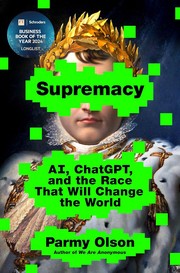
Parmy Olson · 2024

The OpenAI-DeepMind race that set the shape of Nvidia's customer base.

Recommended by: Andrew Wilkinson
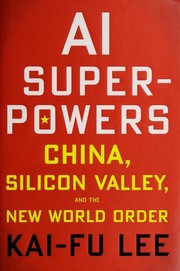
Kai-Fu Lee · 2018

Why China may match the US in AI now that applying it matters more than research.

Daniel Crevier · 1993

AI research from Dartmouth in 1956 to the funding cuts, told by the field's leaders.

Where it sits in the reference 2

Biographies
Business themes

Topics

Artificial IntelligenceEntrepreneurship and StartupsTechnology and ComputingFounder Profiles and Startup StoriesAI and machine learning