Updates

  1. Person pages list letters, writing, profiles and links as sortable tables with filters, and show each person's companies as links; Fund letters show each letter's description in its own column.
  2. Experts show a checked job title and a short description of each person; 30 more people have photographs.
  3. Every company, fund, university and publication the experts work for has a page listing the people there.
  4. Fund letters show each letter's thesis and filter by it; 225 person pages list the essays, columns and newsletter issues the person wrote.
  5. Person pages list every essay and newsletter issue a person wrote, and their own books as a table in List view.
  6. Recommends shows the five largest kinds of book and the rest under More; browse pictures load sooner.
  7. Podcasts and talks link the original episode, filter by Audio and video or Press, and list each publisher once.
  8. Pages are wider, Recommends has List and Grid, and a filter clicked again turns off.
  9. Book cards sit in a ruled grid with Open Library and Goodreads links and each book's one-line note.
  10. Funds is now Investors; each investor's styles are buttons that filter the table.
  11. Podcasts and talks on a person's page filter by year and publisher and show as a list or a grid of pictures.
  12. Quotes show only people's own words: 472 summaries written by list sites are gone.
  13. Country pages open from Browse again, and every link on the shelf lands on a page.
  14. Subject and person pages show their sections as tabs, and each book appears once on a person's page.
  15. Book cards show the quote, who said it and the source; grids show five cards to a row.
  16. On a phone, a menu holds the sections, search, Updates, Feedback and dark mode.
  17. Feedback takes a screenshot of the page with no browser prompt, opens a screenshot full size when you click it, and clears itself once sent.
  18. Book cards are centred, search names the topic each book sits in, and any text cut short shows whole on hover.
  19. Search groups its results by kind: people, companies, geographies, subjects, topics, books, funds, fund letters and papers.
  20. The Books table lists who recommended each book by name, and the browser tab names the section you are in.
  21. Feedback can take a screenshot of the page, or one you paste or choose, and opens in the corner beside Updates.
  22. Each rail button reopens its section where you left it, and Browse, Table and People show on every book and subject page.
  23. Filters grey out choices that hold nothing instead of hiding them, and Books › People filters by authors or recommenders.
  24. Feedback takes a subject line and up to three screenshots.
  25. Biographies are grouped by the person they are about: 41 new pages, from Abraham Lincoln to Lee Kuan Yew.
  26. Sport splits into 23 sports, and Religion into one topic per faith.
  27. Book lists show as cards: the cover, one recommendation quote and every recommender by name.
  28. Seventeen subjects that had two or three pages under different names now have one page each.
  29. Every page lists its Experts as authors and recommenders, with a link to them on the Experts tab.
  30. Economics, Financial history, Financial panics and Accounting are subjects of their own, with one page per financial crisis.
  31. Book, person and subject pages open inside the app, so the tabs stay in view.
  32. 996 more book covers, and photographs or logos for 227 more people and companies.
  33. Books › Browse shows every subject as cards, and the rail holds Fund letters, Papers, Experts, Books and Funds.
  34. Every topic over 150 books splits into narrower topics, each with a page of its own.

Send feedback

What is it?
Screenshots, up to 3 (optional)
or paste one with Ctrl+V

We use your email only to reply to you.

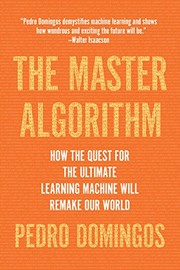
The Master Algorithm

The Master Algorithm

Pedro Domingos
2015
T2 352 pages · about 5h 52m to read Open Librarygoodreads

The five tribes of machine learning explained for non-specialists

Summary

Domingos, a machine learning researcher, argues that the field consists of five distinct schools with different assumptions, techniques and philosophical origins, and that a unified algorithm combining all five is the objective the field should pursue.

The five tribes are the symbolists, who treat learning as inverse deduction and work with rules and logic; the connectionists, who reverse-engineer the brain and work with neural networks and backpropagation; the evolutionaries, who simulate natural selection through genetic algorithms; the Bayesians, who treat learning as probabilistic inference and update beliefs with evidence; and the analogisers, who reason from similarity and work with support vector machines and nearest neighbour methods.

For each he explains the core assumption, the master algorithm within that tradition, what it does well and where it fails. His argument is that each captures something real and that none is sufficient, and he sketches his own attempt at unification through Markov logic networks. He also covers what machine learning cannot do, the difference between correlation and causation in learned models, the data requirements, and the social consequences including the concentration of data and the effects on employment and privacy.

The book was published in 2015, before the transformer architecture and before the current scale of connectionist success. The subsequent decade has gone overwhelmingly to one tribe, which weakens the claim that unification is the path. Domingos has become a public critic of parts of the field since. The taxonomy remains the clearest available explanation of why different machine learning approaches exist and what each assumes.

Key takeaways 8

  1. Machine learning consists of five distinct schools with different assumptions about how learning works, and each has its own core algorithm.
  2. Symbolists treat learning as inverse deduction, connectionists reverse-engineer the brain, evolutionaries simulate selection, Bayesians perform probabilistic inference and analogisers reason from similarity.
  3. Each approach captures something real about learning and each fails in ways the others do not, which is the argument for unification.
  4. Every learning algorithm embeds assumptions about the structure of the data, and no algorithm can learn without them.
  5. A model that fits training data perfectly has usually learned the noise rather than the pattern, which is the central practical failure.
  6. Correlations learned from data do not establish causation, and models used for decisions require causal assumptions the data does not supply.
  7. Concentration of data produces concentration of capability, since the same algorithm performs differently depending on what it is trained on.
  8. The decade since publication has gone overwhelmingly to one tribe, which weakens the argument that unification is the path forward.

Who should read it

Investors and operators who want to understand why different machine learning approaches exist and what each assumes, with the 2015 date in view.

Who recommended it 3 · 1 direct

Sam Altmanreported
Vinod Khoslareported

Similar books 6

Chosen by shared topics, the entries that hold them, and the people who recommended both.

Ian Goodfellow · 2016

The textbook on deep learning: how machines learn layered concepts from data.

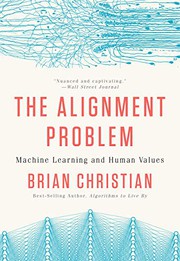
Brian Christian · 2020

The struggle to make machine learning systems do what people actually intend.

Recommended by: Sam Altman
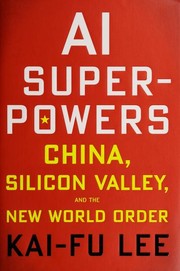
Kai-Fu Lee · 2018

Why China may match the US in AI now that applying it matters more than research.

Daniel Crevier · 1993

AI research from Dartmouth in 1956 to the funding cuts, told by the field's leaders.

Gary Rivlin · 2025

The founder scene around OpenAI, reported from inside the funding rounds.

Where it sits in the reference 2

Business themes
Investment styles

Topics

Artificial IntelligenceTechnology and ComputingAI and machine learning