Updates

  1. Person pages list letters, writing, profiles and links as sortable tables with filters, and show each person's companies as links; Fund letters show each letter's description in its own column.
  2. Experts show a checked job title and a short description of each person; 30 more people have photographs.
  3. Every company, fund, university and publication the experts work for has a page listing the people there.
  4. Fund letters show each letter's thesis and filter by it; 225 person pages list the essays, columns and newsletter issues the person wrote.
  5. Person pages list every essay and newsletter issue a person wrote, and their own books as a table in List view.
  6. Recommends shows the five largest kinds of book and the rest under More; browse pictures load sooner.
  7. Podcasts and talks link the original episode, filter by Audio and video or Press, and list each publisher once.
  8. Pages are wider, Recommends has List and Grid, and a filter clicked again turns off.
  9. Book cards sit in a ruled grid with Open Library and Goodreads links and each book's one-line note.
  10. Funds is now Investors; each investor's styles are buttons that filter the table.
  11. Podcasts and talks on a person's page filter by year and publisher and show as a list or a grid of pictures.
  12. Quotes show only people's own words: 472 summaries written by list sites are gone.
  13. Country pages open from Browse again, and every link on the shelf lands on a page.
  14. Subject and person pages show their sections as tabs, and each book appears once on a person's page.
  15. Book cards show the quote, who said it and the source; grids show five cards to a row.
  16. On a phone, a menu holds the sections, search, Updates, Feedback and dark mode.
  17. Feedback takes a screenshot of the page with no browser prompt, opens a screenshot full size when you click it, and clears itself once sent.
  18. Book cards are centred, search names the topic each book sits in, and any text cut short shows whole on hover.
  19. Search groups its results by kind: people, companies, geographies, subjects, topics, books, funds, fund letters and papers.
  20. The Books table lists who recommended each book by name, and the browser tab names the section you are in.
  21. Feedback can take a screenshot of the page, or one you paste or choose, and opens in the corner beside Updates.
  22. Each rail button reopens its section where you left it, and Browse, Table and People show on every book and subject page.
  23. Filters grey out choices that hold nothing instead of hiding them, and Books › People filters by authors or recommenders.
  24. Feedback takes a subject line and up to three screenshots.
  25. Biographies are grouped by the person they are about: 41 new pages, from Abraham Lincoln to Lee Kuan Yew.
  26. Sport splits into 23 sports, and Religion into one topic per faith.
  27. Book lists show as cards: the cover, one recommendation quote and every recommender by name.
  28. Seventeen subjects that had two or three pages under different names now have one page each.
  29. Every page lists its Experts as authors and recommenders, with a link to them on the Experts tab.
  30. Economics, Financial history, Financial panics and Accounting are subjects of their own, with one page per financial crisis.
  31. Book, person and subject pages open inside the app, so the tabs stay in view.
  32. 996 more book covers, and photographs or logos for 227 more people and companies.
  33. Books › Browse shows every subject as cards, and the rail holds Fund letters, Papers, Experts, Books and Funds.
  34. Every topic over 150 books splits into narrower topics, each with a page of its own.

Send feedback

What is it?
Screenshots, up to 3 (optional)
or paste one with Ctrl+V

We use your email only to reply to you.

Impromptu

Impromptu

Subtitled 'Amplifying Our Humanity Through AI'; co-written with GPT-4

Summary

Reid Hoffman wrote this book with GPT-4 during the months before the model's public release, and the format is the argument. Each chapter presents Hoffman's prompts and the model's unedited responses, with his commentary on what the output reveals, including where it is wrong. The chapters cover education, journalism, creative work, law, medicine, social media, and the work of building and using such systems.

Hoffman's position is that large language models will function as amplifiers of individual capability and that the appropriate response is broad early deployment rather than restriction. He argues that iterative public release produces better safety outcomes than closed development, because problems surface where they can be addressed. He is explicit that he holds financial interests in the companies concerned, including a board seat at OpenAI at the time of writing, and readers should weigh that throughout.

The book is a period document. The specific model behaviour it demonstrates, including the hallucinations Hoffman deliberately preserves, describes a system that has been superseded several times over. Its arguments about labour displacement are optimistic and lightly evidenced, and it does not engage seriously with the strongest safety objections. Read it as a record of how a well-placed investor understood the technology in early 2023, not as an analysis of where the technology went.

Key takeaways 7

  1. Hoffman argues that language models amplify individual capability rather than replacing categories of worker.
  2. Iterative public deployment surfaces failure modes that closed testing does not, so releasing early is the safer policy.
  3. The models produce confident false statements, and Hoffman prints examples rather than editing them out.
  4. Professional work in law and medicine will shift toward supervising model output and away from producing first drafts.
  5. Access to these tools, rather than the tools themselves, will determine how their benefits are distributed.
  6. Hoffman treats regulatory restriction of model development as more likely to entrench incumbents than to improve safety.
  7. Human judgement about which questions to ask becomes the scarce input once generating answers becomes cheap.

Who should read it

Investors and founders who want a documented snapshot of how the technology and its advocates presented themselves at the start of the current cycle.

About Reid Hoffman

Co-founder and former executive chairman of LinkedIn; partner at Greylock Partners; co-founder of Inflection AI

Blitzscaling and The Start-up of You outlived their news cycles and gave the industry durable vocabulary, on top of a first-rate operating and investing record.

Greylock Partners, Inflection AI, LinkedIn

Similar books 6

Chosen by shared topics, the entries that hold them, and the people who recommended both.

Reid Hoffman, Greg Beato · 2025

Recommended by: Brad Feld

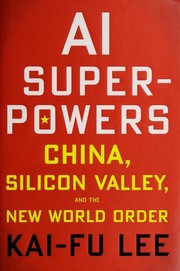
Kai-Fu Lee · 2018

Why China may match the US in AI now that applying it matters more than research.

Daniel Crevier · 1993

AI research from Dartmouth in 1956 to the funding cuts, told by the field's leaders.

Gary Rivlin · 2025

The founder scene around OpenAI, reported from inside the funding rounds.
Where it sits in the reference 2

Founders
Business themes

Topics

Artificial IntelligenceTechnology and ComputingAI and machine learning