Updates

  1. Person pages list letters, writing, profiles and links as sortable tables with filters, and show each person's companies as links; Fund letters show each letter's description in its own column.
  2. Experts show a checked job title and a short description of each person; 30 more people have photographs.
  3. Every company, fund, university and publication the experts work for has a page listing the people there.
  4. Fund letters show each letter's thesis and filter by it; 225 person pages list the essays, columns and newsletter issues the person wrote.
  5. Person pages list every essay and newsletter issue a person wrote, and their own books as a table in List view.
  6. Recommends shows the five largest kinds of book and the rest under More; browse pictures load sooner.
  7. Podcasts and talks link the original episode, filter by Audio and video or Press, and list each publisher once.
  8. Pages are wider, Recommends has List and Grid, and a filter clicked again turns off.
  9. Book cards sit in a ruled grid with Open Library and Goodreads links and each book's one-line note.
  10. Funds is now Investors; each investor's styles are buttons that filter the table.
  11. Podcasts and talks on a person's page filter by year and publisher and show as a list or a grid of pictures.
  12. Quotes show only people's own words: 472 summaries written by list sites are gone.
  13. Country pages open from Browse again, and every link on the shelf lands on a page.
  14. Subject and person pages show their sections as tabs, and each book appears once on a person's page.
  15. Book cards show the quote, who said it and the source; grids show five cards to a row.
  16. On a phone, a menu holds the sections, search, Updates, Feedback and dark mode.
  17. Feedback takes a screenshot of the page with no browser prompt, opens a screenshot full size when you click it, and clears itself once sent.
  18. Book cards are centred, search names the topic each book sits in, and any text cut short shows whole on hover.
  19. Search groups its results by kind: people, companies, geographies, subjects, topics, books, funds, fund letters and papers.
  20. The Books table lists who recommended each book by name, and the browser tab names the section you are in.
  21. Feedback can take a screenshot of the page, or one you paste or choose, and opens in the corner beside Updates.
  22. Each rail button reopens its section where you left it, and Browse, Table and People show on every book and subject page.
  23. Filters grey out choices that hold nothing instead of hiding them, and Books › People filters by authors or recommenders.
  24. Feedback takes a subject line and up to three screenshots.
  25. Biographies are grouped by the person they are about: 41 new pages, from Abraham Lincoln to Lee Kuan Yew.
  26. Sport splits into 23 sports, and Religion into one topic per faith.
  27. Book lists show as cards: the cover, one recommendation quote and every recommender by name.
  28. Seventeen subjects that had two or three pages under different names now have one page each.
  29. Every page lists its Experts as authors and recommenders, with a link to them on the Experts tab.
  30. Economics, Financial history, Financial panics and Accounting are subjects of their own, with one page per financial crisis.
  31. Book, person and subject pages open inside the app, so the tabs stay in view.
  32. 996 more book covers, and photographs or logos for 227 more people and companies.
  33. Books › Browse shows every subject as cards, and the rail holds Fund letters, Papers, Experts, Books and Funds.
  34. Every topic over 150 books splits into narrower topics, each with a page of its own.

Send feedback

What is it?
Screenshots, up to 3 (optional)
or paste one with Ctrl+V

We use your email only to reply to you.

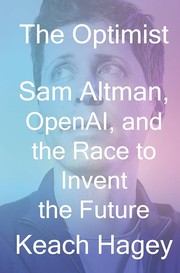
Optimist

Optimist

Keach Hagey
2025
T2 368 pages · about 6h 8m to read Open Librarygoodreads

Sam Altman biography covering the November 2023 firing and return.

Summary

The reference has not verified this book in detail; the summary states only what the title, author and subject establish.

Keach Hagey, a Wall Street Journal reporter who covers technology, published this biography of Sam Altman in 2025. It covers his upbringing in St Louis, Stanford, the founding of Loopt, his presidency of Y Combinator, the founding of OpenAI, the November 2023 removal and reinstatement, and his other ventures.

The reference has not verified this recent book's specific claims, sourcing or conclusions, and readers should check them directly rather than rely on this entry. What the author and subject establish is a reported biography by a journalist who covered the technology industry for a major newspaper, drawing on interviews and on reporting conducted during a period when Altman was among the most consequential figures in technology.

The episodes such a biography necessarily covers include: Y Combinator's expansion during Altman's presidency and the changes he made to it; OpenAI's founding as a non-profit and its restructuring into a capped-profit entity; the Microsoft partnership; the release of ChatGPT and the commercial and political consequences; and the board's removal of Altman in November 2023 and his reinstatement within days, which remains the most examined governance event in the industry.

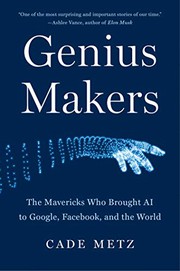
Readers wanting verified accounts of the institutional history should also consult Parmy Olson's Supremacy and Cade Metz's Genius Makers, both of which this reference has assessed and which cover overlapping ground with different emphases.

Key takeaways 5

  1. The book is a reported biography of Sam Altman by a Wall Street Journal technology reporter, published in 2025.
  2. It covers Altman's career from Loopt through Y Combinator to OpenAI, including the November 2023 board removal and reinstatement.
  3. OpenAI's restructuring from non-profit to capped-profit is the governance decision that shaped everything afterwards.
  4. The reference has not verified this book's specific claims, sourcing or conclusions, and readers should check them directly.
  5. Olson's Supremacy and Metz's Genius Makers cover overlapping institutional history with different emphases.

Who should read it

Readers wanting a biography of Sam Altman, with the caveat that this reference has not verified its specific content.

Who recommended it 1 · 1 direct

Similar books 6

Chosen by shared topics, the entries that hold them, and the people who recommended both.
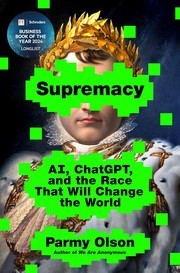
Parmy Olson · 2024

The OpenAI-DeepMind race that set the shape of Nvidia's customer base.

Recommended by: Andrew Wilkinson
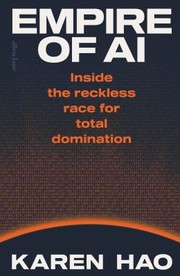
Karen Hao · 2025

A reported history of OpenAI and the industry it created.

Cade Metz · 2021

How Hinton, LeCun and Bengio kept neural networks alive until deep learning took off.
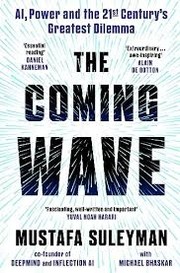
Mustafa Suleyman, Michael Bhaskar · 2023

Why AI and synthetic biology will spread fast and cheaply, and how to contain them.

“Everything is about to be changed by AI in a radical, scary way” — Andrew Wilkinson

Source: Newsletter

Recommended by: Andrew Wilkinson, Bill Gates and 1 other

Gary Rivlin · 2025

The founder scene around OpenAI, reported from inside the funding rounds.
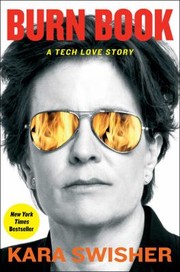
Kara Swisher · 2024

A tech reporter's memoir, including Sam Altman and OpenAI's board crisis.

Where it sits in the reference 2

Companies
Biographies

Topics

Biography and MemoirTechnology and ComputingFounders and EntrepreneursAI and machine learning