Updates

  1. Person pages list letters, writing, profiles and links as sortable tables with filters, and show each person's companies as links; Fund letters show each letter's description in its own column.
  2. Experts show a checked job title and a short description of each person; 30 more people have photographs.
  3. Every company, fund, university and publication the experts work for has a page listing the people there.
  4. Fund letters show each letter's thesis and filter by it; 225 person pages list the essays, columns and newsletter issues the person wrote.
  5. Person pages list every essay and newsletter issue a person wrote, and their own books as a table in List view.
  6. Recommends shows the five largest kinds of book and the rest under More; browse pictures load sooner.
  7. Podcasts and talks link the original episode, filter by Audio and video or Press, and list each publisher once.
  8. Pages are wider, Recommends has List and Grid, and a filter clicked again turns off.
  9. Book cards sit in a ruled grid with Open Library and Goodreads links and each book's one-line note.
  10. Funds is now Investors; each investor's styles are buttons that filter the table.
  11. Podcasts and talks on a person's page filter by year and publisher and show as a list or a grid of pictures.
  12. Quotes show only people's own words: 472 summaries written by list sites are gone.
  13. Country pages open from Browse again, and every link on the shelf lands on a page.
  14. Subject and person pages show their sections as tabs, and each book appears once on a person's page.
  15. Book cards show the quote, who said it and the source; grids show five cards to a row.
  16. On a phone, a menu holds the sections, search, Updates, Feedback and dark mode.
  17. Feedback takes a screenshot of the page with no browser prompt, opens a screenshot full size when you click it, and clears itself once sent.
  18. Book cards are centred, search names the topic each book sits in, and any text cut short shows whole on hover.
  19. Search groups its results by kind: people, companies, geographies, subjects, topics, books, funds, fund letters and papers.
  20. The Books table lists who recommended each book by name, and the browser tab names the section you are in.
  21. Feedback can take a screenshot of the page, or one you paste or choose, and opens in the corner beside Updates.
  22. Each rail button reopens its section where you left it, and Browse, Table and People show on every book and subject page.
  23. Filters grey out choices that hold nothing instead of hiding them, and Books › People filters by authors or recommenders.
  24. Feedback takes a subject line and up to three screenshots.
  25. Biographies are grouped by the person they are about: 41 new pages, from Abraham Lincoln to Lee Kuan Yew.
  26. Sport splits into 23 sports, and Religion into one topic per faith.
  27. Book lists show as cards: the cover, one recommendation quote and every recommender by name.
  28. Seventeen subjects that had two or three pages under different names now have one page each.
  29. Every page lists its Experts as authors and recommenders, with a link to them on the Experts tab.
  30. Economics, Financial history, Financial panics and Accounting are subjects of their own, with one page per financial crisis.
  31. Book, person and subject pages open inside the app, so the tabs stay in view.
  32. 996 more book covers, and photographs or logos for 227 more people and companies.
  33. Books › Browse shows every subject as cards, and the rail holds Fund letters, Papers, Experts, Books and Funds.
  34. Every topic over 150 books splits into narrower topics, each with a page of its own.

Send feedback

What is it?
Screenshots, up to 3 (optional)
or paste one with Ctrl+V

We use your email only to reply to you.

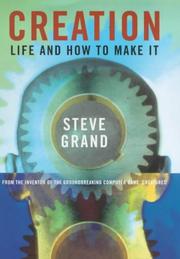
Creation: Life and How to Make It

Creation: Life and How to Make It

Steve Grand
2000
T4 240 pages · about 4h to read Open Librarygoodreads

Artificial life and emergence; complexity built from very simple rules

Summary

Grand designed Creatures, a 1996 computer game in which the creatures had simulated neural networks, biochemistry and genetics rather than scripted behaviour. This book sets out the ideas behind that work and makes a general argument about what life and mind are.

His central claim is that what matters is not the material but the persistent pattern. Grand argues that a thing is defined by the stable process that maintains it rather than by the matter it is made of, and that living things and minds are patterns of this kind operating at several levels at once. From that he argues that artificial life is possible in principle because the substrate does not matter, that it must be built from the bottom up rather than programmed top down, and that emergence across levels is the mechanism to be engineered rather than a mystery to be admired.

The book explains how he built the Creatures biochemistry and neural systems concretely, which is unusual: most artificial life writing is either philosophical or technical, and Grand does both at an accessible level. It is worth reading for people thinking about emergence, agent design and what building a mind actually requires in practice. It is from 2000 and predates deep learning entirely, so its treatment of how learning systems would be built is historical. Grand's philosophical arguments about consciousness and persistent patterns are stated with confidence and are not defended against the standard objections in philosophy of mind.

Key takeaways 7

  1. A living thing is a persistent pattern of process rather than a particular collection of matter, which means the substrate a system runs on is irrelevant to whether it is alive.
  2. Artificial life must be built from the bottom up by specifying local rules, because the interesting behaviour is what emerges rather than what is programmed.
  3. Emergence operates across multiple levels simultaneously, and a designer's job is to build the level below the one they want to appear.
  4. Simulating biochemistry and neural systems separately and letting them interact produces behaviour that neither system alone would generate.
  5. Intelligence is a property of the interaction between an agent and its environment rather than something contained in the agent.
  6. Top-down symbolic approaches to artificial intelligence fail because they specify the outcome rather than the process that generates it.
  7. Building a working artificial creature teaches more about what life requires than analysing existing organisms does.

Who should read it

Readers interested in emergence, bottom-up system design and artificial life, particularly as a pre-deep-learning statement of the constructive approach.

Who recommended it 2 · 1 direct

Similar books 6

Chosen by shared topics, the entries that hold them, and the people who recommended both.
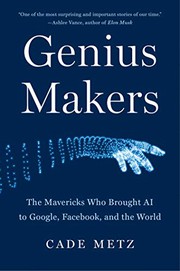
Cade Metz · 2021

How Hinton, LeCun and Bengio kept neural networks alive until deep learning took off.
Where it sits in the reference 2

Business themes
Mental models

Topics

ScienceArtificial IntelligenceComplexity and systems science