Updates

  1. Person pages list letters, writing, profiles and links as sortable tables with filters, and show each person's companies as links; Fund letters show each letter's description in its own column.
  2. Experts show a checked job title and a short description of each person; 30 more people have photographs.
  3. Every company, fund, university and publication the experts work for has a page listing the people there.
  4. Fund letters show each letter's thesis and filter by it; 225 person pages list the essays, columns and newsletter issues the person wrote.
  5. Person pages list every essay and newsletter issue a person wrote, and their own books as a table in List view.
  6. Recommends shows the five largest kinds of book and the rest under More; browse pictures load sooner.
  7. Podcasts and talks link the original episode, filter by Audio and video or Press, and list each publisher once.
  8. Pages are wider, Recommends has List and Grid, and a filter clicked again turns off.
  9. Book cards sit in a ruled grid with Open Library and Goodreads links and each book's one-line note.
  10. Funds is now Investors; each investor's styles are buttons that filter the table.
  11. Podcasts and talks on a person's page filter by year and publisher and show as a list or a grid of pictures.
  12. Quotes show only people's own words: 472 summaries written by list sites are gone.
  13. Country pages open from Browse again, and every link on the shelf lands on a page.
  14. Subject and person pages show their sections as tabs, and each book appears once on a person's page.
  15. Book cards show the quote, who said it and the source; grids show five cards to a row.
  16. On a phone, a menu holds the sections, search, Updates, Feedback and dark mode.
  17. Feedback takes a screenshot of the page with no browser prompt, opens a screenshot full size when you click it, and clears itself once sent.
  18. Book cards are centred, search names the topic each book sits in, and any text cut short shows whole on hover.
  19. Search groups its results by kind: people, companies, geographies, subjects, topics, books, funds, fund letters and papers.
  20. The Books table lists who recommended each book by name, and the browser tab names the section you are in.
  21. Feedback can take a screenshot of the page, or one you paste or choose, and opens in the corner beside Updates.
  22. Each rail button reopens its section where you left it, and Browse, Table and People show on every book and subject page.
  23. Filters grey out choices that hold nothing instead of hiding them, and Books › People filters by authors or recommenders.
  24. Feedback takes a subject line and up to three screenshots.
  25. Biographies are grouped by the person they are about: 41 new pages, from Abraham Lincoln to Lee Kuan Yew.
  26. Sport splits into 23 sports, and Religion into one topic per faith.
  27. Book lists show as cards: the cover, one recommendation quote and every recommender by name.
  28. Seventeen subjects that had two or three pages under different names now have one page each.
  29. Every page lists its Experts as authors and recommenders, with a link to them on the Experts tab.
  30. Economics, Financial history, Financial panics and Accounting are subjects of their own, with one page per financial crisis.
  31. Book, person and subject pages open inside the app, so the tabs stay in view.
  32. 996 more book covers, and photographs or logos for 227 more people and companies.
  33. Books › Browse shows every subject as cards, and the rail holds Fund letters, Papers, Experts, Books and Funds.
  34. Every topic over 150 books splits into narrower topics, each with a page of its own.

Send feedback

What is it?
Screenshots, up to 3 (optional)
or paste one with Ctrl+V

We use your email only to reply to you.

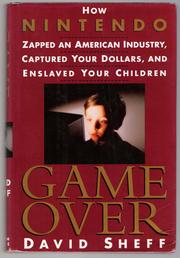
Game Over

Game Over

David Sheff
1993
T2 451 pages · about 7h 31m to read Open Librarygoodreads

Nintendo's licensing regime and its control of the cartridge supply.

Summary

Sheff, a journalist, wrote the history of Nintendo's rise in the American market, based on extensive access including interviews with Hiroshi Yamauchi and with the company's American executives.

The business content is the substance. After the 1983 American video game market collapse, when Atari's oversupply of poor-quality titles destroyed retailer and consumer confidence, Nintendo entered a market that retailers considered dead. Sheff documents the specific decisions that rebuilt it. The Nintendo Entertainment System was marketed as an entertainment system rather than a game console, with a robot accessory, to get it onto shelves retailers had cleared. The lockout chip physically prevented unlicensed cartridges from running, which gave Nintendo control over what software appeared on its platform. The licensing terms restricted publishers to five titles a year, required exclusivity for a period, required Nintendo to manufacture the cartridges, and required payment in advance. Nintendo controlled cartridge supply, which meant it decided how many copies of any title existed.

Sheff argues that these terms rebuilt quality control after Atari's collapse and simultaneously gave Nintendo a position it exploited hard, which produced the antitrust attention, the congressional hearings and the litigation from publishers and from competitors that the book also covers.

He covers Yamauchi's management, the acquisition of the Seattle Mariners, the Tetris rights dispute, and the development culture around Shigeru Miyamoto.

The book was published in 1993, before the PlayStation, before Nintendo's loss of the platform lead, and before the industry's subsequent structure emerged. Its account of platform control through licensing and manufacturing is the most transferable content and remains the clearest statement of how a platform holder exercises power over its ecosystem.

Key takeaways 7

  1. Nintendo entered a market that retailers considered dead after Atari's oversupply of poor titles destroyed confidence.
  2. Marketing the console as an entertainment system rather than a game machine got it onto shelves retailers had cleared.
  3. A lockout chip physically prevented unlicensed software from running, which gave the platform holder control over what appeared on it.
  4. Licensing terms restricted publishers to five titles a year and required exclusivity, advance payment and Nintendo-manufactured cartridges.
  5. Controlling cartridge manufacture meant Nintendo decided how many copies of any title existed.
  6. Quality control terms rebuilt consumer confidence after the crash and simultaneously created a position that drew antitrust attention.
  7. A platform holder's terms with publishers determine both the content quality and the distribution of profit across the ecosystem.

Who should read it

Founders and operators of platform businesses who want the clearest historical case of how licensing and manufacturing control establish platform power.

Similar books 6

Chosen by shared topics, the entries that hold them, and the people who recommended both.

Dan Breznitz · 2007

How Israel, Taiwan and Ireland each used the state to build IT industries.

Josh Lerner · 2009

Why most government efforts to build venture capital sectors fail.

Adam B. Jaffe, Josh Lerner · 2004

How 1980s changes turned the US patent system from aid to obstacle for innovation.

Peter Huber · 1987

A report on competition in the telephone industry.

Recommended by: Mohnish Pabrai

Tim Schwab · 2023

An investigative case against the power of the Gates Foundation.
Where it sits in the reference 2

Industries
Economics

Topics

Politics and GovernmentBiography and MemoirEconomicsFounders and EntrepreneursGlobalisation, development and offshore moneyMedia and entertainment founders