
Fulfillment
What Amazon did to American places; the cost side of the model.
Summary
MacGillis, a ProPublica reporter, examined the geographic concentration of economic activity in the United States using Amazon as the connecting thread, telling the story through people in different places.
The structure moves between locations. Seattle, where the company's growth transformed the city and its housing costs. Northern Virginia, where the data centres and later the second headquarters located, drawing on federal proximity. Baltimore, where a warehouse was built on the site of a closed steel mill, employing people at a fraction of the wages the mill had paid. Dayton, El Paso, rural Virginia and other places where warehouses and data centres arrived or where the businesses they displaced closed.
The analytical argument concerns concentration. MacGillis argues that the American economy has become geographically divergent to a degree it was not fifty years ago: high-productivity, high-wage activity concentrates in a small number of metropolitan areas while other places receive the low-wage logistics and fulfilment work that serves them. He connects this to the decline of antitrust enforcement, to the concentration of corporate headquarters, to the loss of local banks and local ownership, and to the political consequences.
He also covers the specific mechanisms: the state and local tax incentives competed away in bidding for facilities, the effect on local retail, the working conditions and injury rates in fulfilment centres, and the lobbying presence the company built in Washington.
The book is reported through individual lives rather than through data, which is its strength as narrative and its limitation as analysis. MacGillis argues a position and Amazon is the vehicle rather than the sole subject. The geographic divergence he describes is well documented in economic research, and the book supplies the human account that the research does not.
Key takeaways 7
- High-productivity high-wage activity has concentrated in a small number of American metropolitan areas over the past fifty years.
- Other places receive the low-wage logistics and fulfilment work that serves the concentrated centres.
- A warehouse built on a closed steel mill site employs people at a fraction of the wages the mill paid for comparable hours.
- State and local tax incentives competed away in bidding for facilities transfer public money to the company without changing the location decision.
- Loss of local corporate headquarters removes the civic institutions and philanthropy that headquarters supported.
- Concentration of corporate ownership removes local decision-making about employment and investment.
- The geographic divergence is documented in economic research, and the book supplies the human account that research does not.
Who should read it
Operators and investors who want to see the local economic consequences of logistics concentration and the political conditions it produces.
Similar books 6
Chosen by shared topics, the entries that hold them, and the people who recommended both.
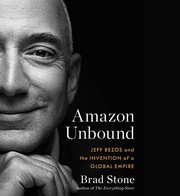
Amazon from 2010 to 2020: Alexa, AWS, logistics and its rise to the top.
Recommended by: Andrew Wilkinson
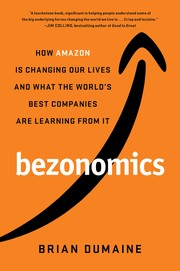

Jeff Bezos and Amazon's early years, from D. E. Shaw to the founding in 1994.
Recommended by: Mohnish Pabrai

Amazon's first two decades, from an online bookshop to selling nearly everything.
Recommended by: Andrew Wilkinson, Mohnish Pabrai and 7 others

Amazon against Walmart; the retail war told as strategy.

Amazon's operating mechanisms, from leadership principles to the six-page memo.
Recommended by: Jeff Bezos
Where it sits in the reference 2
Topics