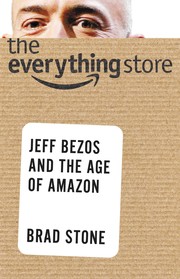
The Everything Store
The canonical Amazon history through 2013.
Summary
Stone covers Amazon from Bezos leaving D. E. Shaw in 1994 through roughly 2013, drawing on around three hundred interviews with current and former employees, though Bezos declined to participate directly. It is the standard business history of the company's first two decades.
The book documents the strategic decisions in sequence: books chosen as the first category because of catalogue size and distributor infrastructure, the near-death cash crisis of 2000 and 2001 when the bond markets closed, the decision to open the platform to third-party sellers despite internal opposition, the launch of Prime against clear objections about its cost, and the creation of Amazon Web Services out of internal infrastructure work. Stone gives detail on the Kindle programme, including the deliberate cannibalisation instruction Bezos gave the team.
He also documents the operating culture: the six-page narrative memos that replaced presentations, the two-pizza teams, the leadership principles, the metrics-driven reviews, and the treatment of warehouse and corporate staff that produced high turnover. The Quidsi acquisition, where Amazon used sustained losses on diapers to force a sale, is documented in detail and is the clearest account of how Amazon competed.
Bezos's then-wife MacKenzie publicly criticised the book's accuracy, particularly the framing around his biological father. The book ends before Amazon's largest expansion, including the growth of AWS into its main profit source, the advertising business, and the pandemic period. Stone's Amazon Unbound continues the story. For the founding decisions, this remains the best available account.
Key takeaways 8
- Amazon sold books first because the category had more titles than any physical store could hold and existing distributors could fulfil orders without inventory.
- Bezos chose growth and low prices over profit deliberately and for decades, using free cash flow rather than earnings as the target metric.
- Opening the site to third-party sellers cannibalised Amazon's own retail sales and became the more profitable business.
- Prime was launched over internal objections about its cost because Bezos judged that changing customer purchasing behaviour outweighed the shipping losses.
- Amazon Web Services grew out of internal infrastructure needs and was pursued as a separate business before any competitor recognised the market.
- Bezos instructed the Kindle team to destroy Amazon's physical book business, on the principle that a competitor would otherwise do it.
- Six-page written narratives replaced presentations because the format forces complete reasoning that slides allow people to hide.
- Amazon used sustained deliberate losses to force competitors including Quidsi into acquisition, which is documented here in detail.
Who should read it
Operators and investors who want the decision-level history of Amazon's first twenty years, including the platform and Prime decisions and the internal writing culture.
About Brad Stone
Senior executive editor for global technology at Bloomberg News who writes reported histories of Amazon, Uber and Airbnb.
The Everything Store reconstructs Amazon's first two decades from hundreds of interviews with insiders, covering the decisions on pricing, third-party sellers and infrastructure that made the model work. Amazon Unbound picks up the following decade, and The Upstarts documents the regulatory and operating fights Uber and Airbnb had to win to reach scale.
Who recommended it 9 · 2 direct
Similar books 6
Chosen by shared topics, the entries that hold them, and the people who recommended both.

Amazon from 2010 to 2020: Alexa, AWS, logistics and its rise to the top.
Recommended by: Andrew Wilkinson
Jeff Bezos and Amazon's early years, from D. E. Shaw to the founding in 1994.
Recommended by: Mohnish Pabrai
Amazon's operating mechanisms, from leadership principles to the six-page memo.
Recommended by: Jeff Bezos
How Walmart grew from one Arkansas store by cutting costs and prices.
Recommended by: David Cancel, Mohnish Pabrai, Iman Gadzhi and 3 others
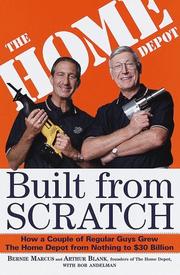
How two fired executives built Home Depot into a national chain.
Recommended by: Mohnish Pabrai, David Cancel, Frank Blake and 1 other

Where it sits in the reference 7
Topics